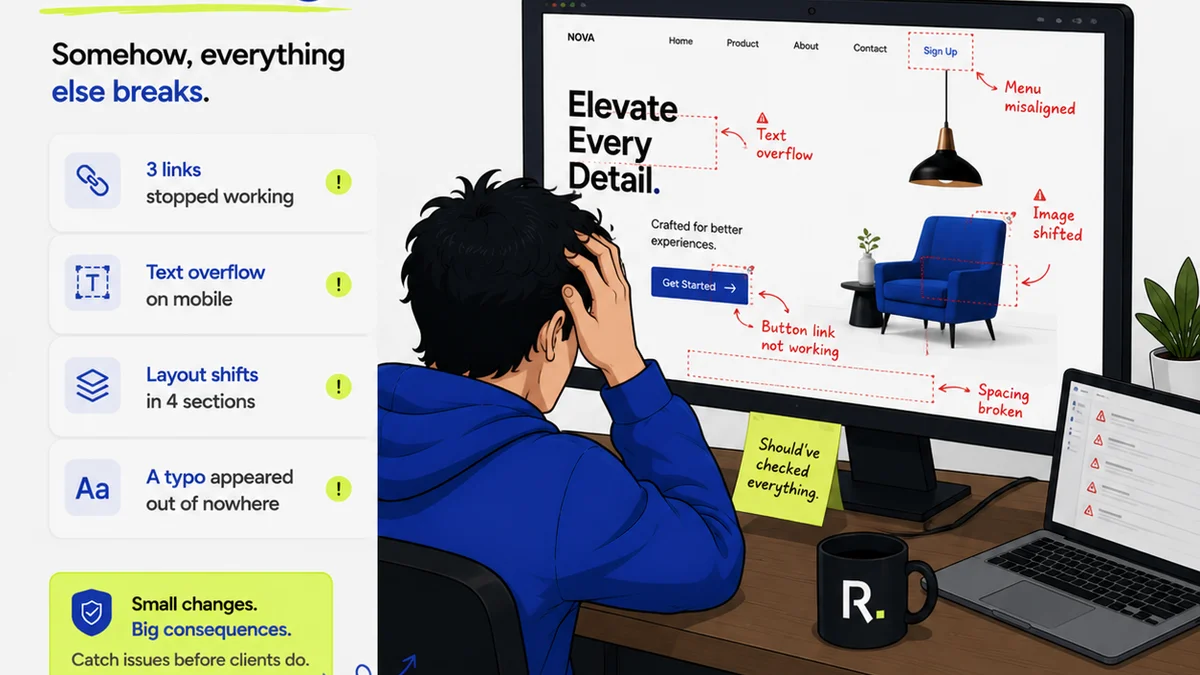
Most teams think design reviews are about making things look good. That’s not entirely wrong. But it’s dangerously incomplete. Especially when your designs are headed for manufacturing.
The hard truth? Flawed design reviews don't just lead to ugly products. They lead to expensive mistakes, missed deadlines, and products that simply don’t work. They kill the project before it even leaves the drawing board.
1. Reviewing Without Context
You’ve probably seen it: a designer presents a mock-up. Stakeholders chime in with opinions. “I don’t like that shade of blue.” “Can we make the button bigger?”
This is surface-level feedback. It’s an assumption that subjective taste is the primary driver of good design for manufacturing. It ignores the entire engineering and production reality.
The Real Problem: Disconnected Goals
What’s often missing is a clear understanding of:
- Manufacturing constraints: materials, tooling, assembly processes, tolerances.
- User context: where and how the product will actually be used.
- Regulatory requirements: safety standards, certifications.
- Cost targets: the impact of design choices on BOM and production costs.
Without this context, feedback is just noise. It can even be detrimental, pushing designs away from what’s feasible or effective.
Fixing the Context Gap
- Establish clear objectives BEFORE the review. What must this product achieve? What are the non-negotiables?
- Include manufacturing engineers and supply chain specialists from the start. Not as an afterthought, but as core reviewers.
- Document constraints. Make them accessible and visible to everyone on the team. Think of it as the product's DNA.
- Use prototypes early and often. Even low-fidelity ones can reveal issues that flat mock-ups hide.
2. The 'One and Done' Review Myth
Many teams treat design review as a single event. A gate they must pass through. Once approved, they move on.
This assumption is a recipe for disaster. Manufacturing is iterative. Design for manufacturing (DFM) is inherently iterative. You can’t approve a design for production in a vacuum.
The Cost of Single-Pass Reviews
A single review:
- Fails to catch evolving issues.
- Doesn't allow for feedback loops with manufacturing.
- Prevents necessary design pivots based on early production insights.
- Leads to costly redesigns late in the process.
This is where the real money gets wasted. It’s easier and cheaper to tweak a CAD file than to retool a factory floor.
Embrace Iterative Design Reviews
- Schedule multiple review points. Concept, preliminary design, detailed design, pre-production.
- Build feedback loops into the process. Each review should inform the next stage.
- Use a centralized platform for feedback. This ensures all comments are tracked, visible, and actionable across iterations. No more hunting through email chains.
3. Ambiguous Feedback: The Silent Killer
“Make it stronger.” “Improve the usability.” “It needs more polish.”
These are common review comments. They sound constructive. But they are useless for manufacturing.
The assumption here is that everyone has the same interpretation of vague terms. They don’t. Especially when those terms relate to physical objects and production processes.
Why Vague Feedback Fails
- Lack of specificity. What does
Frequently asked questions
What is Design for Manufacturing (DFM)?
Design for Manufacturing (DFM) is the practice of designing products in a way that makes them easy and economical to manufacture. It involves considering production processes, materials, and assembly during the design phase to minimize costs and maximize quality.
How can I ensure feedback is actionable for manufacturing?
Provide specific, measurable, achievable, relevant, and time-bound (SMART) feedback. Instead of 'make it stronger,' say 'increase wall thickness by 0.5mm in this area to withstand 100N force.' Reference specific materials, tolerances, or assembly steps.
What are the biggest risks of poor design reviews in manufacturing?
The biggest risks include significant cost overruns due to late-stage redesigns, production delays, quality issues, product failures, and damage to brand reputation. Poor reviews often stem from a lack of clear context or actionable feedback.
How often should design reviews happen for a manufacturable product?
Design reviews should be iterative and occur at multiple stages: concept, preliminary design, detailed design, and pre-production. This allows for continuous feedback and adjustments based on manufacturing insights.