Most agencies think a design review is just about getting client sign-off. Send the JPEG, get the comments, make the tweaks, repeat.
None of that is wrong. But it’s incomplete.
The hard truth? A truly effective design review process isn't a bottleneck. It's a catalyst for better creative work. It’s how you align stakeholders, mitigate risk, and build trust. It’s about moving fast without breaking things.
1. Define the Purpose of Every Review
Before you even think about sending a link, get crystal clear on *why* this specific review is happening.
Is it an initial concept presentation? A detailed iteration check? A final polish before launch? Each stage demands a different approach.
Treating every review like a final sign-off meeting leads to endless, unproductive rounds of feedback. You’ll frustrate your team and your client.
Concept Presentation
At this stage, focus on the big picture. Are we solving the right problem? Is the strategic direction sound? Feedback should be high-level.
Avoid nitpicking typography or minor layout issues. That comes later.
Iterative Review
Here, you’re refining specific elements. Details matter more now. Ensure the feedback is actionable and focused on the defined goals of this iteration.
Final Approval
This is the last gate. All major feedback should have been addressed. Focus on final checks: copy, links, minor visual tweaks. No new strategic direction should emerge here.
2. Standardize Your Review Workflow
Ad-hoc reviews are a recipe for chaos. You need a repeatable system.
This means defining:
- Who needs to review the work?
- What are their specific roles (e.g., approver, reviewer, FYI)?
- What information do they need *before* the review?
- What is the expected turnaround time for feedback?
- What happens if feedback is late or unclear?
A standardized workflow reduces confusion and ensures everyone knows their part. It also makes onboarding new team members or clients much smoother.
Documentation is Key
Document your process. Create a simple guide for clients and internal teams. Make it accessible.
This isn't about bureaucracy; it's about clarity and efficiency. It sets expectations from day one.
3. Gather the Right Feedback, From the Right People
Not all feedback is created equal. And not everyone’s opinion carries the same weight.
Identify your key stakeholders. Who has the authority to approve? Who has crucial insights? Who is just along for the ride?
The Stakeholder Matrix
Map out your stakeholders. Understand their level of involvement and their influence.
- Decision-makers: Those who have the final say.
- Influencers: Those whose opinions strongly sway decision-makers.
- Subject Matter Experts: Those with deep knowledge in a specific area (e.g., legal, technical).
- End-users (if possible): Their perspective is invaluable, even if indirect.
Focus your review efforts on the decision-makers and key influencers. Don't get bogged down by opinions from people outside the core group, unless they are functional experts.
Context is Crucial
Feedback without context is noise. Always provide background information with your design.
What problem are you solving? Who is the target audience? What are the project goals? What specific questions are you asking for feedback on?
Without this, clients might comment on things that aren’t relevant to the project's objectives.
4. Centralize Feedback and Communication
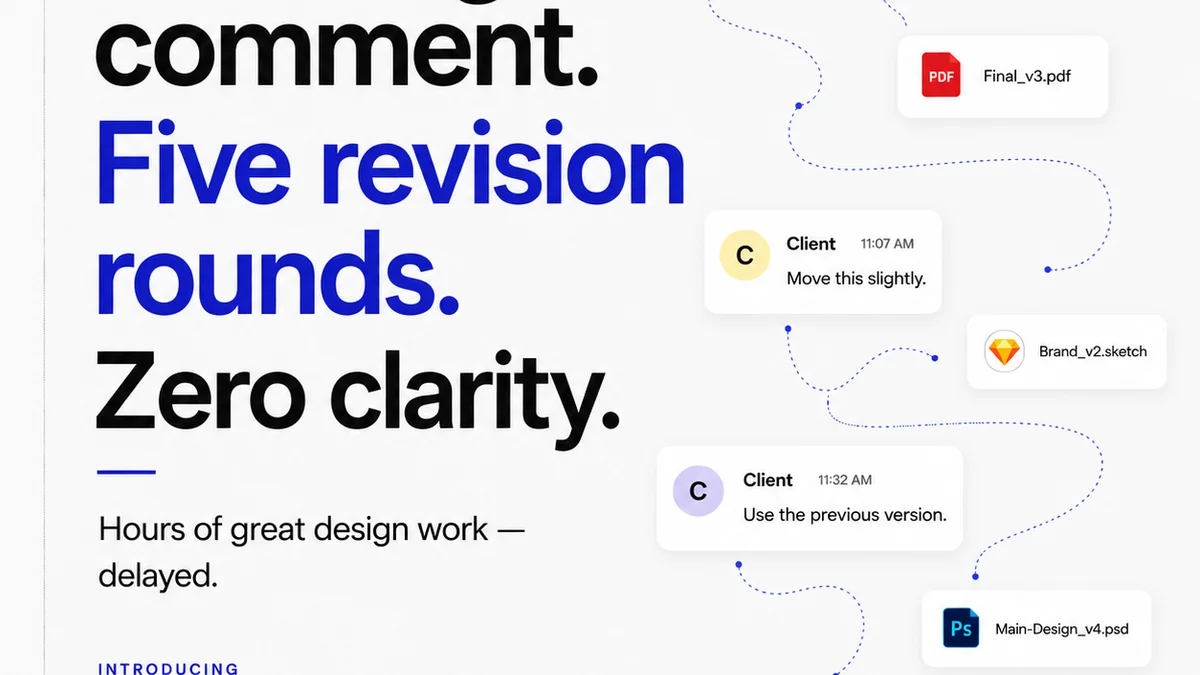
Scattered feedback across emails, Slack messages, and random documents is a productivity killer.
You need a single source of truth for all comments, revisions, and approvals.
This prevents:
- Lost comments
- Conflicting feedback
- Endless back-and-forth clarification
- Arguments over what was actually said
Centralization streamlines the entire process. It gives everyone visibility and accountability.
5. Streamline Revisions and Approvals
Once feedback is gathered, the revision process begins. This is where many workflows break down.
How do you track what's been changed? How do you ensure all feedback has been addressed? How do you get that final, unambiguous approval?
Version Control is Non-Negotiable
Maintain clear version history. Every iteration should be documented. This protects your team and provides a clear audit trail.
Avoid vague version names like 'Final' or 'Final_v2'. Use dates, version numbers, or specific milestone names.
Clear Approval Gates
Define what constitutes an approval. Is it a signature? An email confirmation? A checkmark in a system?
Ensure the right person is giving the final sign-off. Misaligned approvals lead to costly rework down the line.
Where Revue Fits In
Building a robust design review process requires tools that support clear communication, organized feedback, and transparent tracking.
Revue is built for this. It centralizes all your client feedback, making it easy to see comments, track revisions, and manage approvals in one place.
No more hunting through emails or Slack threads. Every piece of feedback, every iteration, every approval is logged and visible.
This keeps your projects moving forward, reduces miscommunication, and ensures you hit those quality checks before launch.
6. Conduct Effective Review Meetings (When Necessary)
Not every review needs a meeting. But when it does, make it count.
Preparation is paramount. Share materials in advance. Set a clear agenda.
During the meeting:
- Assign a note-taker.
- Keep the discussion focused on the review objectives.
- Steer the conversation away from subjective opinions and towards objective feedback tied to project goals.
- Summarize action items and next steps before ending the meeting.
Respect everyone’s time. If a meeting isn't adding value, skip it.
7. Foster a Culture of Constructive Critique
The best design reviews aren't adversarial; they're collaborative.
Encourage your team and your clients to provide feedback that is:
- Specific: Instead of
Frequently asked questions
What are the key stages of a design review process?
Key stages typically include concept presentation, iterative review, and final approval. Each stage has a different focus, from high-level strategy to detailed refinement.
How can I ensure I get actionable feedback from clients?
Provide context with your designs, clearly state the project goals, and ask specific questions. Focus feedback requests on key stakeholders who understand the project objectives.
Why is centralizing feedback important?
Centralizing feedback prevents lost comments, resolves conflicting input, and eliminates endless back-and-forth. It provides a single source of truth for all project communication and decisions, improving efficiency and accountability.
What makes a design review meeting effective?
Effective review meetings are well-prepared with advance materials and a clear agenda. During the meeting, focus on objective feedback tied to project goals, assign a note-taker, and summarize action items at the end.