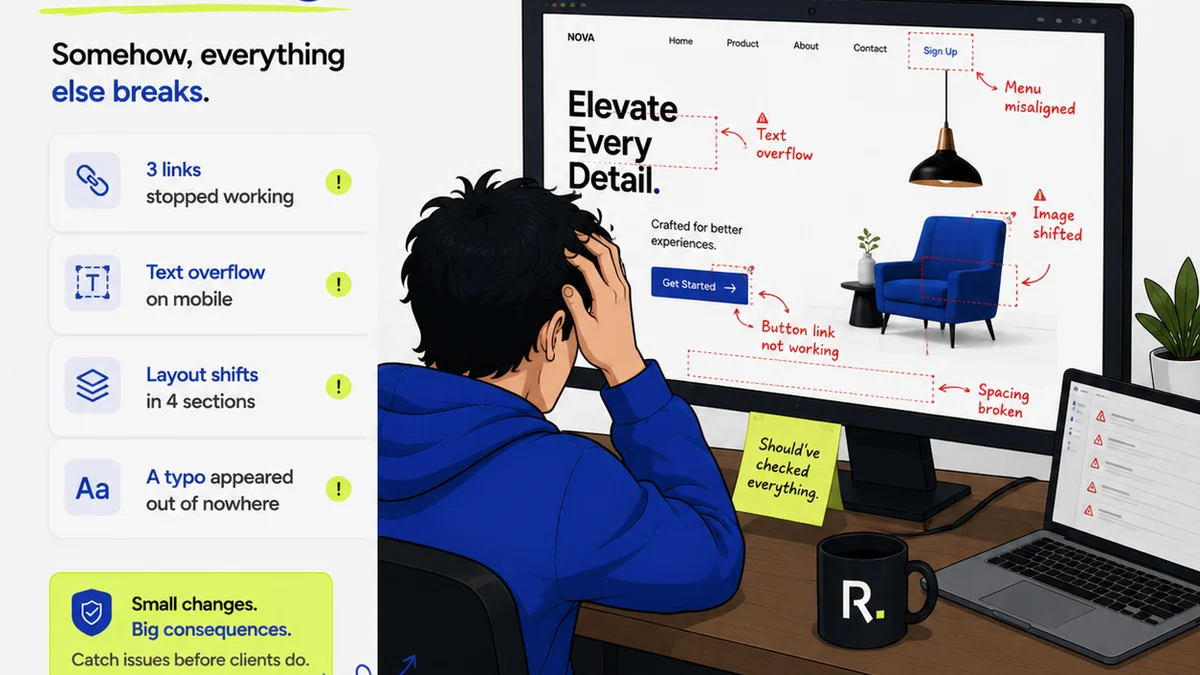
Everyone knows design reviews are crucial. You gather stakeholders, present the work, and collect their thoughts. That’s the theory, anyway.
The hard truth? Most design review reporting is a mess. It's a collection of subjective opinions, conflicting requests, and vague
Frequently asked questions
What is the primary goal of design review reporting?
The primary goal is to translate subjective feedback into objective, actionable insights that can be clearly implemented by the design team. It ensures everyone is aligned on necessary changes and the rationale behind them, leading to a more efficient and effective revision process.
How can a checklist improve design review reporting?
A checklist standardizes the review process, ensuring all critical aspects are considered and documented consistently. It helps identify subjective vs. objective feedback, tracks decisions, and prevents scope creep, leading to clearer communication and fewer misunderstandings.
What are common pitfalls in design review reporting?
Common pitfalls include vague feedback (e.g., 'I don't like it'), conflicting opinions from different stakeholders, failure to prioritize feedback, and a lack of clear decision-making. Without a structured approach, these issues lead to wasted time and frustration.
Can reporting help prevent scope creep during design reviews?
Absolutely. A structured reporting process, especially one that clearly documents approved changes and their rationale, acts as a safeguard against scope creep. By referencing the documented review outcomes, teams can more easily identify and push back on requests that fall outside the agreed-upon scope.