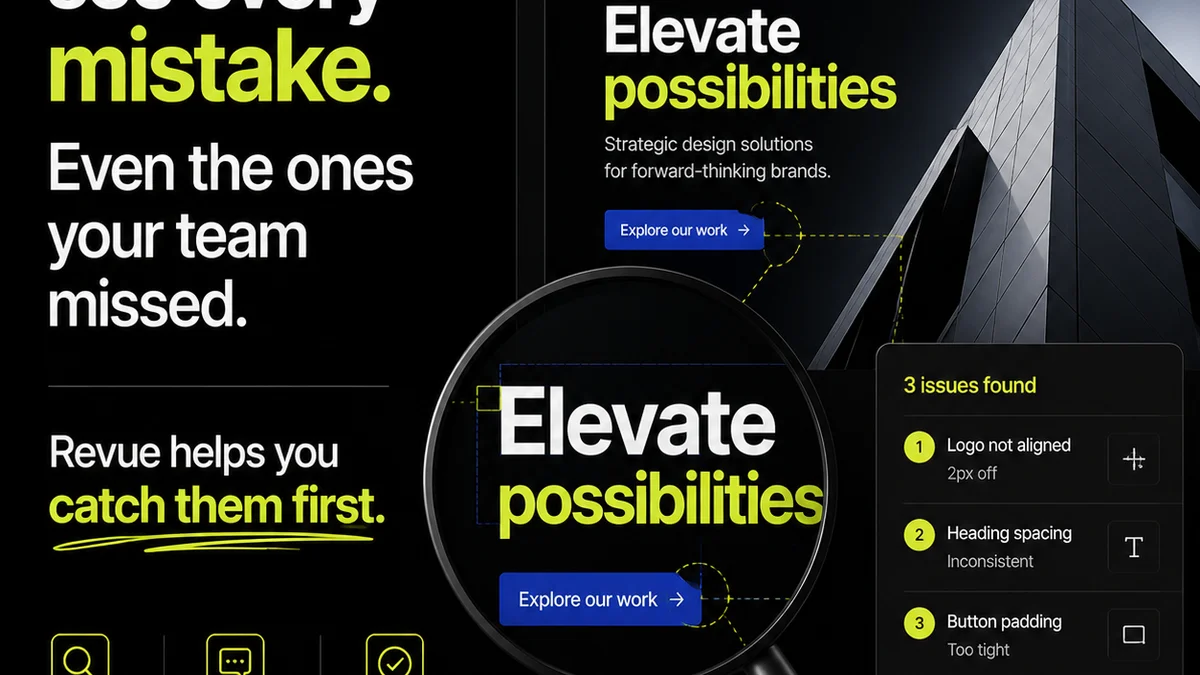
Everyone thinks design review software is about approvals. Get the client's sign-off, move on to the next project. Simple. Efficient. Profitable.
None of that is wrong. But it’s incomplete.
The hard truth? Design review is a bottleneck. It’s where projects get stuck, where miscommunications fester, and where profitability bleeds out. The software you use to manage it isn't just a tool; it's a critical lever for your agency's operational health.
If your current process feels more like a drag than a driver, it’s time to look beyond basic annotation tools. You need a system built for the realities of agency workflow.
1. Centralized Feedback vs. Scattered Emails
The most common assumption is that any tool that lets clients drop a pin on an image is sufficient. This leads to a fragmented mess.
Imagine this:
- Client A emails feedback on a PDF.
- Client B leaves a comment on a Google Drive link.
- Client C sends a Slack message with a screenshot.
- Your designer is drowning in tabs, trying to reconcile conflicting input.
This isn't just inefficient; it's a recipe for missed feedback and scope creep.
The Core Problem: Context Collapse
When feedback lives in multiple places, it loses context. Why was that change requested? Who asked for it? What was the original brief? Without a single source of truth, these questions become hurdles.
This forces designers to:
- Manually consolidate feedback.
- Guess at intent.
- Waste time chasing down clarification.
The result? Rework, frustration, and delayed deadlines. Your project managers are pulling their hair out, and clients are left wondering why things are taking so long.
What to Look For: A Single Source of Truth
Your design review software must act as the central hub. Everything related to a specific project's creative assets should live in one place.
- All versions of a design.
- All feedback comments, from all stakeholders.
- All revisions and approvals, tracked historically.
This eliminates the need for manual consolidation and ensures everyone is working from the same, up-to-date information. It’s the foundation of efficient creative operations.
2. Revision Management: Tracking More Than Just Comments
Many tools offer basic commenting. They let a client circle something and type. That’s not revision management; that’s just digital scribbling.
Real revision management means understanding the *entire* lifecycle of a design iteration.
The Pain of Version Control Chaos
Without a structured approach, you end up with:
- Files named `logo_final.ai`, `logo_final_v2.ai`, `logo_final_REALLY_final.ai`.
- Lost progress from deleted versions.
- Disputes over which version was approved.
- Endless
Frequently asked questions
What's the biggest mistake agencies make with design review software?
Treating it as just an approval tool. The best software centralizes all feedback, tracks revisions, and provides visibility, preventing bottlenecks and miscommunications.
How can design review software improve client communication?
By providing a single, clear platform for all feedback and revisions. This eliminates scattered emails, reduces confusion, and keeps clients informed about the review process.
Can design review software help with scope creep?
Yes. By clearly documenting all feedback, requested changes, and approvals, it creates an auditable trail that helps identify and manage out-of-scope requests.
What are the key features to look for in design review software for agencies?
Centralized feedback, version control, clear revision tracking, stakeholder management, and integration capabilities are crucial for efficient agency workflows.