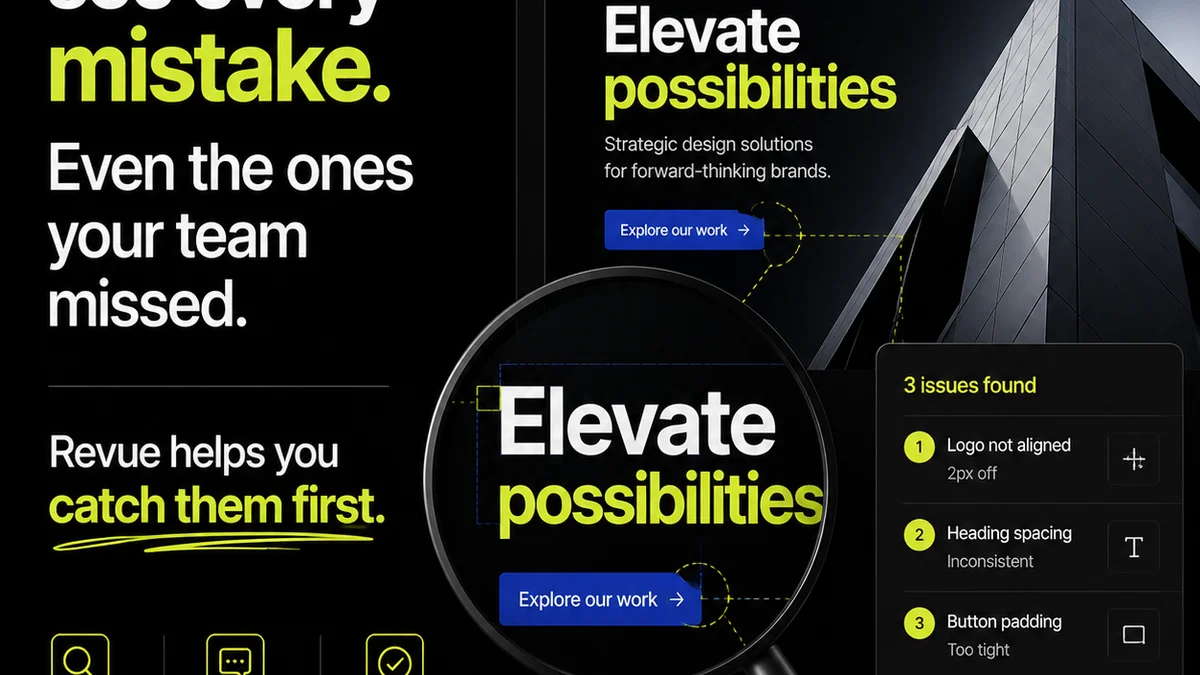
Everyone wants faster design review turnaround time. Clients demand it. Project managers track it. Creative directors chase it. The assumption is simple: speed equals efficiency, and efficiency means more profitable projects and happier clients.
None of that is wrong. But it’s incomplete.
The hard truth is that focusing solely on shaving minutes off review cycles misses the forest for the trees. True efficiency in design reviews isn't about rushing; it's about clarity, context, and control.
1. The Myth of the "Quick" Review
We’ve all been there. A client clicks “Approve” on a PDF without a word. Or a designer pushes a Figma file out the door with a curt “Ready for feedback.” It feels fast.
But what does that “quick” review actually achieve?
- Was the feedback clear?
- Was the context understood?
- Was the approval truly informed?
Often, the answer is no. These rapid-fire “approvals” are usually just a pause button. The real work – understanding, iterating, and ensuring alignment – happens later, often chaotically. This leads to scope creep, frustrating revisions, and ultimately, longer project timelines than if the initial review had been thorough.
2. Understanding the Real Bottlenecks
Design review turnaround time isn't just about the hours spent in a meeting or the minutes a client spends looking at a screen. It’s a complex ecosystem.
The Sender’s Role: Clarity is King
Before any review even begins, the groundwork must be laid.
Is the brief crystal clear? Are the objectives well-defined? Has the designer presented the work in a way that directly addresses the brief’s requirements and potential client questions?
Lack of clarity here means the reviewer has to guess. Guessing leads to broad, unfocused feedback. Unfocused feedback leads to wasted revisions. This is a primary driver of slow turnaround.
The Reviewer’s Burden: Cognitive Load and Context
Clients and stakeholders aren't typically immersed in the project details like the creative team is. Asking them to review a complex design without proper context is setting them up for failure.
They need:
- A concise summary of the project goals.
- Specific questions the designer needs answered.
- A clear understanding of what stage the work is in (e.g., concept, refinement, final polish).
- Access to relevant background materials (previous versions, brand guidelines, user research).
Overwhelming reviewers with too much information, or not providing enough, both kill efficiency. It’s a delicate balance.
The Format Factor: Static vs. Dynamic
How is the design being presented? A static PDF can obscure interaction details or subtle animations. Email chains for feedback create a scattered mess.
Modern design tools offer richer ways to present work. Think interactive prototypes, annotated screens, or even video walkthroughs. The right format can preempt questions and make feedback more precise.
Consider the Nielsen Norman Group's insights on usability. If the review process itself is difficult to navigate, it will inevitably slow down.
3. The Hidden Costs of Rushed Feedback
Let's be blunt. The pressure to speed up design reviews often backfires.
When feedback is rushed, it's rarely constructive. It becomes a list of superficial preferences rather than strategic input.
This leads to:
- Surface-Level Revisions: Designers are asked to make changes that don't address core issues, leading to endless tweaking.
- Eroded Trust: Clients feel their input isn't valued when they're pressured, and designers feel their expertise is disregarded.
- Missed Opportunities: Crucial strategic insights or innovative solutions get overlooked in the rush to simply
Frequently asked questions
What is a typical design review turnaround time?
There's no single 'typical' time, as it depends heavily on project complexity, client availability, and internal team processes. However, aiming for feedback within 24-48 business hours for initial reviews and 1-2 business days for subsequent rounds is a common benchmark for efficiency. The key is setting clear expectations upfront.
How can I get faster feedback from clients?
Set clear deadlines for feedback, provide concise and contextual information for reviewers, use dedicated feedback tools to streamline the process, and schedule brief, focused review meetings if necessary. Sometimes, a quick pre-review call to align expectations can prevent lengthy back-and-forth later.
Does using a design review tool actually speed things up?
Yes, when implemented effectively. Tools centralize feedback, provide context, track versions, and create an audit trail, all of which reduce confusion and miscommunication. This clarity directly translates to faster, more accurate revisions and approvals, significantly improving overall turnaround time.
What's more important: speed or quality of feedback?
Quality of feedback is paramount. Rushed, unclear feedback leads to wasted effort and poorer outcomes. While efficiency is crucial, it should be achieved through clear processes and better communication, not by sacrificing the depth and strategic value of the review.