Everyone thinks they know what design sign-off means. It’s the final hurdle. The moment the client clicks ‘Approve’ and the project moves to development or launch. Simple, right?
None of that is wrong. But it’s incomplete. Dangerously so.
The hard truth is that most design sign-off processes are broken. They’re often rushed, lack clarity, and set up teams for costly rework and strained client relationships. Effective design sign-off isn't just about getting a final 'yes'; it's about ensuring everyone is aligned on what 'done' actually means, and that the work meets objectives.
1. Define 'Sign-Off' Before You Start
This sounds obvious, but it’s rarely done. What does ‘sign-off’ really entail for this specific project or phase? Is it a formal email confirmation? A tracked approval within a platform? A verbal agreement on a call?
The definition needs to be crystal clear. Ambiguity here is the enemy.
What Constitutes Approval?
Does signing off mean the client is happy with the aesthetic? Or does it mean they’ve signed off on the functionality, the copy, and the strategic goals being met? Usually, it’s all of the above, but this must be explicitly stated.
A common mistake is assuming a client understands the full scope of what they are approving. They might see a beautiful design but miss a critical copy error or a functional flaw.
Who Has the Authority?
Not everyone who provides feedback has the authority to sign off. Identify the ultimate decision-maker(s) early. This prevents endless loops of feedback from secondary stakeholders who can’t give the final go-ahead.
When Does Sign-Off Occur?
Is sign-off only for the final deliverable? Or are there key milestones that require sign-off along the way? For complex projects, interim sign-offs are crucial to catch issues before they become major problems.
2. Establish a Clear Feedback Loop
Design sign-off is the culmination of feedback. If the feedback process is chaotic, the sign-off will be too.
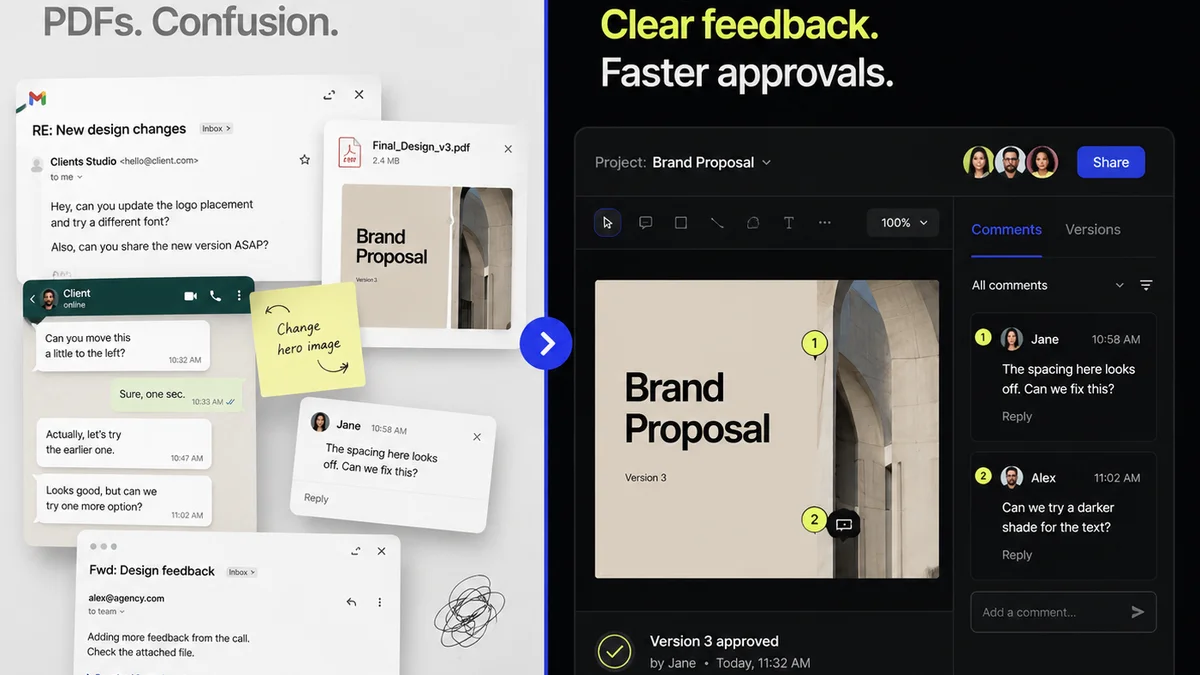
This means moving beyond endless email chains and scattered Slack messages. Centralized feedback is key.
Structured Feedback Channels
Use tools designed for creative feedback. This allows stakeholders to comment directly on the design, annotate specific elements, and see existing feedback. It prevents comments from getting lost or misinterpreted.
Think of it like this: Would you try to build a house based on verbal instructions shouted from across a construction site? No. You’d use blueprints and clear, documented instructions. Creative feedback deserves the same rigor.
Consolidated Feedback Rounds
Don't allow ad-hoc feedback. Set clear expectations for when feedback should be submitted. Bundle feedback into defined rounds. This respects your team's time and prevents constant context switching.
If a client has a question, it should be logged. If they have a suggestion, it should be part of the next feedback round. This avoids the
Frequently asked questions
What is the most common mistake in design sign-off?
The most common mistake is treating design sign-off as a mere formality or the final click of a button. This overlooks the critical need for clear definitions of what 'approved' means, who has the authority, and ensuring alignment on project objectives before signing off.
How can I ensure clients provide constructive feedback for sign-off?
Establish structured feedback channels and define clear feedback rounds. Educate clients on the purpose of feedback and what information is most helpful. Using a centralized platform where feedback is visible and actionable can also encourage more constructive input.
What should be included in a design sign-off checklist?
A sign-off checklist should confirm that all project requirements have been met, all agreed-upon revisions are implemented, all feedback has been addressed, key stakeholders have approved, and the final deliverable matches the approved scope and specifications.
How does centralized feedback help with design sign-off?
Centralized feedback tools consolidate all comments, annotations, and revisions in one place. This provides a clear audit trail, reduces miscommunication, ensures all stakeholders see the same information, and makes the final sign-off process more transparent and efficient.