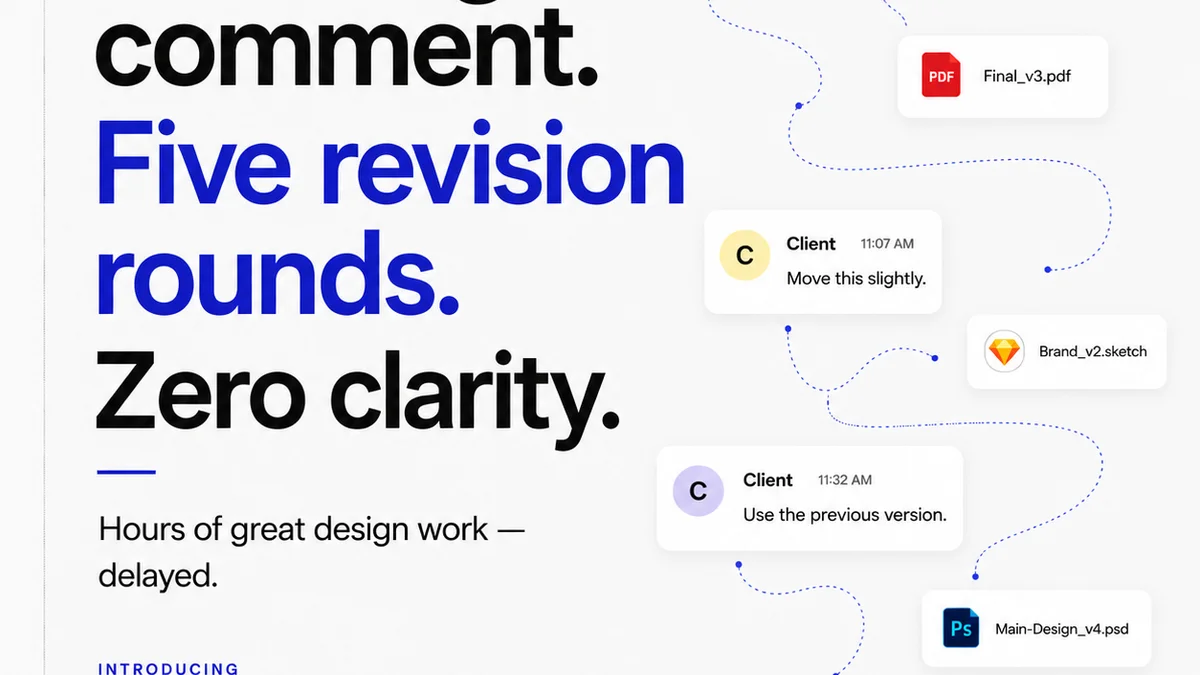
Everyone talks about the importance of a smooth design sign-off process. It’s the finish line, the handshake, the moment your project moves from creative flux to final delivery.
It’s often framed as a simple checklist: client sees design, client approves design, job done.
None of that is wrong. But it’s incomplete.
The hard truth is that a truly effective design sign-off isn't just about a final click. It’s the culmination of a series of deliberate, proactive steps taken throughout the entire project lifecycle. It’s about managing expectations, fostering clarity, and building trust from day one.
1. Define 'Done' Before You Start
The biggest bottleneck in any design sign-off process isn't the final review; it's the lack of clarity at the outset. You can’t get a meaningful sign-off if nobody agrees on what constitutes a successful outcome.
This means moving beyond vague statements like “make it pop” or “align with our brand.”
Establish Clear Objectives and KPIs
What should this design achieve? Is it increased conversion rates? Better brand recognition? Improved user engagement? Define these goals upfront.
Quantifiable objectives are your best friend. They provide a benchmark against which the final design can be objectively measured.
Document Scope and Deliverables Meticulously
What exactly is being designed? What are the specific assets? What are the technical constraints? What platforms will it live on?
Your Statement of Work (SOW) or project brief isn't just a formality. It's the blueprint. Refer back to it constantly.
Define the Approval Workflow
Who needs to approve what, and when? What are the decision-making roles?
This isn't just about listing names; it's about understanding their level of input and authority.
2. Integrate Feedback Loops Early and Often
The sign-off shouldn't be a surprise party for the client, or for you. By the time you reach the formal sign-off stage, the client should have a very clear idea of what to expect.
This requires building feedback and review into the process, not tacking it on at the end.
Staged Reviews
Break down the design process into logical stages: concept, wireframes, mockups, prototypes. Schedule review sessions for each stage.
This allows for course correction when it’s least expensive and easiest to implement.
Structured Feedback Guidelines
Don't just ask, “What do you think?” Provide specific prompts:
- Does this meet the objective of X?
- Is the call to action clear?
- Is the tone of voice consistent with the brand?
- Are there any technical limitations we need to address?
This guides clients toward constructive, actionable feedback rather than subjective opinions.
Centralize Communication
Scattered email chains and Slack messages are a recipe for missed feedback and miscommunication. All feedback should live in one place.
This ensures that all stakeholders are seeing the same version and the same comments.
3. Manage Client Expectations Proactively
Many sign-off delays stem from a mismatch between what the client expected and what they received. This often isn't malicious; it's a failure of communication.
Your role is to bridge that gap, consistently and clearly.
Onboarding and Kick-off
Use the project kick-off to set the stage. Discuss the process, timelines, and how feedback will be handled. Educate the client on what to expect at each stage.
This is your first opportunity to establish control and build confidence.
Educate on Design Principles
Clients aren’t designers. They might not understand why certain choices are made. Briefly explain the rationale behind design decisions, linking them back to the project objectives.
For example, explain why a certain layout improves usability or why a particular color palette enhances brand perception. This builds understanding and reduces arbitrary requests.
Boundaries on Revisions
Clearly define the number of revision rounds included in the project scope. Specify what constitutes a
Frequently asked questions
What is the most common mistake in the design sign-off process?
The most common mistake is treating the sign-off as a final step rather than a culmination of clear communication and iterative feedback throughout the project. This often leads to scope creep and unexpected revisions.
How can I ensure clients provide constructive feedback?
Provide structured feedback guidelines and specific questions at each review stage. This directs clients to assess the design against project objectives and usability, rather than offering purely subjective opinions.
What role does documentation play in design sign-off?
Documentation, such as the SOW or project brief, is crucial. It clearly defines scope, deliverables, and objectives, serving as a reference point to ensure the final design meets the agreed-upon criteria and to manage expectations regarding revisions.
How can agencies prepare clients for the sign-off process?
Prepare clients from the project's inception. Educate them on the design process, timelines, how feedback will be managed, and what constitutes a successful outcome. Clear onboarding and consistent communication are key.