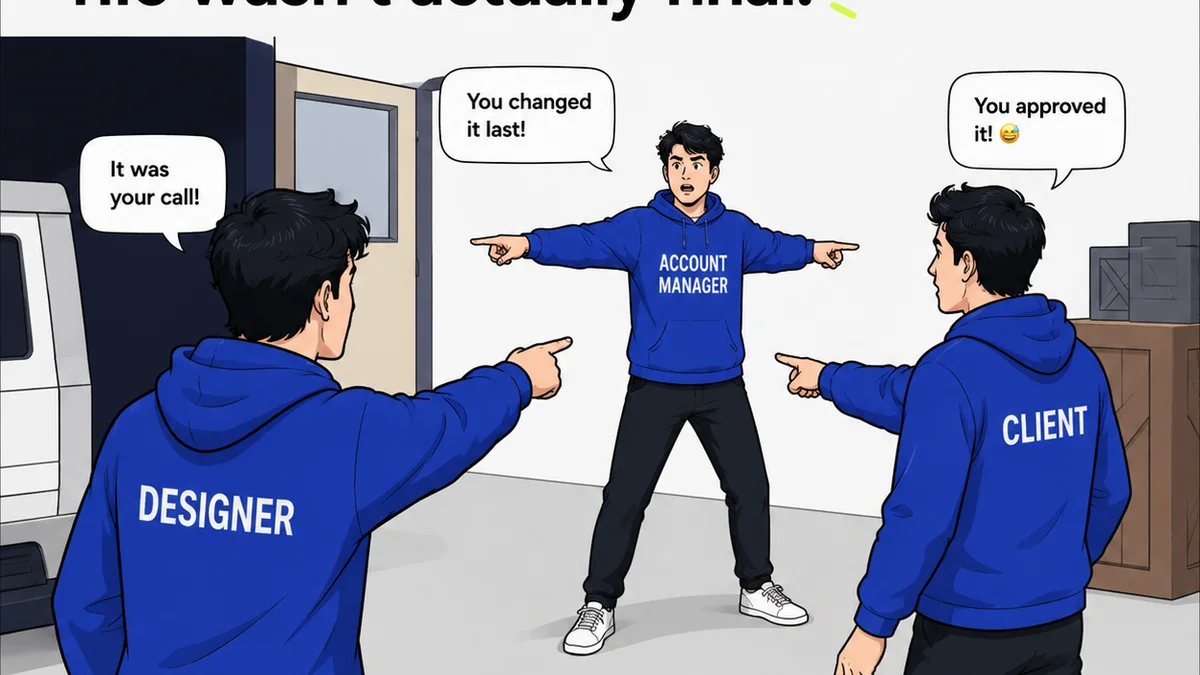
You think design version control is about naming files like `project_v1_final_approved_client_20231027.ai`. None of that is wrong. But it’s incomplete.
The hard truth? True design version control isn’t just about file names. It’s about process, communication, and visibility. It’s the invisible backbone that keeps your agency or team from devolving into chaos.
1. The Myth of the 'Final' File
We’ve all been there. A project is supposedly “done,” but then someone needs a small tweak. Or worse, a client asks for a revision based on an earlier concept. You dive into your folders, searching for the right starting point, only to find a graveyard of `_OLD`, `_REVISED`, and `_DO_NOT_USE` files. Which one is actually the last approved version?
This isn't just messy; it's a productivity killer. It breeds confusion and can lead to costly mistakes.
The Real Problem: Lack of a Single Source of Truth
Your file system is a mess because you lack a centralized, authoritative record of what’s been approved and what’s been worked on. Every file you save is a potential dead end.
2. Establishing a Clear Workflow
Effective version control starts before you even open your design software. It’s about defining how work moves from concept to completion.
Define Stages and Statuses
What are the clear stages of your design process? Examples:
- Concepting
- Drafting
- Internal Review
- Client Feedback
- Revisions
- Client Approval
- Final Delivery
Each stage needs a clear definition. What does it mean for a design to be in
Frequently asked questions
What is the most common mistake in design version control?
Relying solely on file naming conventions without a robust process for tracking approvals and revisions. This leads to confusion about which version is truly final or approved.
How can I prevent 'final_v3_really_final.psd' scenarios?
Implement a system that clearly marks approved versions, centralizes feedback, and archives previous iterations. Tools that automate version tracking are invaluable.
Does version control apply to different design file types?
Yes. Whether it's Adobe Creative Suite files, Figma, Sketch, or even exported JPEGs and PDFs, consistent versioning practices are crucial across all assets.
How does client feedback integrate with version control?
Client feedback should be captured systematically and linked to specific design versions. This ensures that revisions are based on documented requests and that the history is preserved.