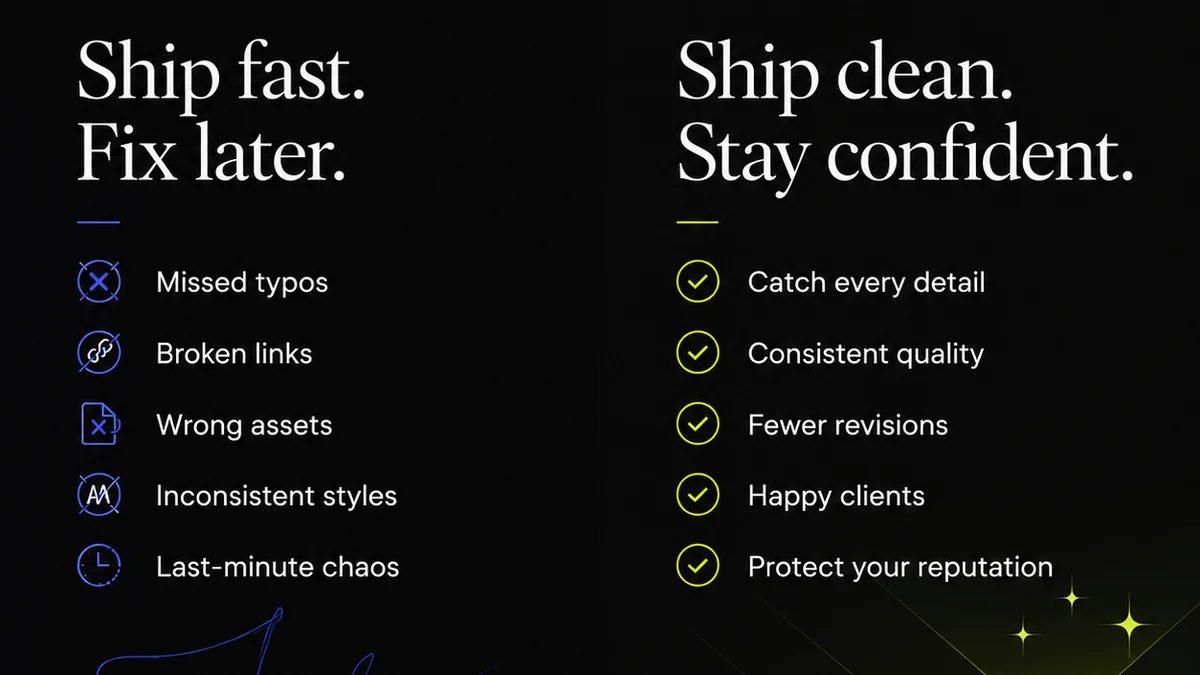
You think design version control is about meticulously naming files: project_v3_final_reallyfinal_johnsedit.ai. It feels organized. It feels safe.
None of that is wrong. But it’s incomplete.
The hard truth? File naming is a band-aid. Real design version control is about process, communication, and visibility. It’s the engine that keeps your creative projects moving, not just a filing system.
Let’s cut through the noise. This isn’t about hoarding files. It’s about clarity, accountability, and ultimately, shipping better work, faster.
1. The Illusion of Control: Why File Naming Fails
We’ve all been there. A client asks for a revision on logo_v7_clientapproved_final.psd. You open it, make a tweak, save it as logo_v8_clientapproved_final_revised.psd. Then someone else opens the original v7, makes a different tweak, and saves it as logo_v7_clientapproved_final_janeedit.psd.
Chaos.
This manual approach breeds confusion because:
- It relies entirely on human discipline.
- It doesn't track *why* changes were made.
- It offers no easy way to compare versions side-by-side.
- It’s impossible to see who made what change and when.
- It quickly becomes unmanageable on complex projects.
This isn't version control; it's version *clutter*.
2. Establishing a Single Source of Truth
The foundation of effective design version control is a single source of truth. This means one designated place where the current, active version of the design lives. Everything else is either a draft, a rejected concept, or a historical record.
This isn't just about the final output. It applies to every asset: wireframes, mockups, prototypes, and even copy. Consistency is key.
Defining
Frequently asked questions
What is design version control?
Design version control is a system for managing and tracking changes to design files throughout their lifecycle. It ensures that everyone on a team is working with the most current version, provides a history of revisions, and clarifies who made what changes and when.
Why is manual file naming not enough for version control?
Manual file naming (e.g., adding 'v2', 'final', 'edited') is prone to human error, lacks a clear audit trail, makes comparison difficult, and quickly becomes unmanageable. It creates clutter rather than control.
How can I implement a single source of truth for my design projects?
Designate a central platform (like cloud storage with versioning or a dedicated design management tool) where the primary, active design files reside. Establish clear protocols for saving, updating, and archiving older versions.
What are the benefits of good design version control?
Benefits include reduced errors, faster approval cycles, improved team collaboration, clearer accountability, easier rollback to previous versions if needed, and ultimately, a more efficient and less stressful creative process.