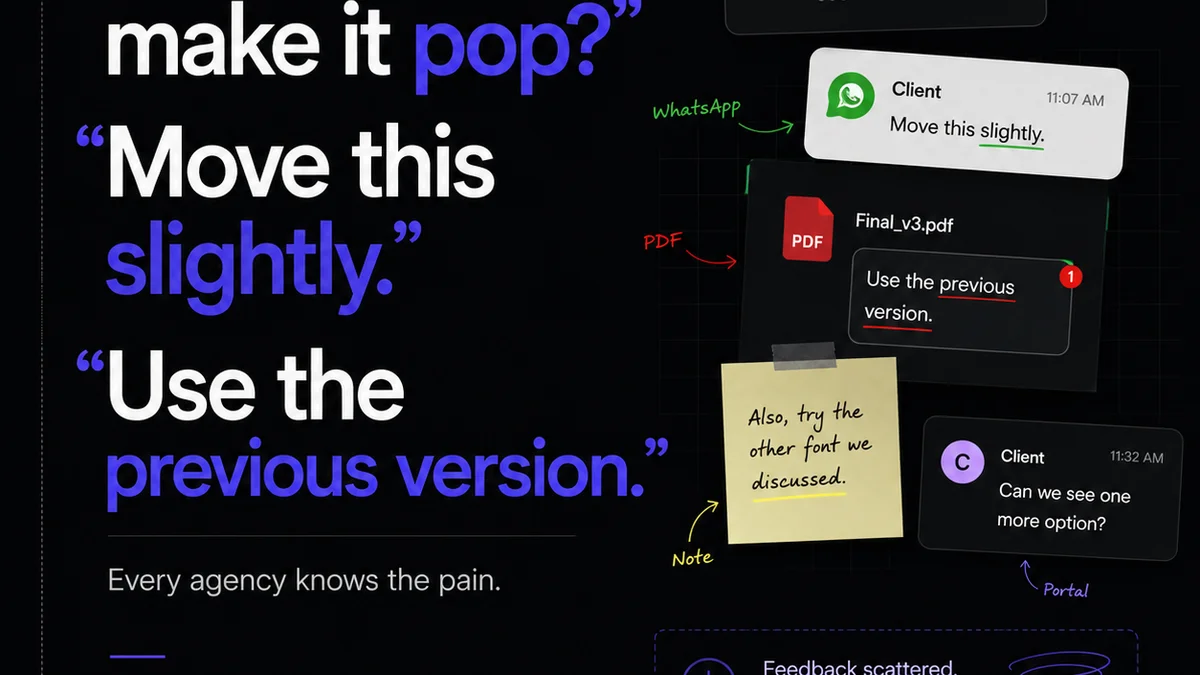
Everyone talks about design version control. They say it’s about tracking changes, reverting to old files, and preventing chaos. None of that is wrong. But it’s incomplete.
The hard truth is that true design version control is less about the software and more about the *process* and the *people*. It’s about creating a reliable, transparent system for managing creative work from brief to final delivery.
1. The Illusion of 'Saving As'
Many teams still rely on a convoluted system of 'Save As' folders, timestamped files, and gut feeling to manage design versions. ‘Final_v3_client_approved_really.psd’ is a common sight.
This approach is a ticking time bomb.
The Pitfalls of Manual Versioning
- Endless searching for the right file.
- Accidental overwrites of critical work.
- Lost client feedback embedded in email threads.
- No clear audit trail of decisions.
- Difficulty collaborating remotely.
It feels like control, but it’s a fragile illusion.
2. Beyond File Naming: Understanding the Workflow
Effective design version control is deeply intertwined with your entire creative workflow. It’s not an add-on; it’s a foundational element.
Where does a design truly live? It’s not just the PSD or AI file.
The Lifecycle of Creative Assets
- Briefing: The initial requirements and scope.
- Concepting: Early sketches and mood boards.
- Design Iteration: Drafts, revisions, and feedback rounds.
- Client Approvals: Formal sign-off points.
- Final Delivery: Packaged, ready-to-use assets.
- Archiving: Storing completed projects for future reference.
Each stage generates new versions and requires clear tracking. Ignoring this lifecycle means version control is just a superficial fix.
3. The Collaboration Conundrum
Creative work is rarely a solo act. Whether it’s an agency team or an in-house department, multiple people touch a project. This is where manual systems break down spectacularly.
How do you ensure everyone is working on the latest version?
Challenges in Team Collaboration
- Simultaneous Edits: Two designers working on the same file without knowing.
- Communication Gaps: Feedback missed or misinterpreted.
- Onboarding New Team Members: Disorienting them with a chaotic file structure.
- Remote Work Friction: Accessing and syncing files across different locations.
Git revolutionized code version control because it solved these exact problems for developers. Designers need similar robust solutions.
4. The Cost of Chaos
What’s the real cost of poor design version control? It’s more than just wasted time.
It’s missed deadlines. It’s unhappy clients. It’s burned-out teams.
Tangible Impacts of Inefficient Systems
- Project Delays: Time lost searching for files or redoing work.
- Budget Overruns: Extra hours billed due to inefficiency.
- Client Dissatisfaction: Frustration from unclear communication and slow progress.
- Team Burnout: Stress from constant firefighting and lack of clarity.
- Reputational Damage: Inconsistent quality or missed commitments.
These aren't abstract problems; they directly impact your bottom line and your team’s morale.
5. Where Revue Fits In
Managing design versions effectively requires more than just file storage. It demands a system that captures the entire revision and approval process.
Revue is built for this reality.
It centralizes client feedback, making it visible and actionable. No more hunting through emails or Slack messages for that one crucial comment.
Revue provides clear visibility into revision history and approval status. You always know where a project stands and who signed off on what, and when. This eliminates ambiguity and reduces the risk of working on outdated versions.
By providing a single source of truth for feedback and approvals, Revue streamlines the entire review cycle. This ensures quality checks are easier to perform and helps maintain consistency across projects.
6. Embracing a Proactive Approach
Switching from a reactive 'fix-it-as-it-breaks' mentality to a proactive system takes effort. But the rewards are substantial.
It means investing in tools and processes that support your team, not hinder them.
Key Elements of a Proactive System
- Centralized Communication: All feedback in one place.
- Clear Approval Workflows: Defined steps for sign-off.
- Version Tracking: Automatic or semi-automatic logging of changes.
- Asset Management: Organized storage and retrieval.
- Collaboration Tools: Features that facilitate teamwork.
This isn’t about adding complexity; it’s about removing friction.
Final Thought
Are you truly in control of your design versions, or are your files controlling you? The answer lies not in the software you use, but in the workflow you build around it. What’s one small change you can make today to improve your team’s design version control?
Frequently asked questions
What is design version control?
Design version control is a system for managing changes to design files over time. It allows teams to track revisions, revert to previous states, and collaborate more effectively by ensuring everyone works with the correct version of an asset.
Why is 'Save As' not enough for design version control?
'Save As' creates multiple, often unorganized, copies of files. This leads to confusion, lost feedback, accidental overwrites, and difficulty tracking the history of decisions, unlike dedicated version control systems that offer structured tracking and collaboration features.
How does version control impact team collaboration?
Effective version control prevents conflicts when multiple team members work on the same project by providing a clear history and a single source of truth. It reduces errors, speeds up feedback loops, and makes it easier for team members, especially remote ones, to stay synchronized.
Can tools like Revue help with design version control?
Yes, tools like Revue centralize client feedback and provide visibility into revision history and approval status. While not a file-level version control system like Git, Revue manages the crucial communication and approval aspects of the design lifecycle, which are integral to effective version management.