Everyone talks about the tools that enable distributed design teams: Slack, Figma, Zoom, Miro. The assumption is that if you have the right tech stack, your remote or hybrid team will naturally hum along. None of that is wrong. But it’s incomplete.
The real challenge isn’t the technology; it’s the deliberate architecture of your team’s workflow and communication. Without it, even the best tools become just more noise in a chaotic remote setup. This is the hard truth: successful distributed design teams are built, not just enabled.
Let’s break down how to build one.
1. Intentional Communication over Constant Connection
The biggest trap for distributed teams is mistaking constant availability for effective communication. Just because someone is online doesn’t mean they’re available, or that you need to interrupt them.
Async-first thinking is your superpower here. It forces clarity and reduces friction. Instead of expecting immediate Slack responses, encourage detailed briefs, well-documented decisions, and thoughtful feedback delivered in shared spaces.
Define Your Channels and Cadence
Not every message needs a meeting. Not every thought needs an immediate reply.
- Urgent (Real-time): Critical blockers that halt progress for multiple people. Use direct messages or a dedicated urgent channel. Limit use.
- Important (Asynchronous): Project updates, design feedback, questions that require thoughtful answers. Use project management tools, email, or dedicated discussion threads.
- Informational (Broadcast): Company news, general announcements, non-urgent updates. Use team-wide channels or newsletters.
Establish clear expectations for response times. If a designer needs 24 hours to respond to feedback, state it. This isn’t about being slow; it’s about allowing deep work and preventing context switching.
The Art of the Written Brief
A poorly written brief is the enemy of distributed design. It’s the source of endless back-and-forth, misunderstood requirements, and wasted revisions. Invest time in crafting crystal-clear briefs that anticipate questions.
Include:
- Project goals and desired outcomes.
- Target audience and their needs.
- Key deliverables and scope.
- Brand guidelines and technical constraints.
- Examples of what success looks like (and what to avoid).
This documentation becomes the single source of truth, accessible to everyone, anytime. It’s the foundation of effective asynchronous collaboration.
2. Structured Feedback Loops
Feedback is the lifeblood of design, but in a distributed setting, it can easily become a bottleneck or a source of confusion. Casual hallway chats or quick “what do you think?” Slack messages don’t translate well.
You need a system. A system that ensures feedback is clear, actionable, and tracked.
Centralize, Don’t Scatter
Client feedback, stakeholder input, internal reviews – it all needs a home. When feedback is scattered across emails, Slack threads, and random documents, it’s impossible to manage. You lose context, miss crucial points, and introduce errors.
This is where a dedicated platform for creative review and approval makes a difference. It ensures all comments are in one place, linked to specific design elements, and visible to the relevant parties. No more hunting for that one crucial comment buried in an old email chain.
Actionable, Not Emotional
Train your team and your clients on how to give effective feedback. Vague comments like “I don’t like it” or “Make it pop” are useless.
Good feedback:
- Is specific and references the brief.
- Explains the ‘why’ behind the suggestion.
- Offers concrete alternatives or solutions.
- Distinguishes between subjective preference and objective requirements.
For clients, this means educating them on what constructive criticism looks like. For internal teams, it means fostering a culture where feedback is seen as a collaborative tool, not a personal critique.
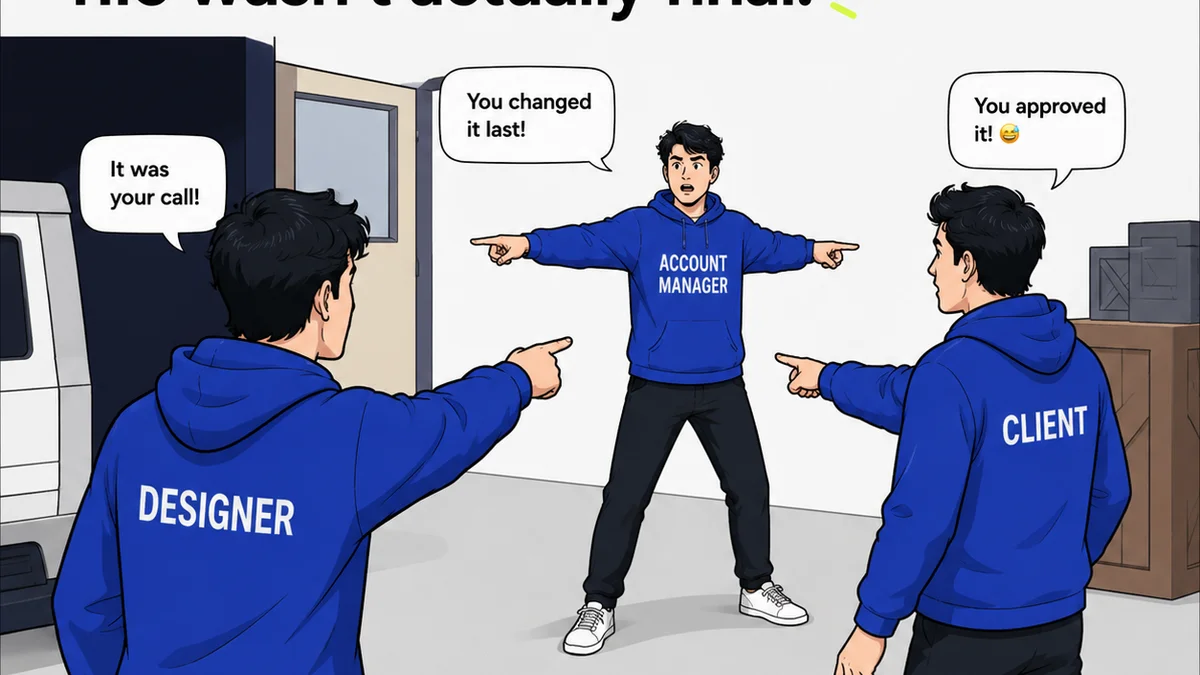
Clear Revision and Approval Workflows
What happens after feedback is given? This is where many distributed teams stumble. Without clear stages and ownership, projects languish.
Define:
- Who gives feedback?
- Who consolidates feedback?
- Who makes the final decision?
- What are the revision rounds?
- How is final approval secured?
Visibility is key. Everyone involved should know the status of a design: Is it in review? Awaiting feedback? In revision? Approved?
3. The Power of Asynchronous Design Critiques
The traditional in-person design critique is a sacred ritual for many agencies. It’s where ideas are sharpened, and designers learn from each other. Replicating this online requires intention.
Don’t just hop on a Zoom call and hope for the best. Structure your asynchronous critiques.
Document Everything
Before a critique session (even an asynchronous one), require designers to document their work. This includes:
- The problem statement they are solving.
- Their design decisions and rationale.
- Specific areas where they are seeking input.
- Potential risks or unknowns.
This written context is vital for team members who might be in different time zones or have different working hours.
Structured Feedback Channels
Use a tool where comments can be threaded and organized. Each piece of feedback should ideally link back to the specific design element it refers to. This prevents misinterpretation and makes it easy to track responses.
Consider a template for feedback:
- Observation: What do you see? (e.g., “The button contrast appears low.”)
- Interpretation: What might this mean? (e.g., “This could impact accessibility for users with visual impairments.”)
- Suggestion: What could be done? (e.g., “Consider increasing the contrast ratio to meet WCAG AA standards.”)
This framework moves the conversation from subjective opinion to objective problem-solving.
Scheduled Synchronous Check-ins
While async is king, don’t eliminate synchronous interaction entirely. Schedule regular, focused syncs for high-level discussions, unblocking critical issues, or building team cohesion. These are not for detailed feedback review, but for strategic alignment and connection.
4. Quality Assurance: A Distributed Necessity
Ensuring quality across multiple locations and time zones is a significant challenge. What looks good on one screen might be broken on another, or missed entirely by a reviewer working late.
QA needs to be a baked-in process, not an afterthought.
Automate Where Possible
Leverage tools that can automatically check for common issues:
- Code linters and formatters.
- Automated accessibility checkers (though human oversight is still crucial).
- Visual regression testing tools.
These tools catch obvious errors consistently, freeing up human reviewers for more nuanced checks. Think of them as your first line of defense.
Checklists Are Your Friends
Develop comprehensive QA checklists tailored to your projects. These should cover:
- Functional testing across devices and browsers.
- Usability and user flow.
- Accessibility standards (e.g., WCAG compliance).
- Brand consistency.
- Content accuracy and typos.
- Performance metrics.
Make these checklists easily accessible and require sign-off at key stages. This ensures a standardized approach to quality, regardless of who is performing the check.
Cross-Functional Reviews
In a distributed environment, having designers review their own work can lead to blind spots. Implement peer reviews and cross-functional reviews. Have developers check designs for technical feasibility, copywriters review content integration, and QA specialists conduct thorough testing.
5. Building Culture and Connection Remotely
Tools and processes are essential, but they don’t build culture. Culture is built through intention, shared values, and consistent effort, especially when everyone isn’t sharing the same physical space.
Onboarding is Crucial
A robust onboarding process is non-negotiable for distributed teams. New hires need to understand not just the tools, but the team’s communication norms, workflows, and cultural values.
This includes:
- Clear documentation of processes and expectations.
- Introductions to key team members across different functions.
- Mentorship or buddy systems.
- Regular check-ins during the initial weeks.
A strong start prevents early misunderstandings and sets the tone for long-term success.
Foster Social Connection
Don’t let work be the only interaction. Intentionally create opportunities for informal connection.
- Virtual coffee breaks.
- Non-work-related Slack channels (e.g., #pets, #hobbies, #random).
- Online team games or social events.
- Encourage sharing personal wins or interesting finds.
These small moments build rapport and trust, which are the bedrock of any high-performing team, remote or not.
Recognize and Celebrate
Publicly acknowledge good work and contributions. In a distributed setting, achievements can sometimes go unnoticed. Make an effort to highlight successes in team meetings, newsletters, or dedicated recognition channels.
Where Revue Fits In
Managing feedback, revisions, and approvals for distributed teams can become a complex juggling act. Scattered comments, missed updates, and unclear ownership lead to delays and frustration.
Revue provides a centralized platform designed to streamline this exact process. Instead of digging through emails or Slack, all feedback, discussions, and approval statuses live in one accessible place, directly on your creative assets.
This means:
- Centralized Feedback: All client and stakeholder comments are consolidated and organized, linked to specific versions and elements.
- Clear Revision Tracking: Easily see the history of changes, who made them, and what feedback they addressed.
- Streamlined Approvals: Define clear approval workflows and get explicit sign-offs, reducing ambiguity.
- Enhanced Visibility: Everyone on the team and all clients have a single source of truth for project status, reducing the need for constant status update meetings.
By bringing structure to creative collaboration, Revue helps distributed teams maintain momentum and deliver high-quality work without the usual remote chaos.
Final Thought
The future of creative work is undeniably distributed. The agencies and in-house teams that thrive won’t be the ones with the fanciest tools, but the ones who master the art of intentional process and communication. Are you building for resilience, or just hoping for the best?
Frequently asked questions
What is the biggest challenge for distributed design teams?
The biggest challenge is often not the technology, but the lack of intentional processes for communication, feedback, and workflow management. Without these, even the best tools can lead to chaos and inefficiency.
How can distributed teams ensure clear communication?
Embrace an 'async-first' approach. Define clear communication channels for different types of messages (urgent, important, informational), set response time expectations, and prioritize detailed written briefs and documentation over immediate, synchronous interactions.
What makes feedback effective in a distributed design setting?
Feedback must be specific, actionable, and documented. Train teams and clients to explain the 'why' behind suggestions and to distinguish between subjective preferences and objective requirements. Centralizing feedback in a dedicated platform prevents loss of context and ensures all input is tracked.
How can distributed teams maintain design quality?
Implement structured QA processes. Utilize automated checks where possible, develop comprehensive checklists for functional and usability testing, and conduct cross-functional peer reviews to catch errors and ensure consistency across different environments and perspectives.
Is synchronous communication still important for distributed teams?
Yes, but it should be used intentionally. While asynchronous communication is key for deep work and flexibility, scheduled synchronous meetings are valuable for strategic alignment, unblocking critical issues, and building team cohesion. These should complement, not replace, async workflows.