Everyone wants the ‘best’ project management service. You see the ads, read the reviews, and hear the buzzwords: AI-powered workflows, seamless integrations, real-time collaboration. It all sounds great. None of that is wrong. But it’s incomplete.
The hard truth? Most project management tools offer a buffet of features. Your agency doesn’t need a buffet. It needs a curated menu that solves your specific pain points. The best project management services aren’t about having the most features; they’re about having the *right* features, implemented effectively to drive clarity, control, and client confidence.
1. The Illusion of Integration
Integration is king, right? Connect your CRM, your accounting software, your design tools. Theoretically, this creates a seamless flow of information. In reality, it often creates more complexity.
Think about it. How many of those integrations are truly used? How many are clunky workarounds? How many create duplicate data or require manual syncing anyway?
The obsession with a million integrations distracts from a more critical need: a centralized source of truth for your creative projects. A system that doesn’t require constant toggling between tabs or copy-pasting data is worth more than ten half-baked integrations.
The Real Integration Goal
- Contextual Information: Can you see client feedback, design files, and approval status all in one place, related to the specific task or deliverable?
- Reduced Friction: Does the system minimize the need to switch tools for core project tasks?
- Data Integrity: Is information consistent across the platform, reducing errors from manual transfers?
2. Feedback Chaos: The Client's (and Your) Nightmare
Client feedback. It's the lifeblood of creative work, but also the primary source of project derailment. Emails buried in inboxes, Slack messages lost in the stream, scribbled notes on printouts – it's a recipe for disaster.
Many project management tools treat feedback as an afterthought. They might have a comment section, but it’s often disconnected from the actual creative asset. This disconnect leads to:
- Misinterpretation of feedback
- Missed revisions
- Endless back-and-forth emails
- Frustrated clients and teams
- Scope creep disguised as 'clarifications'
The best project management services tackle feedback head-on. They provide a clear, visual, and contextual way for clients to provide input, and for your team to track and act on it.
What Effective Feedback Management Looks Like
- Visual Annotation: Ability to comment directly on images, PDFs, or videos.
- Centralized Communication: All feedback tied to a specific asset or task, not lost in email threads.
- Version Control: Clear tracking of revisions based on specific feedback.
- Approval Workflows: Defined steps for sign-off, ensuring everyone is aligned.
3. Visibility: Who's Doing What, By When?
A common assumption is that if a task is in a system, everyone knows what’s happening. That’s a dangerous assumption.
True visibility isn't just about having a Gantt chart or a Kanban board. It's about understanding capacity, bottlenecks, and progress in real-time. It’s about knowing who owns what, what the dependencies are, and what the actual status is – not just what someone *thinks* it is.
The Visibility Gap in Many Tools
- Task Overload: Team members assigned too many tasks without clear prioritization.
- Hidden Dependencies: Work being blocked because a prerequisite task isn't complete, but no one flagged it.
- Status Ambiguity: Tasks marked 'in progress' when they're actually stalled or waiting for input.
- Lack of Resource Insight: Inability to see who is over-allocated or under-utilized.
Effective project management services offer granular control and clear reporting. They help you see the forest *and* the trees.
4. The Approval Bottleneck
Approvals. They’re necessary, but they can also be the slowest part of any creative project. Waiting for that final sign-off can bring everything to a standstill.
Many systems treat approvals as a simple button click. But what happens before and after? Is there a clear audit trail? Can stakeholders easily see what they’re approving? Can you easily nudge them when time is running out?
The best services streamline this entire process. They clarify who needs to approve what, provide context for the approval, and track the status transparently.
Key Approval Features to Look For
- Defined Approval Chains: Setting up sequential or parallel approvers.
- Clear Status Tracking: Easily see if a deliverable is pending, approved, or rejected.
- Automated Reminders: Gentle nudges for approvers who are lagging.
- Version History: Ensuring approvers are looking at the latest, correct version.
5. Quality Control: The Unsung Hero
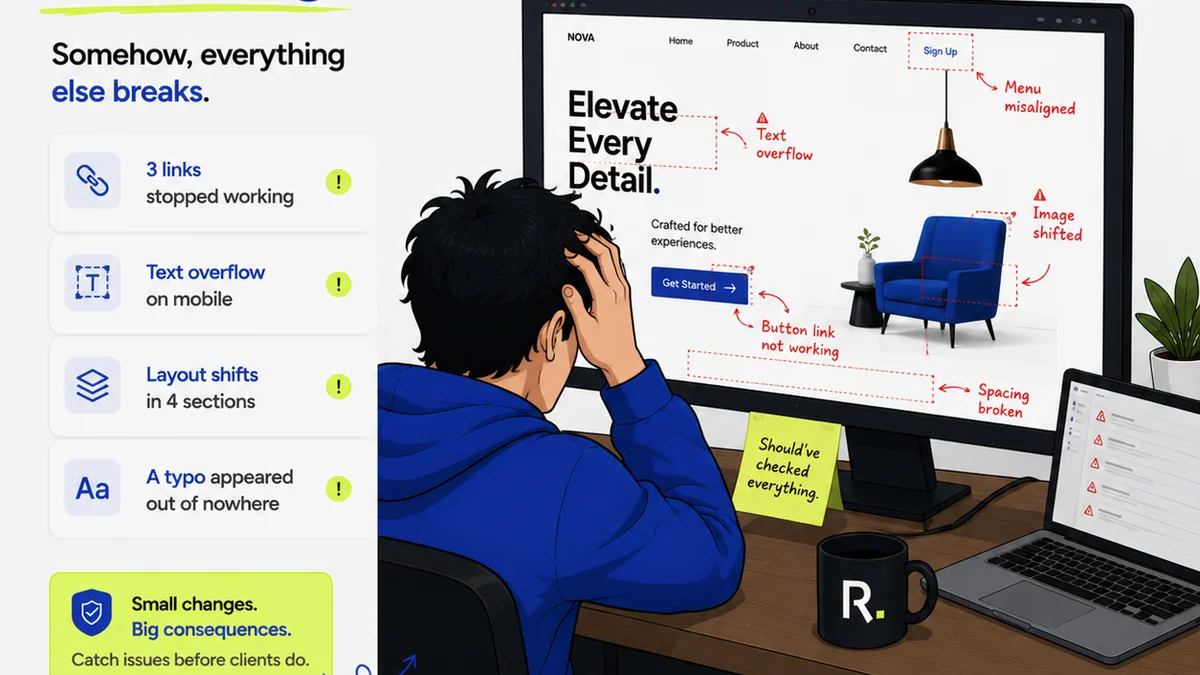
This is where many agencies truly fall short. They focus on getting the work *done* and *approved*, but miss the final crucial step: a robust quality check.
What constitutes a quality check? It’s not just a final glance. It’s ensuring:
- All client feedback has been addressed correctly.
- All specs and requirements have been met.
- The deliverable meets internal standards.
- There are no technical glitches or errors.
A project management service that facilitates this final gate before delivery is invaluable. It prevents costly mistakes and protects your agency's reputation.
Where Revue Fits In
You're juggling client feedback, managing revisions, and chasing approvals. It's a complex dance, and many tools add to the chaos instead of reducing it.
Revue is built for this reality. We focus on the core needs of creative agencies and design teams:
- Centralized Feedback: Bring all client comments, markups, and discussions into one place, directly linked to the creative assets. No more hunting through emails or Slack.
- Revision & Approval Visibility: Clearly track every version, every revision, and every approval status. Know exactly where a project stands and who needs to act next.
- Quality Control Checkpoints: Implement final review stages to ensure everything is perfect before it goes to the client or is marked as complete.
We don't overload you with unnecessary features. We provide the critical tools to manage feedback, streamline approvals, and maintain quality, giving you control and confidence.
Final Thought
The 'best' project management service isn't a mythical unicorn. It's the one that aligns with your agency's specific workflow, simplifies complexity, and fosters clear communication – both internally and with your clients.
Are you optimizing for features, or for clarity and control?
Frequently asked questions
What is the most important factor in choosing a project management service for a creative agency?
The most important factor is how well the service addresses your specific workflow pain points, particularly around client feedback, revision tracking, and approval management. A tool that centralizes these critical functions and provides clear visibility will be far more effective than one with a plethora of unused features.
How can project management services improve client communication?
Effective services improve client communication by providing a single, transparent platform for feedback and approvals. This eliminates confusion, reduces the risk of missed information from scattered emails or messages, and ensures clients see exactly what they are approving, leading to greater confidence and fewer misunderstandings.
Is extensive integration with other tools always necessary for project management?
Not necessarily. While some integrations can be helpful, the focus should be on a 'source of truth' within the project management tool itself. Too many integrations can create complexity and data silos. Prioritize a tool that handles core project needs exceptionally well, rather than one that merely connects to many others imperfectly.
How does a project management service help with quality control?
A good project management service facilitates quality control by providing structured workflows for final reviews and approvals. It ensures that all client feedback has been addressed, internal standards are met, and all requirements are fulfilled before a project is marked as complete or delivered, acting as a crucial gatekeeping mechanism.