Everyone talks about enterprise agency management. They throw around terms like ‘synergy,’ ‘streamlining,’ and ‘integrated workflows.’ It sounds impressive. It sounds like the future.
None of that is wrong. But it’s incomplete.
The hard truth is that sophisticated enterprise agency management isn't about adopting the latest jargon. It’s about relentlessly solving the fundamental, often unglamorous, operational challenges that plague large creative teams. It’s about making the complex simple, day in and day out.
1. Visibility Is Not Insight
You think you have visibility into your projects because you use a project management tool. Maybe it’s a Gantt chart. Maybe it’s a Kanban board. Maybe it’s a sprawling spreadsheet.
This gives you a snapshot. A surface-level view of who is doing what. But does it tell you *why* a project is stuck? Does it highlight where the bottlenecks truly are, or just where the tasks are sitting?
True visibility means understanding the flow. It means seeing:
- Where feedback is getting lost.
- Which revision cycles are taking too long.
- When quality checks are being skipped or rushed.
- The true cost of rework due to unclear direction.
Without this deeper layer, you’re just watching a clock tick. You’re not understanding the mechanism.
The Illusion of Control
Many enterprise agencies believe that having a centralized system equals control. They invest in expensive software, implement rigid processes, and expect magic. The reality is often different.
If the system doesn’t account for the human element—the nuances of creative feedback, the pressure of deadlines, the reality of team dynamics—it will fail.
2. The Feedback Feedback Loop is Broken
Creative feedback is the lifeblood of any agency. Yet, it’s often the biggest source of friction and delay in enterprise settings.
Think about it. Where does feedback typically live?
- Scattered across dozens of email threads.
- Buried in Slack messages.
- Scribbled on printouts.
- Verbal notes that are forgotten or misinterpreted.
This fragmented approach leads to:
- Misunderstandings and missed revisions.
- Endless back-and-forth.
- Client frustration.
- Team burnout.
You can’t manage what you can’t track. And when feedback is a wild goose chase, you’re not managing anything effectively.
The Cost of Ambiguity
Ambiguous or conflicting feedback is a project killer. It forces teams to guess, to iterate blindly, and to waste valuable hours on work that will ultimately be scrapped. This isn't just inefficient; it’s demoralizing.
3. Revision Hell is a Process Problem, Not a People Problem
It’s easy to blame individuals for slow revision cycles. “So-and-so is holding things up.” “They’re not managing their time well.”
But the truth is usually systemic. The real culprit is often a lack of clear process for:
- Requesting revisions.
- Tracking revision history.
- Getting consolidated, actionable feedback.
- Approving final assets.
When these steps are haphazard, your team spends more time deciphering requests than doing creative work.
The Approval Bottleneck
Approvals are critical. But in large organizations, they can become a significant bottleneck. Multiple stakeholders, differing opinions, and a lack of clear decision-making authority can grind projects to a halt.
This isn’t about laziness; it’s about a lack of structured workflow for ensuring the right people see the right work at the right time, with clear instructions on what’s needed from them.
4. Quality Control is an Afterthought
For many agencies, quality control (QC) happens in a panic. It’s the last-minute check before delivery, often rushed and incomplete.
This is a dangerous game.
What does a proper QC process involve?
- Brand guideline adherence.
- Technical specifications (file formats, dimensions, resolution).
- Accessibility standards (like those outlined by the WCAG).
- Cross-platform consistency.
- Proofreading and error checking.
When QC is an afterthought, errors slip through. This damages your agency’s reputation and can lead to costly redos or client dissatisfaction.
The Ripple Effect of Rushed QC
Skipping or rushing QC might save a few hours upfront, but the downstream costs can be immense. Revisions, client complaints, and damage to your agency’s credibility are far more expensive than a structured QC process.
5. Tools are Only as Good as Their Integration
Enterprise agencies often have a buffet of tools. Project management software, communication platforms, design suites, DAMs, and more. The assumption is that more tools mean better capability.
But if these tools don’t talk to each other, they create more silos, not fewer.
Consider the data flow:
- Does feedback from a client review tool automatically update the task in your PM system?
- Can designers easily access the latest approved assets from the DAM?
- Is there a clear audit trail from brief to final delivery?
Disconnected tools force manual data entry, increase the risk of errors, and create frustrating workarounds for your team.
The Ecosystem Approach
The goal isn't just to have tools, but to have an integrated ecosystem. A place where information flows seamlessly, reducing friction and maximizing efficiency. This requires careful consideration of how each tool supports the overall workflow, not just its standalone features.
Where Revue Fits In
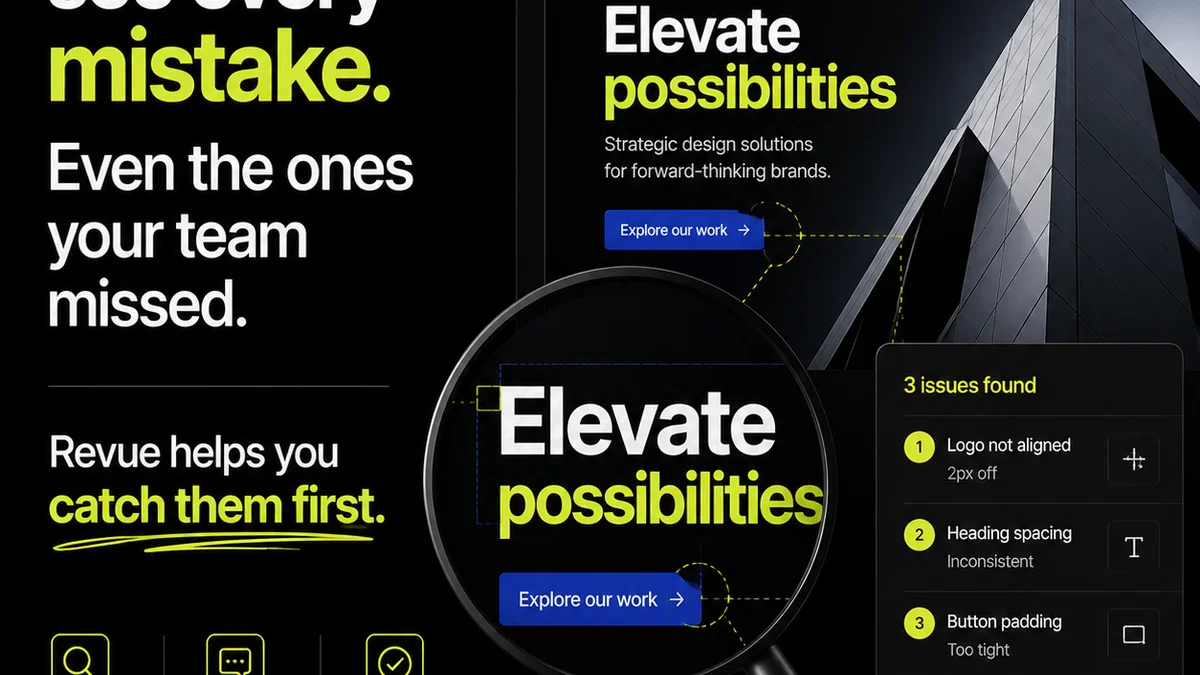
This is where a platform like Revue becomes critical for enterprise agency management. It’s built to address these core operational challenges head-on.
Revue centralizes client feedback, so no more hunting through endless email chains or Slack messages. All comments, annotations, and approvals are in one place, tied directly to the creative asset.
This provides unparalleled visibility into the revision and approval process. You can see exactly who provided feedback, what it was, and when it was actioned. This eliminates ambiguity and speeds up cycles.
Furthermore, Revue streamlines quality checks. By having a clear, documented history of feedback and approvals, you create a robust audit trail. This makes it easier to ensure that all requirements are met before final delivery, reducing errors and improving client satisfaction.
It connects the dots between feedback, revisions, and final sign-off, turning chaos into clarity. This allows your teams to focus on what they do best: creating exceptional work.
Final Thought
Enterprise agency management isn't about implementing a single, silver-bullet solution. It's about a continuous, deliberate effort to refine your operational processes. It’s about understanding the friction points your teams face and systematically removing them.
Are you truly managing your agency’s operations, or are you just managing tasks?
Frequently asked questions
What are the biggest challenges in enterprise agency management?
The biggest challenges often stem from fragmented client feedback, inefficient revision and approval processes, a lack of visibility into project status, and inconsistent quality control. These issues lead to delays, increased costs, and team frustration.
How can agencies improve client feedback processes?
Agencies can improve client feedback by centralizing all communication and annotations in a single platform. This ensures feedback is clear, actionable, and easily traceable, reducing misunderstandings and the need for constant back-and-forth.
What is the role of technology in enterprise agency management?
Technology plays a crucial role by providing platforms for centralized feedback, streamlined revisions, clear approvals, and automated quality checks. However, tools must be integrated and support the actual workflow, not create more complexity.
How does Revue help manage enterprise creative workflows?
Revue centralizes client feedback, provides clear revision and approval tracking, and facilitates quality control by creating a single source of truth for all project communication and sign-offs. This reduces errors and speeds up delivery.