Everyone talks about enterprise creative collaboration. They point to slick dashboards, real-time editing, and endless integrations. It sounds like a magic bullet for agency chaos.
None of that is wrong. But it’s incomplete.
The hard truth is that the best tools in the world won't fix broken processes. Enterprise creative collaboration isn't about the software; it's about the people, the communication, and the systems that support them. Get those right, and the tools become powerful accelerators. Get them wrong, and they're just expensive distractions.
1. Defining the 'Enterprise' in Creative Collaboration
When we say 'enterprise,' we're not just talking about headcount. We mean complexity. Multiple teams, diverse stakeholders, global reach, stringent compliance, and often, deeply entrenched legacy systems.
This isn't a small startup sharing a Figma file. This is about coordinating work across departments, continents, and established hierarchies. The stakes are higher, the approval chains longer, and the potential for miscommunication exponentially greater.
The Stakes Are Higher
Misaligned feedback on a single campaign can cost millions. A missed compliance check can lead to legal trouble. A delayed launch can impact quarterly earnings.
In an enterprise setting, creative collaboration directly impacts the bottom line and brand reputation. It demands a level of rigor and control that scrappy startups can often afford to skip.
The Communication Gap
Consider the sheer volume of communication:
- Internal team syncs
- Client status meetings
- Stakeholder reviews
- Legal and compliance checks
- Agency partner briefings
- Cross-departmental alignment sessions
Each interaction is an opportunity for information to get lost, misinterpreted, or simply forgotten. Without a system, it’s a game of telephone played at a global scale.
2. The Illusion of 'Centralization'
Many solutions promise to centralize feedback and approvals. They offer a single source of truth. That sounds great on paper.
But true centralization isn't just about a single dashboard. It's about a *single, unambiguous understanding* of what needs to be done, by whom, and to what standard.
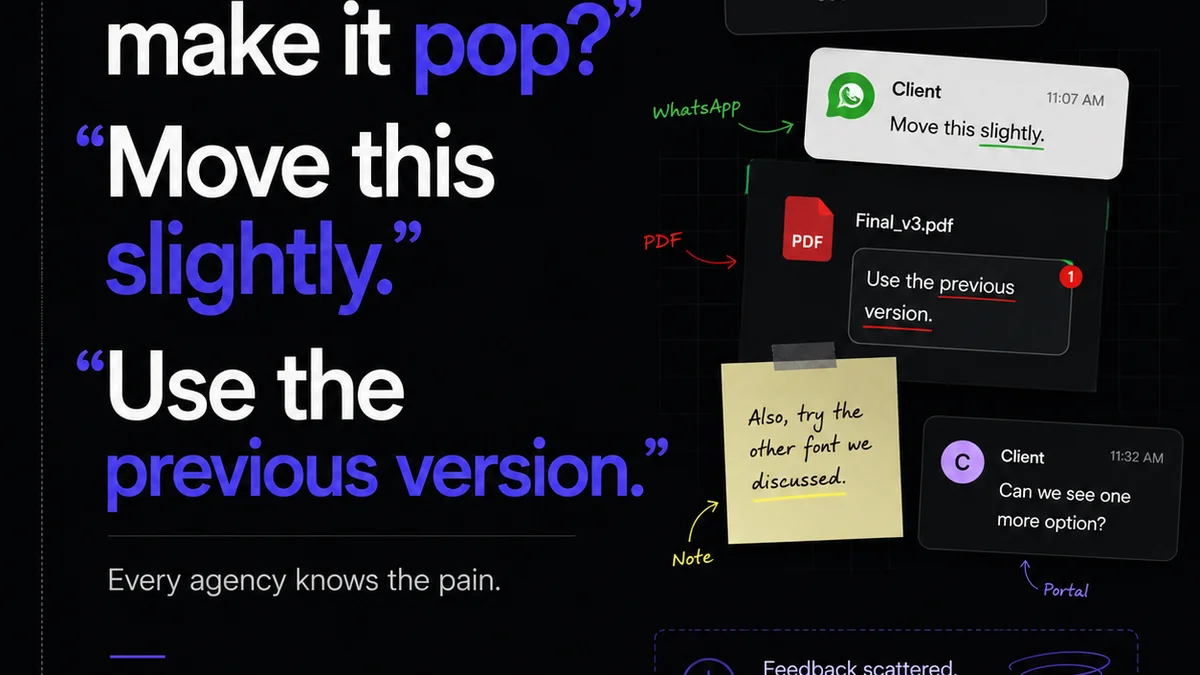
Too often, 'centralized' platforms become dumping grounds for uncontextualized comments. What does 'make it pop' actually mean when it comes from three different VPs, none of whom are on the core creative team?
Context is King
Feedback needs context. Who is giving it? What is their role and authority? What specific deliverable are they commenting on? What was the brief for this piece?
Without this, comments become noise. Valuable time is wasted deciphering vague suggestions or chasing down the source of a conflicting opinion.
The Approval Bottleneck
A centralized system is only as good as its approval workflow. If approvals are still happening via scattered email chains or hallway conversations, the system fails.
This leads to:
- Endless revision cycles
- Missed deadlines
- Frustrated creatives
- Uncertainty about final sign-off
The goal isn't just to collect approvals in one place; it's to make the *process* of approval clear, efficient, and auditable.
3. Building Blocks of Effective Collaboration Systems
Forget the shiny features for a moment. Let's talk about the foundational elements of enterprise creative collaboration.
Clarity of Roles and Responsibilities
Who is the final decision-maker? Who provides input? Who needs to be informed? This must be crystal clear for every project and every deliverable.
Use RACI charts (Responsible, Accountable, Consulted, Informed) as a starting point. But more importantly, ensure everyone understands their role in the context of the specific project.
Standardized Briefing and Intake
Every project starts with a brief. If your briefs are inconsistent, vague, or incomplete, the collaboration will be too.
Standardize your creative brief template. Ensure it captures:
- Project goals
- Target audience
- Key messages
- Mandatories (legal, brand, technical)
- Deliverables
- Timeline and key milestones
- Budget
- Stakeholders and approval contacts
This isn't busywork; it's the bedrock of alignment.
Defined Feedback Loops
Not all feedback is created equal. Establish clear guidelines for feedback:
- When should feedback be given?
- Who should give it?
- What format should it take? (e.g., annotations on the asset, structured comments)
- How should conflicting feedback be resolved?
This prevents subjective opinions from derailing objective goals.
Version Control and Audit Trails
In an enterprise, knowing which version is the *final* version is critical. So is knowing who approved what, and when.
A robust system tracks revisions, maintains a history, and provides an auditable record. This protects everyone and provides invaluable insights into project evolution.
4. The Human Element: Culture and Process
Technology can facilitate, but it cannot dictate culture. Effective collaboration requires a shift in mindset and a commitment to process.
Foster Psychological Safety
Team members need to feel safe to voice concerns, ask clarifying questions, and even disagree respectfully without fear of retribution.
This is especially important in enterprise settings where hierarchy can stifle open communication. Leadership must champion an environment where constructive debate is encouraged.
Embrace Asynchronous Workflows
Not everyone can be in the same meeting at the same time, especially across different time zones. Asynchronous collaboration tools and processes are essential.
This means clear documentation, well-defined tasks, and systems that allow people to contribute effectively on their own schedule. Think detailed comments, clear task assignments, and recorded walkthroughs.
Train and Reinforce
New tools and processes require training. But more importantly, they require ongoing reinforcement.
Regularly revisit workflows, solicit feedback on what’s working and what’s not, and provide refresher training or guidance. Make collaboration best practices part of your team’s DNA.
Where Revue Fits In
Enterprise creative collaboration is a complex beast. It requires a platform that understands the nuances of agency and in-house workflows.
Revue provides that clarity. It’s built to centralize client feedback, making it actionable and contextual. No more digging through endless email threads or Slack channels for that one crucial comment.
Revue helps manage revisions and approvals with clear visibility. You can track the status of every asset, see who has reviewed it, and understand the approval history. This streamlines the process, reduces bottlenecks, and ensures everyone is working from the latest, approved version.
And by bringing structure to feedback and approvals, Revue inherently supports quality checks. When the process is clear and documented, it's easier to identify deviations from the brief or standards.
It’s about bringing order to the creative chaos, so your teams can focus on what they do best: creating great work.
Final Thought
The pursuit of perfect enterprise creative collaboration is ongoing. It's a blend of the right technology, rigorous processes, and a culture that values clarity and respect.
Are you investing more in software than in the systems and culture that make collaboration work? Perhaps it's time to re-evaluate where your real challenges lie.
Frequently asked questions
What is the biggest misconception about enterprise creative collaboration?
The biggest misconception is that simply adopting new software will solve collaboration problems. True enterprise creative collaboration relies heavily on well-defined processes, clear communication protocols, and a supportive team culture, with technology acting as an enabler rather than a sole solution.
How can I improve feedback quality in a large organization?
Improve feedback quality by establishing clear guidelines for who provides feedback, when, and in what format. Ensure feedback is contextual, tied to specific project goals and deliverables, and that there's a defined process for resolving conflicting input. Standardized creative briefs are also crucial.
What are the key components of an effective creative collaboration system?
Key components include clarity of roles and responsibilities (like RACI), standardized briefing and intake processes, defined feedback loops, robust version control, and auditable trails for revisions and approvals. A culture that fosters psychological safety is also vital.
How does asynchronous collaboration benefit enterprise teams?
Asynchronous collaboration benefits enterprise teams, especially those spread across different time zones, by allowing individuals to contribute effectively on their own schedules. This requires clear documentation, well-defined tasks, and systems that support detailed communication outside of real-time meetings.