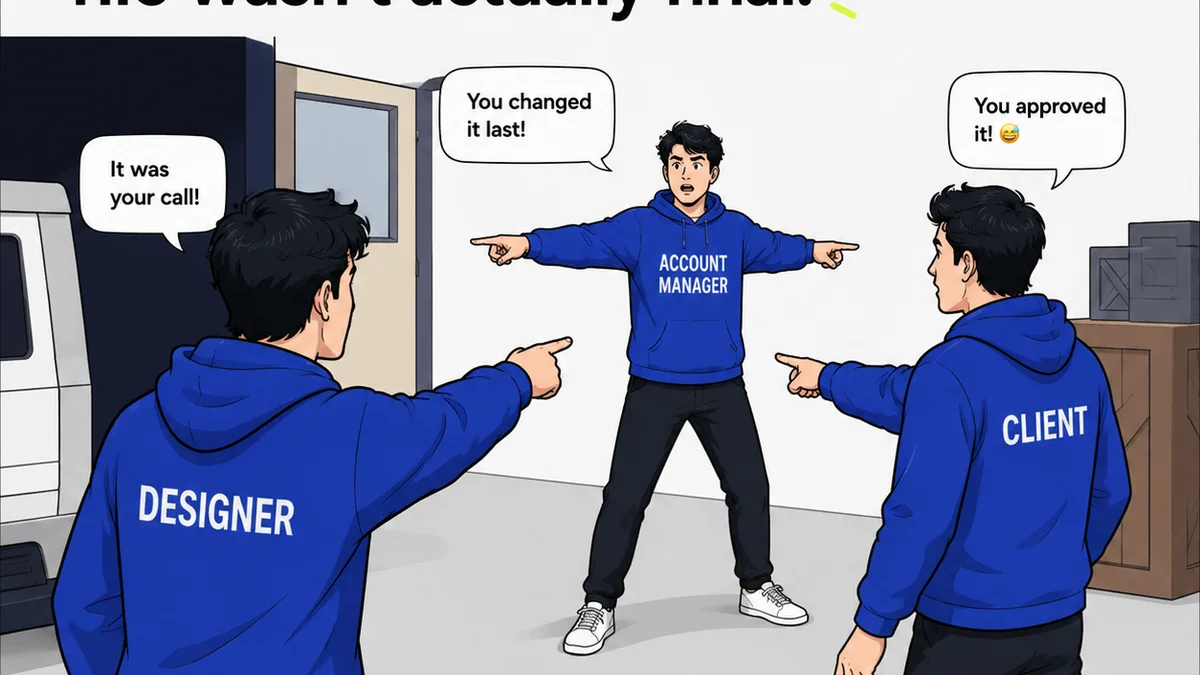
Everyone thinks enterprise creative proofing is about getting sign-off. A final tick-box before launch. That’s the common assumption, anyway.
None of that is wrong. But it’s incomplete. Dangerously so.
The hard truth? Enterprise creative proofing is less about the final ‘yes’ and more about the entire, messy, often-broken process that leads to it. It’s about managing complex feedback loops, ensuring brand consistency across global teams, and maintaining quality control at scale. Get this wrong, and your ‘approved’ assets might be anything but.
1. Defining 'Enterprise' Creative Proofing
What separates enterprise creative proofing from a small agency’s workflow? Scale. Complexity. And the sheer number of stakeholders involved.
We’re talking about:
- Global teams with different regional needs and regulations.
- Multiple product lines, each with its own brand guidelines.
- A constant stream of assets: digital ads, social posts, video, print collateral, website updates, internal comms.
- Dozens, sometimes hundreds, of reviewers and approvers across legal, marketing, product, and regional departments.
- The pressure to move fast while maintaining impeccable quality and brand integrity.
This isn't just about a designer sending a JPG to a client. This is about orchestrating a symphony of feedback and approvals across an entire organization.
2. The Hidden Bottlenecks: Where Proofing Breaks Down
Most teams focus on the final review stage. But the real problems fester much earlier.
Look for these common bottlenecks:
Unclear Briefs and Scope Creep
If the initial brief is vague, feedback will be subjective and endless. This leads to scope creep, where requirements shift mid-project, making approvals a moving target.
Fragmented Communication Channels
Feedback scattered across email threads, Slack messages, and random documents is a recipe for disaster. Key comments get lost. Versions get confused. It’s inefficient and error-prone.
Lack of Centralized Brand Guidelines
When teams can’t easily access or adhere to up-to-date brand guidelines, proofs inevitably deviate from brand standards. This creates rework and dilutes brand impact.
Ineffective Version Control
How many times has someone approved an outdated version? Without clear version tracking, this is not a matter of ‘if’ but ‘when’.
Ambiguous Roles and Responsibilities
Who is the final approver? Who provides technical feedback? When roles are unclear, projects stall waiting for the right person to weigh in, or the wrong person gives feedback.
Manual, Repetitive Quality Checks
Basic checks – like ensuring correct dimensions, file formats, or spelling – are often done manually. This is tedious, prone to human error, and takes valuable time away from creative tasks.
Geographical and Time Zone Delays
Global teams mean feedback loops can take days, not hours. This slows down production and can miss critical market windows.
3. Building a Robust Enterprise Proofing Workflow
A truly effective enterprise proofing process is built on a foundation of clarity, control, and collaboration.
Establish Clear, Measurable Briefs
Every project starts with a crystal-clear brief. Define objectives, target audience, key messaging, and success metrics upfront. Use templates to ensure consistency.
Centralize All Feedback and Communication
Implement a single source of truth for all creative assets and feedback. This eliminates scattered communication and ensures everyone works from the same information.
Automate Version Control and Tracking
Use a system that automatically tracks every version of an asset. This provides an immutable history, showing exactly who changed what and when.
Define Roles and Approval Chains Explicitly
Map out the exact review and approval process for different asset types. Clearly designate who needs to review, who can approve, and in what order.
This includes:
- Primary reviewers (e.g., Marketing Manager)
- Secondary reviewers (e.g., Legal, Brand Compliance)
- Final approvers (e.g., Creative Director, VP Marketing)
Integrate Brand Guidelines and Assets
Make brand guidelines easily accessible within the proofing environment. Ideally, link directly to approved logos, fonts, and color palettes.
Implement Automated Quality Assurance (QA) Checks
Leverage technology to automate repetitive QA tasks. This can include checking file specs, resolution, color profiles, and even basic accessibility standards.
Streamline Global Collaboration
Utilize tools that accommodate different time zones, offering features like automated notifications and clear deadlines to keep global projects moving.
4. The Enterprise Creative Proofing Checklist
Use this checklist to audit your current process and identify areas for improvement.
- Project Brief: Is the brief clear, detailed, and agreed upon before creative work begins? Does it include measurable objectives?
- Asset Upload: Is there a single, secure place to upload all creative assets for review?
- Version Control: Is every version of an asset automatically tracked with a clear history? Can you easily revert to previous versions if needed?
- Reviewer Assignment: Are reviewers assigned clearly based on their role and expertise? Are approval chains defined?
- Feedback Mechanism: Is feedback collected in one place, directly on the asset? Is it contextual and actionable?
- Annotation Tools: Do reviewers have tools to provide precise feedback (e.g., drawing, text annotations)?
- Real-time Notifications: Are stakeholders automatically notified of new feedback, comments, or status changes?
- Deadline Management: Are review and approval deadlines clearly set and communicated?
- Brand Guideline Access: Can reviewers easily access and reference brand guidelines during the review process?
- Automated QA: Are basic quality checks (file type, dimensions, resolution) automated?
- Audit Trail: Is there a complete, immutable log of all feedback, revisions, and approvals for compliance and reference?
- Cross-Departmental Collaboration: Does the system facilitate seamless collaboration between creative, marketing, legal, and product teams?
- Global Accessibility: Can teams in different regions access and use the system effectively, regardless of time zone?
- Final Approval: Is the final approval clearly documented and auditable?
- Integration: Does the proofing tool integrate with other essential creative tools (e.g., DAM, project management)?
Where Revue Fits In
This is where a centralized feedback and approval platform like Revue becomes critical for enterprise teams.
Revue isn't just another tool; it's the operational layer that brings order to the chaos of creative production at scale. It provides a unified environment for centralized client feedback, eliminating those scattered email chains and Slack messages. Every comment, every revision, lives in one place, tied directly to the asset.
Its robust revision and approval management features ensure clear accountability. You can set up specific approval workflows, track who has reviewed what, and see the complete audit trail. This visibility is key to understanding project status and identifying bottlenecks before they halt progress.
Furthermore, Revue helps enforce quality through structured feedback and clear approval gates, acting as a crucial step in your creative quality checks. By streamlining these complex processes, it frees up creative teams to focus on what they do best: creating exceptional work, consistently and efficiently, no matter the scale.
Final Thought
Enterprise creative proofing is an operational discipline, not just a step in the production cycle. It demands systems, clear processes, and the right technology to manage complexity. Are you treating proofing as a strategic imperative, or just another hurdle to clear?
Frequently asked questions
What is the main difference between standard and enterprise creative proofing?
Enterprise creative proofing involves managing a much higher volume and complexity of assets, stakeholders, and global teams compared to standard proofing. It requires robust systems for version control, audit trails, and compliance across diverse departments and regions.
How can I prevent scope creep during the creative proofing process?
Prevent scope creep by starting with a highly detailed and agreed-upon project brief. Utilize a proofing system that tracks all feedback and changes, making any proposed deviations from the original scope explicit and requiring a formal re-approval process.
What are the key benefits of centralizing feedback in a proofing tool?
Centralizing feedback eliminates communication silos (like scattered emails and chats), ensures everyone is working with the latest information, provides a clear audit trail of discussions, and reduces the risk of missed comments or conflicting instructions, leading to faster and more accurate approvals.
How does automation help in enterprise creative proofing?
Automation streamlines repetitive tasks such as version control, notifications, basic quality assurance checks (like file specs), and tracking approval status. This frees up teams to focus on strategic creative work and reduces the likelihood of human error in critical processes.