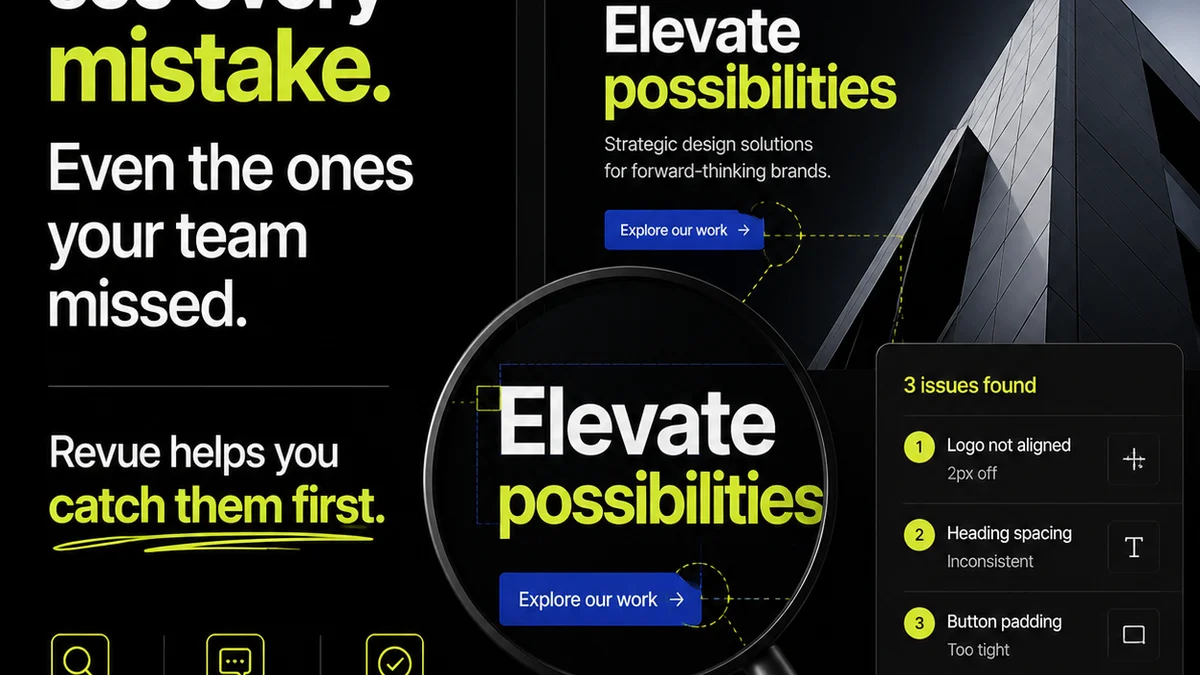
Everyone thinks design review is about catching errors. About making sure the logo is the right size and the copy hasn't gone rogue. None of that is wrong. But it’s incomplete.
The hard truth? For enterprise teams, design review is a strategic bottleneck. It’s a point where projects either gain critical momentum or grind to a halt. Getting it right means shipping better work, faster. Getting it wrong means endless loops, missed deadlines, and frustrated stakeholders.
1. The Assumption: Design Review is a QA Step
Most teams treat design review as the final quality assurance gate. A last-ditch effort to catch typos or alignment issues before launch.
This is a reactive stance. It implies that design is done, and now we're just checking boxes. It’s a process that waits for mistakes to happen, rather than preventing them.
The Deeper Truth: Design Review is a Collaboration Hub
Effective design review isn't just about quality control. It's about collective problem-solving and strategic alignment. It’s where diverse perspectives converge to refine the solution, not just polish the output.
Think of it less as a final inspection and more as a critical checkpoint for strategic alignment and user value. It’s where you confirm the design still meets the brief, the user needs, and the business goals.
- Is the core problem still being solved?
- Does the solution still align with user research?
- Are we hitting the key business objectives?
- Are there any new risks or opportunities we've missed?
When you frame review as a collaborative hub, you shift from finding fault to fostering improvement. This fundamentally changes the dynamic.
2. The Assumption: Anyone Can Review Designs
The thinking goes: if you can see it, you can review it. So, why not loop in everyone? More eyes, more feedback, right?
Wrong. This leads to a cacophony of conflicting opinions, unqualified critiques, and scope creep.
The Deeper Truth: Reviewers Must Be Qualified and Focused
Not all feedback is created equal. Not all feedback is helpful. In an enterprise setting, you need a structured approach to who reviews what, and why.
Define clear roles for your reviewers. Are they:
- Subject Matter Experts (SMEs): Providing input on specific domains (e.g., legal, accessibility, brand compliance).
- Stakeholders: Confirming strategic alignment and business goals.
- End Users (or Proxies): Validating usability and user needs.
- Technical Leads: Assessing feasibility and implementation constraints.
Each group needs a clear mandate and a defined scope for their review. This prevents subjective opinions from derailing objective goals.
The Cost of Unqualified Feedback
Unqualified feedback is noise. It’s subjective, often based on personal preference rather than project objectives. It wastes everyone’s time and erodes trust in the design process.
When a stakeholder who doesn't understand accessibility comments on contrast ratios, or a marketing manager dictates UI patterns without understanding user behavior, the review becomes counterproductive.
3. The Assumption: Feedback Should Be Unfiltered
The idea here is that open, honest feedback is always best. Just dump all the comments into a shared document and let the team sort it out.
This sounds democratic. It’s also a recipe for chaos.
The Deeper Truth: Feedback Needs Structure and Synthesis
Raw, unfiltered feedback is hard to act on. It’s often contradictory, vague, or actionable only in isolation.
Your review process needs a mechanism for filtering, prioritizing, and synthesizing feedback. This doesn't mean ignoring valid points; it means making them digestible and actionable.
- Centralize Feedback: Use a tool that consolidates comments in one place.
- Categorize Feedback: Tag comments by type (e.g., usability, brand, technical, strategic).
- Prioritize Feedback: Use a framework (e.g., impact vs. effort, alignment with goals) to determine what needs immediate attention.
- Assign Ownership: Clearly designate who is responsible for addressing each piece of feedback.
This structured approach ensures that feedback is addressed systematically, rather than reactively.
4. The Assumption: Design Review Happens at the End
The classic waterfall approach. Design the whole thing, then review it. Then revise. Then review again. Then, maybe, finally, build it.
This creates long, drawn-out cycles. It delays the discovery of fundamental issues until it’s incredibly expensive to fix them.
The Deeper Truth: Integrate Review Throughout the Lifecycle
Effective design review is not a single event; it’s a continuous process. It should be woven into the fabric of your design and development workflow.
Early and frequent reviews catch problems when they are small and easy to fix.
- Concept Reviews: Before significant design work begins, review the problem statement, user flows, and initial concepts.
- Wireframe Reviews: Check information architecture and user journeys.
- Mockup Reviews: Validate visual design, interaction patterns, and content hierarchy.
- Prototype Reviews: Test usability and gather feedback on interactive elements.
- Pre-launch Reviews: A final check for consistency, quality, and adherence to requirements.
This iterative approach reduces risk and ensures that the project stays aligned with its goals at every stage.
5. The Assumption: Visual Polish is the Goal
Many teams equate design review with aesthetic critique. Is it pretty? Does it follow the brand guide? Is the kerning correct?
These are important, but they are surface-level concerns.
The Deeper Truth: Review for Strategic Alignment and User Value
The most critical aspect of enterprise design review is ensuring the design achieves its strategic objectives and delivers genuine value to the user.
Ask the hard questions:
- Does this design solve the user’s problem effectively?
- Does it align with our business goals?
- Is it accessible to all intended users?
- Is it technically feasible within our constraints?
- Does it enhance the overall user experience?
A visually stunning interface that doesn't solve a problem or meet business needs is a failure. Focus on the substance, not just the style.
Where Revue Fits In
Managing enterprise design review effectively requires robust tools. You need a platform that supports continuous feedback, clear version control, and transparent communication.
Revue is built for this. It centralizes client feedback, making it easy to track comments and ensure nothing falls through the cracks. You can manage revisions and approvals with clarity, seeing the entire history of changes and decisions.
This visibility is crucial for enterprise teams. It ensures that all stakeholders are on the same page, reducing misunderstandings and speeding up the approval process. Revue helps transform design review from a chaotic point of friction into a streamlined, collaborative workflow.
Final Thought
Enterprise design review is often seen as a chore. A necessary evil. But what if it’s actually your greatest opportunity?
An opportunity to build consensus, de-risk your projects, and ensure that the creative work you deliver is not just beautiful, but strategically sound and deeply effective. How are you turning your review process from a bottleneck into a launchpad?
Frequently asked questions
What is the primary goal of enterprise design review?
The primary goal is not just to catch errors, but to ensure strategic alignment, validate user value, and confirm that the design meets business objectives. It's a collaborative checkpoint for problem-solving and refinement, not just a final QA step.
Who should be involved in design reviews for enterprise teams?
Involve qualified reviewers with specific roles: subject matter experts (SMEs), key stakeholders, technical leads, and potentially user proxies. Their feedback should be focused and relevant to their area of expertise to avoid unqualified critiques.
How can enterprise teams handle conflicting feedback during reviews?
Structure and synthesize feedback. Centralize comments, categorize them by type (e.g., usability, strategic), prioritize based on project goals and impact, and assign clear ownership for addressing each point. This prevents subjective opinions from derailing objective goals.
When should design reviews take place in an enterprise project?
Design reviews should be integrated throughout the entire project lifecycle, not just at the end. Conduct them at key stages: concept, wireframe, mockup, prototype, and a final pre-launch check. Early and frequent reviews reduce risk and cost.
How does a tool like Revue help with enterprise design review?
Revue centralizes feedback, manages revisions and approvals transparently, and provides a clear history of decisions. This visibility streamlines communication, reduces misunderstandings, and transforms the review process from a bottleneck into an efficient workflow.