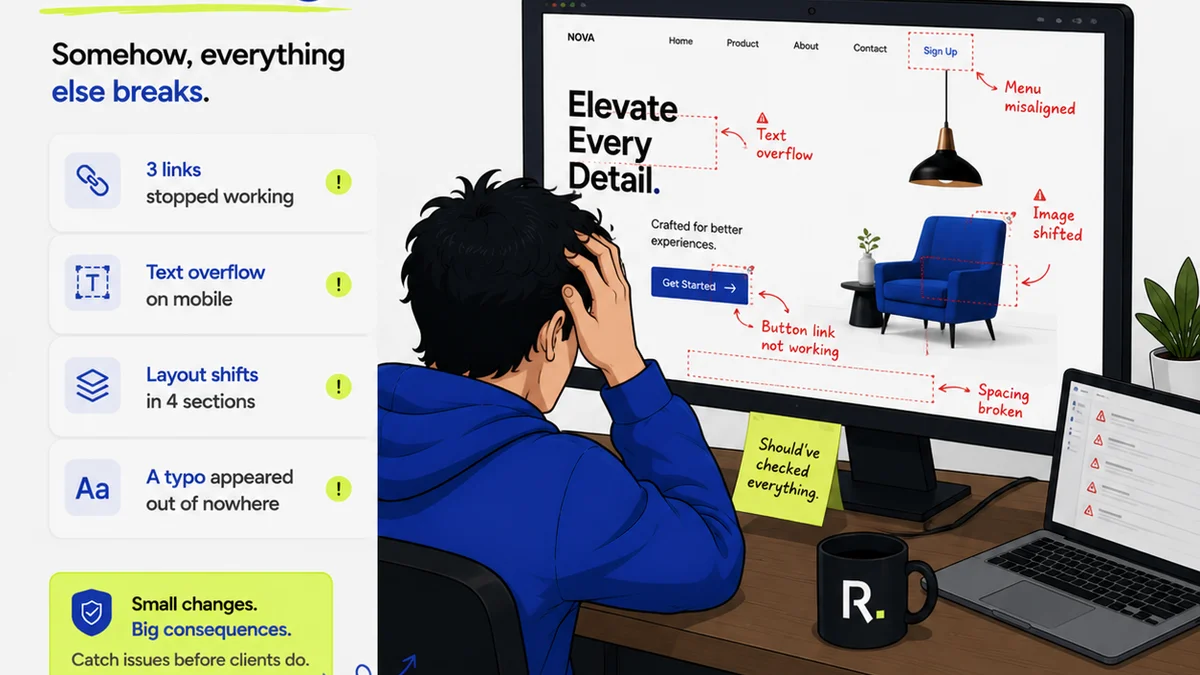
Everyone knows enterprise design review is important. It’s a crucial step for ensuring quality, alignment, and brand consistency across large organizations. But too often, it’s treated as a necessary evil—a series of meetings and checklists designed to catch obvious mistakes. None of that is wrong. But it’s incomplete.
The hard truth? If your enterprise design review process is merely about spotting errors, you’re missing the point entirely. You’re not just reviewing designs; you’re reviewing strategy, process, and communication. The real goal isn't just approval; it’s elevation.
1. The Illusion of Control: Why Checklists Aren't Enough
Checklists are great for repeatable tasks. They ensure you don’t forget to, say, include a privacy policy link or check color contrast ratios. But design is rarely just a checklist.
Too many teams rely on rigid, generic checklists for enterprise design review. They focus on surface-level compliance rather than strategic impact.
The Symptoms of Checklist Overload
- Endless, unproductive meetings where participants just tick boxes.
- A focus on minor aesthetic tweaks instead of core usability or strategic fit.
- Missed opportunities for innovation because the process stifles creativity.
- Frustration and delays as teams get bogged down in bureaucratic hurdles.
- Designs that pass review but fail in the real world.
This isn't about abandoning quality control. It’s about recognizing that a purely tactical approach to design review misses the strategic nuances that matter most in enterprise environments.
2. Shifting from Approval to Alignment
Enterprise design review needs to be more than a gatekeeper. It needs to be a bridge builder.
The real value comes not from signing off on a finished product, but from ensuring the product aligns with broader business objectives, user needs, and the evolving digital landscape. This requires a different kind of review.
Strategic Alignment Questions
Instead of asking “Does this meet spec?”, ask:
- Does this design solve the identified user problem effectively?
- How does this align with our current business goals and KPIs?
- Is this scalable and sustainable for future iterations?
- Does it adhere to our brand strategy, not just visual guidelines?
- Are we considering accessibility and inclusivity from the outset?
- What are the potential risks or unintended consequences?
This proactive, strategic questioning transforms review from a passive endorsement into an active contribution to product success.
3. The Human Element: Collaboration Over Gatekeeping
Design review is often perceived as a top-down process. Senior designers or stakeholders point out flaws. This can create an adversarial dynamic.
True enterprise design review fosters collaboration. It’s about bringing diverse perspectives together to solve problems, not just to find fault.
Cultivating a Collaborative Environment
- Diverse Review Panels: Include stakeholders from product, marketing, engineering, and even customer support, not just design.
- Clear Roles and Responsibilities: Define who is providing feedback, who is responsible for decisions, and who is accountable for implementation.
- Constructive Feedback Training: Equip reviewers with the skills to provide actionable, empathetic feedback. Focus on “why” and “how” rather than just “what.”
- Shared Understanding of Goals: Ensure everyone involved understands the project’s objectives, target audience, and constraints.
- Iterative Feedback Loops: Integrate feedback early and often, rather than saving it all for a final review.
When teams feel safe to share and challenge ideas constructively, the quality of the final design skyrockets. It’s no longer about defending a design; it’s about collectively improving it.
4. Context is King: Understanding the Design's Journey
A design doesn't exist in a vacuum. It’s the result of research, user testing, stakeholder input, and technical constraints.
Effective enterprise design review requires understanding this context. Without it, feedback can be misdirected or irrelevant.
Key Contextual Information to Provide
- Project Brief & Objectives: What problem are we solving? What are the success metrics?
- User Personas & Research: Who are we designing for? What have we learned about their needs and behaviors?
- Technical Constraints: What are the limitations imposed by the platform, engineering resources, or existing systems?
- Brand Guidelines & Design System: What are the established rules and components?
- Previous Iterations & Feedback: What has already been tried and tested?
Providing this context upfront helps reviewers understand the rationale behind design decisions and offer more targeted, helpful feedback. It prevents subjective opinions from derailing objective goals.
5. The Right Tools for the Job: Streamlining Enterprise Review
Managing feedback across multiple stakeholders, projects, and platforms in an enterprise setting can be chaotic. This is where technology plays a vital role.
However, simply throwing more tools at the problem isn't the answer. You need tools that facilitate clear communication, centralize feedback, and provide visibility.
Where Revue Fits In
Revue is built for this exact challenge. It’s not just another annotation tool. It’s a central hub for managing client and stakeholder feedback, streamlining revisions, and ensuring nothing falls through the cracks.
- Centralized Feedback: All comments, annotations, and discussions live in one place, tied directly to the creative asset. No more hunting through emails or scattered documents.
- Version Control & Revision Tracking: See exactly what changed between versions and who approved what. This clarity is essential for enterprise accountability.
- Streamlined Approvals: Define clear approval workflows so stakeholders know when and how to provide sign-off, reducing bottlenecks.
- Quality Assurance Checks: Integrate final QA steps directly into the workflow, ensuring designs meet all requirements before launch.
By providing a structured, transparent environment for review and approval, Revue helps enterprise teams move faster and with greater confidence.
6. Measuring What Matters: Beyond Sign-Off Rates
If you’re not measuring your design review process, how do you know if it’s effective? Most organizations track simple sign-off rates, but that’s a shallow metric.
True measurement goes deeper, assessing the impact of the review process on the business and the product.
Metrics for a Smarter Review Process
- Time to Approval: How long does it take from initial submission to final sign-off?
- Number of Revisions: How many iterations are typically required? (Fewer might indicate clearer initial direction or feedback).
- Post-Launch Issue Rate: Are designs that went through review having fewer bugs or usability issues?
- Stakeholder Satisfaction: How do participants feel about the review process itself? (Surveys can help here).
- Alignment with Business Goals: Are the final designs demonstrably contributing to the intended business outcomes?
Analyzing these metrics helps identify bottlenecks, areas for improvement, and the overall ROI of your design review efforts.
7. The Future of Enterprise Design Review: AI and Proactive Insights
The landscape of design review is constantly evolving. Emerging technologies promise to make the process even more efficient and insightful.
Artificial intelligence is beginning to play a role, moving beyond basic compliance checks.
Potential AI Applications in Design Review
- Automated Accessibility Checks: AI can go beyond basic contrast ratios to identify more complex accessibility barriers.
- Predictive Usability Analysis: Tools that can flag potential usability issues based on patterns and heuristics before human review.
- Brand Consistency Monitoring: AI that can scan designs to ensure adherence to brand guidelines and design systems at scale.
- Sentiment Analysis of Feedback: Understanding the tone and nature of qualitative feedback to identify recurring themes or potential conflicts.
While AI won't replace human judgment, it can augment it, freeing up reviewers to focus on strategic and creative aspects rather than tedious verification.
Final Thought
Enterprise design review is far more than a quality control gate. It's a strategic imperative. When done right, it elevates not just the design, but the entire product development process. Are you just ticking boxes, or are you building better products?
Frequently asked questions
What is the primary goal of enterprise design review?
The primary goal isn't just to catch errors, but to ensure designs align with strategic business objectives, user needs, and brand consistency across a large organization. It's about elevating the product, not just approving it.
How can I make design reviews more collaborative?
Foster collaboration by including diverse stakeholders (product, marketing, engineering), defining clear roles, training reviewers on constructive feedback, and establishing shared project goals. Encourage iterative feedback loops early and often.
What information is crucial for effective design review context?
Provide essential context such as the project brief and objectives, user research and personas, technical constraints, brand guidelines, and details on previous iterations and feedback. This helps reviewers understand the 'why' behind design decisions.
How can technology help streamline enterprise design review?
Tools like Revue can centralize feedback, manage version control and revisions, streamline approval workflows, and integrate quality assurance checks. This reduces chaos and provides essential transparency for large teams.
What metrics should I track beyond simple sign-off rates?
Track metrics like time to approval, number of revisions needed, post-launch issue rates, stakeholder satisfaction with the process, and alignment with business goals. These provide a deeper understanding of the review process's effectiveness.