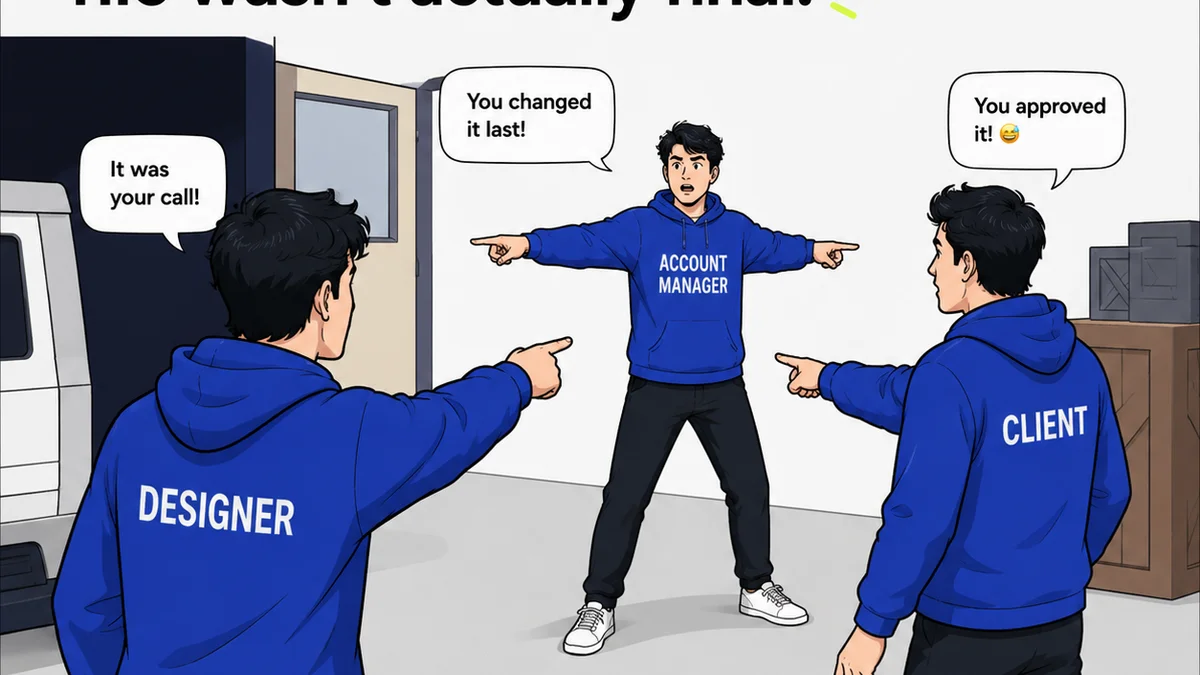
You think enterprise revision management is just about getting client sign-off. That's what everyone thinks. It’s about tracking versions, making sure the right files get to the right people, and hitting deadlines.
None of that is wrong. But it’s incomplete.
The hard truth is that for enterprise clients, revision management isn't just a step in the workflow; it’s a critical business process that impacts profitability, client relationships, and brand consistency across massive organizations. It’s where projects live or die, often due to a lack of structured control.
1. Defining the Scope: What Are We *Really* Revising?
Before a single pixel is tweaked, you need crystal clarity on what constitutes a revision. For enterprise clients, this isn't always straightforward. Their feedback might come from multiple stakeholders, each with different priorities and interpretations.
The Stakeholder Maze
Who has the final say? In enterprise settings, it's rarely one person. You might have:
- Marketing leads
- Legal/Compliance officers
- Brand guardians
- Technical implementation teams
- Regional representatives
Each group needs to weigh in, and their feedback can sometimes conflict. A robust revision process anticipates this.
Scope Creep's Enterprise Cousin: Strategic Drift
It’s not just about adding small changes. Enterprise projects can suffer from 'strategic drift,' where the core objective of the creative work gets subtly altered over multiple revision cycles. This happens when feedback isn't tied back to the original brief or business goals.
Your checklist must start with a clear definition of what’s in scope for revisions, what’s out, and how any proposed changes align with the project’s strategic intent.
2. The Feedback Funnel: From Noise to Signal
Gathering feedback from an enterprise client can feel like trying to drink from a firehose. Without a system, it’s pure noise. The goal of your revision management checklist is to turn that noise into actionable signals.
Consolidated Feedback Points
You cannot manage feedback arriving via email, Slack, random calls, and sticky notes. It’s a recipe for disaster.
- Designate a single point of contact for feedback consolidation.
- Insist on all feedback being submitted through a centralized platform.
- For video or complex assets, use timestamped comments.
This ensures nothing gets lost and provides a clear audit trail.
Prioritization Framework
Not all feedback is created equal. Enterprise clients often have a high volume of input, and not all of it is strategically sound or operationally feasible.
Your checklist should include a step for evaluating feedback against:
- The original project brief and objectives.
- Brand guidelines and legal requirements.
- Technical constraints.
- Budget and timeline implications.
This isn't about ignoring client input; it’s about managing it intelligently to protect the project's integrity and your team's sanity.
3. Version Control: The Unsung Hero
This is where many agencies falter, especially with large, long-running enterprise projects. Poor version control leads to confusion, duplicated effort, and the dreaded 'which file is the final one?' panic.
Naming Conventions That Don't Suck
Forget `final_final_v3_really_final.ai`. Enterprise projects demand rigorous naming conventions. Think:
- ProjectName_AssetType_VersionNumber_Status_Date.ext
- Example: `AcmeCorp_WebBanner_V03_ClientApproved_20231027.jpg`
This is non-negotiable for clarity and organization.
Master File Integrity
Every revision cycle should result in a clear 'master' file. This master file is the single source of truth for that iteration.
- Never overwrite the master file directly.
- Create a new version for each significant change.
- Maintain a clear history of what was changed in each version.
This prevents accidental data loss and allows for easy rollback if necessary.
4. Approval Workflow: Who Signs Off and When?
Enterprise approvals are complex. A simple 'approved' checkbox isn't enough. You need a defined workflow that accounts for multiple decision-makers and stages.
Staged Approvals
Break down the approval process. For example:
- Stage 1: Internal Review (Creative Director, Project Manager)
- Stage 2: Client Stakeholder Review (e.g., Marketing Lead)
- Stage 3: Final Legal/Brand Compliance Sign-off
- Stage 4: Final Client Executive Approval
Each stage should have clear criteria for moving forward. If a stage fails, the feedback loop restarts at the appropriate point.
Clear Approval Criteria
What does 'approved' actually mean? Define it upfront.
- Does it mean 'no further revisions'?
- Does it mean 'minor tweaks acceptable'?
- Does it mean 'meets all defined KPIs'?
Documenting these criteria prevents subjective interpretations and disputes later.
5. Communication & Transparency: The Glue
Revision management isn't just about files; it's about people and process. Transparency is key to managing enterprise client expectations.
Centralized Communication Hub
All project-related communication, especially regarding feedback and revisions, should live in one place. This avoids siloed conversations and ensures everyone is working from the same information.
Revision Status Updates
Regular, concise updates on revision status are crucial. Clients need to know where things stand, what feedback is being actioned, and what the next steps are. This builds trust and prevents 'check-in' emails from flooding your inbox.
Escalation Paths
What happens when feedback is contradictory, a deadline is at risk due to revisions, or scope creep becomes undeniable? Your checklist needs clear escalation paths. Who gets notified? What are the decision-making protocols?
Where Revue Fits In
Managing revisions at the enterprise level demands more than just a shared drive and a prayer. It requires a system designed for clarity, accountability, and efficiency.
Revue provides that system. It acts as your central hub for creative asset feedback and approvals. Instead of juggling emails and spreadsheets, you get:
- Centralized Feedback: All client comments and annotations on designs, videos, and documents in one place, linked directly to the asset.
- Clear Revision History: A visual trail of every version, every change, and every approval, making it easy to track progress and understand what’s been done.
- Streamlined Approvals: Configurable approval workflows ensure that feedback goes to the right people, in the right order, and that final sign-offs are clearly recorded.
- Version Control: Easily manage and compare different versions of your creative work, ensuring you're always working with the latest iteration and preventing costly errors.
This level of control is essential for managing the complexity and volume of feedback typical in enterprise engagements.
6. Quality Assurance Checks: The Final Gate
Even with a solid revision process, quality can slip. Enterprise clients expect flawless execution. QA is your final gatekeeper.
Pre-flight Checks
Before delivering a final asset, run through a pre-flight checklist. This might include:
- Brand consistency (logos, colors, fonts).
- Technical specifications (file format, resolution, dimensions).
- Accessibility standards (WCAG compliance for digital assets).
- Legal disclaimers and required copy.
This step catches errors that might have crept in during the final stages.
Internal Sign-off on Final Deliverables
Have a designated internal reviewer give the final asset a last look. This person should not have been heavily involved in the day-to-day revisions to provide fresh eyes.
7. Post-Project Archiving and Debrief
Your revision management checklist shouldn't end at delivery. What happens next is crucial for future projects.
Asset Archiving
Properly archive all final versions and key revision iterations. This creates a valuable historical record for the client and your agency.
Project Debrief
Conduct a debrief focused on the revision process itself. What worked? What didn't? Were there bottlenecks? What feedback loops were inefficient?
Use this information to refine your checklist and processes for the next enterprise client.
Final Thought
Enterprise revision management isn't a task to be delegated to junior staff or treated as a bureaucratic hurdle. It’s a strategic discipline that directly impacts project success, client satisfaction, and your agency’s bottom line.
Are you treating your revision process as a core operational strength, or just a necessary evil?
Frequently asked questions
What is the biggest challenge in enterprise revision management?
The biggest challenge is managing the complexity and volume of feedback from multiple stakeholders within large organizations, often with conflicting priorities. Without a structured process, this can lead to scope creep, delays, and miscommunication.
How can I prevent scope creep during enterprise revisions?
Clearly define the scope of revisions upfront, establish a feedback prioritization framework that aligns with project objectives, and maintain a strict version control system. Any proposed changes outside the agreed scope should be flagged for formal change order discussions.
What are the key components of an effective revision management checklist?
An effective checklist includes defining revision scope, establishing a consolidated feedback funnel, implementing rigorous version control and naming conventions, defining clear approval workflows, ensuring transparent communication, conducting thorough quality assurance, and planning for post-project archiving and debriefing.
How does a tool like Revue help with enterprise revision management?
Revue centralizes feedback, tracks all asset versions and changes, and streamlines approval workflows. This provides a single source of truth, enhances transparency, and reduces the chaos typically associated with managing feedback from multiple enterprise stakeholders.