Everyone agrees that managing client revisions is a core challenge for creative agencies and in-house teams. You've probably heard the advice: communicate clearly, set expectations, document everything. None of that is wrong. But it’s incomplete.
The hard truth? Most teams don't just *manage* revisions; they *react* to them. This reactive stance drains resources, erodes client trust, and stifles creativity. True enterprise revision management isn't about a better spreadsheet or a more detailed brief. It's about fundamentally shifting your process from chaos to control.
1. The Illusion of 'Final' Feedback
The biggest myth is that feedback, once given, is clear and actionable. It rarely is. Clients often provide vague comments, conflicting requests, or feedback that misses the strategic mark. This isn't malicious; it's a natural byproduct of subjective creative evaluation.
Your job isn't just to collect feedback. It’s to *interpret* it. To translate subjective opinions into concrete design decisions. This requires a system that surfaces ambiguity and prompts clarification, rather than allowing it to fester.
The Feedback Black Hole
Consider the common scenarios:
- A client says, "Make it pop more." What does that even mean?
- Two stakeholders give contradictory instructions on the same asset.
- Feedback arrives late, after significant work has already been done based on previous, now-superseded, input.
- Important feedback gets buried in long email chains or scattered across multiple platforms.
These aren't minor annoyances. They are systemic failures that lead to wasted hours and frustration on both sides.
2. Deconstructing the Revision Cycle
A typical revision cycle looks simple on the surface: receive feedback, make changes, resubmit. But beneath that lies a complex web of communication, interpretation, and execution.
For enterprise-level projects, this complexity explodes. Multiple stakeholders, diverse departments, and stringent compliance requirements all add layers of difficulty. Without a robust system, you're navigating a minefield.
Stakeholder Alignment is Key
One of the most significant hurdles is ensuring all client stakeholders are aligned *before* feedback is given, and that their input is consolidated. Disparate opinions from different departments (marketing, legal, product) can pull a project in opposing directions.
Effective revision management requires a mechanism to:
- Identify all key client stakeholders early.
- Define clear roles and responsibilities for feedback.
- Establish a single source of truth for consolidated feedback.
- Implement a process for resolving conflicting feedback *before* revisions begin.
This isn't about micromanaging the client; it's about creating a structured environment where their input can be most effective.
The Cost of Inefficiency
Every extra round of revisions, every misunderstood comment, has a tangible cost. It impacts:
- Project Timelines: Delays ripple through the entire project schedule.
- Budget: Additional hours spent on revisions directly increase costs.
- Team Morale: Constant rework and unclear direction lead to burnout.
- Client Satisfaction: A drawn-out, frustrating revision process damages the client relationship.
Treating revisions as just another step is a costly mistake. It's a critical control point that, if managed poorly, undermines the entire project.
3. Establishing a Feedback Framework
Moving beyond reaction requires a proactive framework. This means defining clear processes and expectations around feedback, not just hoping for the best.
Define Feedback Gates
Not all feedback is created equal. Establish distinct stages where specific types of feedback are expected and appropriate. For example:
- Concept Approval: High-level strategic feedback.
- Design Iteration: Detailed aesthetic and functional feedback.
- Content Review: Copy and messaging validation.
- Final QA: Technical and brand compliance checks.
When feedback arrives outside these gates, you have a clear process to address it – typically by asking the client to hold it for the next appropriate stage.
Standardize Feedback Capture
How is feedback collected? Email? Spreadsheets? Ad-hoc calls? This fragmentation is the enemy of efficiency. Implement a standardized method for capturing all feedback in one place.
This system should:
- Allow for clear annotation directly on the creative asset.
- Attribute feedback to specific stakeholders.
- Enable commenting and discussion around feedback points.
- Distinguish between different types of comments (e.g., suggestion vs. required change).
This structured approach drastically reduces misinterpretation and ensures nothing gets lost.
Build in Clarification Loops
Assume feedback will need clarification. Build this into your process. Schedule brief check-ins after major feedback rounds to walk through comments, address ambiguities, and confirm understanding. This small investment of time can prevent hours of wasted rework.
4. Quality Control as a Preventative Measure
Revision management isn't just about handling client changes; it's also about preventing unnecessary revisions in the first place. This is where robust internal quality control (QC) becomes paramount.
Pre-Flight Checks for Creatives
Before any asset is sent for client review, it should undergo rigorous internal checks. This includes:
- Technical Compliance: Are file formats correct? Are specs met?
- Brand Consistency: Does it adhere to brand guidelines?
- Usability & Accessibility: Is it functional and usable for the intended audience? For web and app design, adherence to principles like those in the Web Content Accessibility Guidelines (WCAG) is critical.
- Strategic Alignment: Does it fulfill the brief's objectives?
Catching issues internally saves the client the trouble of pointing them out, leading to fewer revision rounds and a smoother experience.
Define 'Done'
What constitutes a completed revision? It's not just about the client saying "yes." It's about confirming that all agreed-upon changes have been implemented correctly and that the asset now meets all defined requirements.
This requires clear acceptance criteria and a final sign-off process that goes beyond a simple email confirmation. It ensures that what's delivered is truly finished and ready for deployment.
Where Revue Fits In
Managing enterprise revisions effectively requires a centralized platform that brings structure to the chaos. Revue is built to address these exact workflow challenges.
It provides a single source of truth for all creative assets and their associated feedback. Instead of juggling emails, spreadsheets, and chat messages, your team can:
- Centralize Feedback: Collect all client comments, annotations, and approvals in one place, directly linked to the specific version of the asset.
- Gain Visibility: Track the entire revision history, understand who provided what feedback, and see the status of each change. This transparency eliminates guesswork and reduces the likelihood of conflicting instructions.
- Streamline Approvals: Implement clear approval workflows, ensuring that all necessary stakeholders sign off before an asset moves to the next stage.
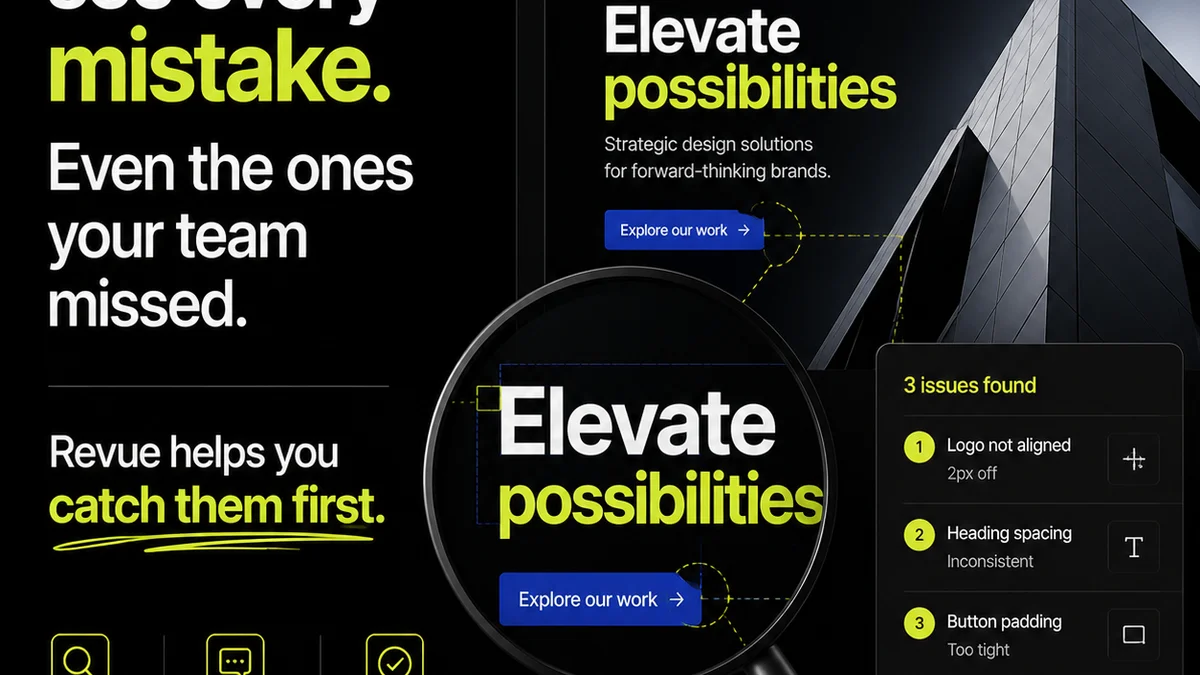
- Enhance Quality Checks: Integrate internal QC processes by ensuring assets meet predefined criteria before being sent for client review, reducing back-and-forth.
Revue helps transform revision management from a reactive chore into a proactive, efficient part of your creative process.
Final Thought
The goal of enterprise revision management isn't just to get through the feedback process. It's to elevate the quality of the final output and strengthen client relationships through clarity and professionalism. Are you truly managing revisions, or are you just surviving them?
Frequently asked questions
What is the biggest mistake agencies make with client revisions?
The biggest mistake is treating revisions as a purely reactive process. Agencies often wait for feedback to come in and then scramble to implement it, leading to confusion, wasted time, and scope creep. A proactive approach involves establishing clear feedback gates, standardized capture methods, and internal quality checks *before* client review.
How can I ensure client stakeholders are aligned on feedback?
Alignment starts early. Identify all key stakeholders and their roles in the feedback process. Establish a single channel for consolidated feedback and, if possible, facilitate a brief alignment meeting or summary before major feedback rounds. This helps prevent conflicting instructions from different departments.
What are the key components of an effective feedback framework?
An effective framework includes defining clear feedback gates tied to project stages, standardizing how feedback is captured (ideally in a central tool), building in mandatory clarification loops to resolve ambiguity, and implementing robust internal quality control checks to catch issues before they reach the client.
How does a centralized platform like Revue help with revision management?
A centralized platform like Revue acts as a single source of truth for all creative assets and feedback. It allows for direct annotation, clear version control, consolidated comments, and streamlined approval workflows, eliminating the confusion and inefficiency of scattered communication channels like email and chat.