Everyone talks about User Experience (UX) for consumers. Apps, websites, the whole digital world. We assume enterprise UX is just a scaled-up version of that. Bigger teams, more complex systems, maybe a few more logins. None of that is wrong. But it’s incomplete.
The hard truth? Enterprise UX isn’t just about making internal tools easier to use. It’s about fundamentally reshaping how large organizations operate, communicate, and generate value. It’s a strategic lever for business transformation, not just a feature set.
1. What Enterprise UX Actually Is (And Isn't)
Enterprise UX deals with software and digital products used within organizations. Think CRMs, ERPs, internal dashboards, specialized industry tools. The users are employees, partners, or specific business units, not the general public.
This distinction matters. Consumer UX often focuses on delight, engagement, and conversion. Enterprise UX prioritizes efficiency, productivity, accuracy, and compliance.
The Common Misconception: Just Usability
Many assume enterprise UX is simply about making complex software less intimidating. A coat of paint, better navigation, clearer labels. That's a start, but it misses the point.
Enterprise systems are deeply embedded in business processes. A usability tweak might help an individual, but true enterprise UX redesigns the process itself to be more effective.
The Hard Truth: Business Outcome Focus
Great enterprise UX directly impacts the bottom line. It reduces training costs, minimizes errors, speeds up task completion, improves data quality, and boosts employee satisfaction. It’s about enabling the business to achieve its goals more effectively.
Consider a sales team using a CRM. If the CRM is clunky, reps spend less time selling and more time logging data. Better enterprise UX means a faster, more intuitive system, leading to more sales.
2. Key Challenges in Enterprise UX
Building great enterprise UX is tough. You're not just designing for one user persona; you're designing for hundreds, sometimes thousands, across diverse roles and technical proficiencies.
The stakes are also higher. Errors in enterprise systems can have significant financial or operational consequences. And the legacy systems you're often replacing or integrating with can be deeply entrenched and resistant to change.
The Maze of Stakeholders
Every enterprise project has a committee. Product managers, IT departments, legal, compliance, multiple user groups, executives – all with competing priorities. Navigating this can feel like a full-time job.
Aligning everyone on user needs versus perceived business needs is a constant battle.
Legacy Systems and Technical Debt
Many enterprise organizations are saddled with outdated technology. These systems are often brittle, poorly documented, and difficult to integrate with. Modernizing them is a massive undertaking.
You might have a brilliant UX design, but if it can't be implemented due to technical constraints or prohibitive costs, it's just a pretty picture.
Data Overload and Complexity
Enterprise software often deals with vast amounts of data. Presenting this information in a digestible, actionable way is a significant UX challenge. Users need to find what they need, quickly and without getting overwhelmed.
This requires sophisticated information architecture, clear data visualization, and intelligent filtering and search capabilities.
Resistance to Change
Employees are used to their workflows, however inefficient. Introducing new tools or processes, even if superior, can be met with resistance. Change management is as crucial as the design itself.
Think about the last time your company rolled out a new email client. Some people adapted instantly, others clung to the old ways for months.
3. Principles of Effective Enterprise UX Design
While the challenges are significant, a set of core principles can guide your enterprise UX efforts. These aren't revolutionary ideas, but their application in an enterprise context requires rigor and discipline.
3.1. Deep User Understanding
Go beyond surface-level personas. Understand the user's daily tasks, their pain points, their goals, and the broader business context in which they operate. Conduct thorough ethnographic research.
Observe users in their natural environment. This is non-negotiable for enterprise UX.
3.2. Process-Centric Design
Don't just design a screen; design the entire workflow. Map out the steps, identify bottlenecks, and look for opportunities to streamline or automate. The software should support and improve the business process.
This often means rethinking how work gets done, not just how it's represented on a screen.
3.3. Data-Driven Decision Making
Leverage analytics, user feedback, and A/B testing to inform design choices. In the enterprise space, even small improvements in efficiency can yield substantial returns.
Track key metrics: task completion time, error rates, user satisfaction scores.
3.4. Consistency and Predictability
Users should be able to learn one part of the system and apply that knowledge elsewhere. A consistent design language, interaction patterns, and terminology reduces cognitive load and speeds up adoption.
This applies across different modules and even different applications within the enterprise suite.
3.5. Scalability and Flexibility
Enterprise solutions need to grow and adapt. The design should accommodate future features, increased user loads, and evolving business requirements without requiring a complete overhaul.
Think modularly. Design for extensibility.
3.6. Accessibility and Inclusivity
Ensure that your designs are usable by everyone, including those with disabilities. This is not just a compliance issue; it's good design that benefits all users by promoting clarity and robustness.
Adhering to standards like the Web Content Accessibility Guidelines (WCAG) is essential.
4. Building an Enterprise UX Strategy
A successful enterprise UX initiative requires more than just good design principles; it needs a strategic framework. This involves aligning UX efforts with business objectives and fostering a user-centric culture.
4.1. Executive Sponsorship
Without buy-in from leadership, enterprise UX projects often stall. Secure champions who understand the value of UX and can advocate for resources and strategic alignment.
This sponsorship is critical for navigating organizational politics and securing budget.
4.2. Cross-Functional Collaboration
Break down silos. UX designers, product managers, engineers, business analysts, and subject matter experts must work together from the outset. This ensures that designs are technically feasible, strategically sound, and meet real business needs.
Regular workshops and shared documentation are key.
4.3. Phased Rollouts and Iteration
Avoid the “big bang” approach. Release new features or redesigned modules in phases, gather feedback, and iterate. This allows users to adapt gradually and provides opportunities to course-correct.
Agile methodologies are well-suited for this iterative process.
4.4. Measurement and Continuous Improvement
Define key performance indicators (KPIs) tied to business outcomes. Regularly measure the impact of your UX initiatives and use the data to drive ongoing improvements. UX is not a one-time project; it’s a continuous process.
What gets measured gets managed.
5. Where Revue Fits In
Managing feedback, revisions, and approvals for complex enterprise projects can quickly become chaotic. This is where a centralized platform like Revue becomes invaluable.
Imagine a large-scale software rollout involving multiple departments. Feedback might come through email, spreadsheets, Slack, and hallway conversations. Tracking which feedback applies to which module, who approved what, and the latest revision status is a nightmare.
Revue provides a single source of truth for all creative feedback and approvals.
- Centralized Feedback: Consolidate all client and stakeholder comments in one place, tied directly to the specific creative asset or design element. No more digging through endless email threads.
- Revision Tracking: Maintain a clear, auditable history of all changes made. Understand the evolution of a design and the rationale behind each revision.
- Streamlined Approvals: Manage the approval workflow efficiently. Ensure the right stakeholders sign off at the right stages, reducing bottlenecks and preventing costly rework downstream.
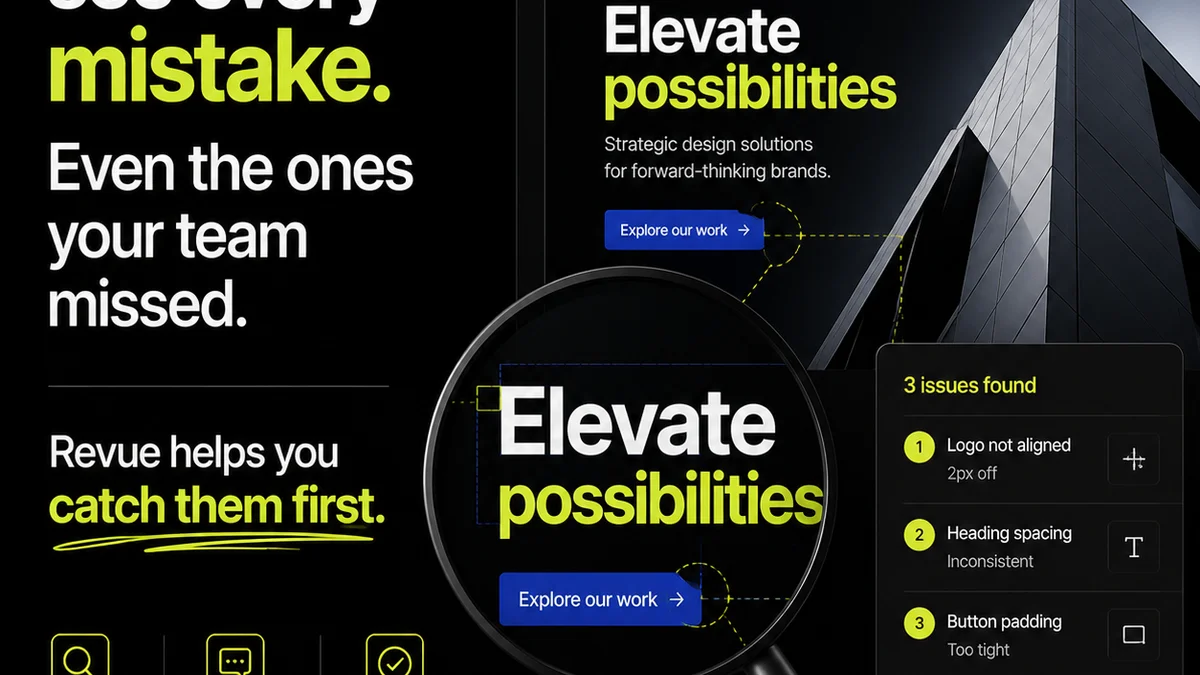
- Quality Assurance: Use the platform to conduct and document quality checks, ensuring that the final product meets all requirements and standards before deployment.
By bringing structure and visibility to the feedback and approval process, Revue helps enterprise teams mitigate risks, improve collaboration, and ultimately deliver higher-quality digital products faster.
6. Final Thought
Enterprise UX is a discipline that sits at the intersection of human-centered design and strategic business objectives. It’s about empowering people within organizations to do their best work through intuitive, efficient, and effective digital tools.
Are you designing for the user, or are you designing for the business outcome? In enterprise, the best answer is always: both.
Frequently asked questions
What's the main difference between consumer UX and enterprise UX?
Consumer UX typically focuses on delight, engagement, and broad market appeal. Enterprise UX prioritizes efficiency, productivity, accuracy, compliance, and integration within complex business processes and systems.
Why is stakeholder management so critical in enterprise UX?
Enterprise projects involve numerous stakeholders (IT, legal, various user groups, management) with competing priorities. Effective stakeholder management is crucial for aligning on goals, securing buy-in, and navigating organizational politics to ensure project success.
How can legacy systems impact enterprise UX design?
Legacy systems often present technical debt, integration challenges, and resistance to change. Designers must account for these constraints, potentially simplifying designs, planning for phased integration, or advocating for modernization efforts.
What role does data play in enterprise UX?
Data is vital for understanding user behavior, identifying pain points, measuring impact, and informing design decisions. Enterprise UX relies on analytics, user feedback, and performance metrics to drive continuous improvement and demonstrate ROI.
How does Revue help with enterprise UX projects?
Revue centralizes feedback, streamlines revision tracking, and manages approval workflows for enterprise projects. This provides a single source of truth, improves collaboration, reduces confusion, and ensures quality, directly supporting efficient enterprise UX delivery.