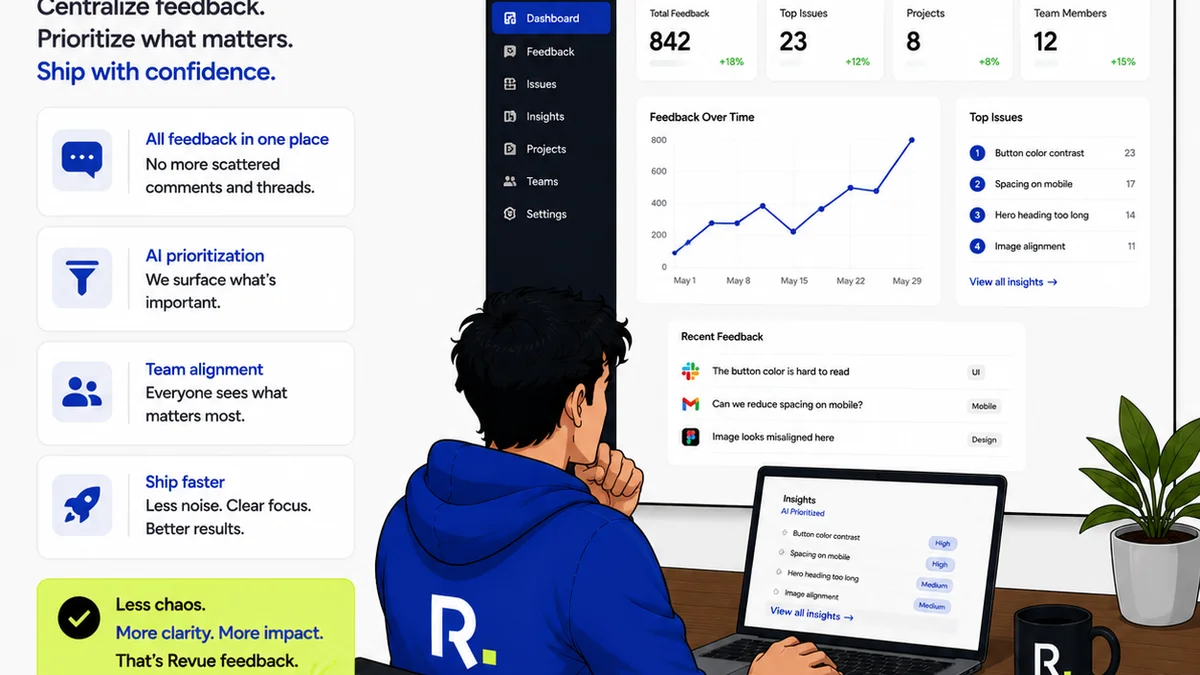
Everyone knows that client feedback is crucial for creative projects. You've probably heard it a thousand times: listen to your client, understand their needs, iterate based on their input. None of that is wrong. But it’s incomplete.
The hard truth is that the *process* of collecting, interpreting, and acting on feedback is where most creative teams falter. Scattered emails, endless Slack threads, scribbled notes on printouts – this chaos doesn’t just slow you down; it actively degrades the quality of your work.
1. The Myth of 'Just One More Round'
The common assumption is that more feedback rounds equal a better final product. This often stems from a fear of missing something or disappointing the client. It’s a reactive approach.
But this
Frequently asked questions
What is feedback consolidation?
Feedback consolidation is the process of gathering all client feedback from various sources (emails, calls, meetings, platforms) into a single, organized location. This allows creative teams to review, prioritize, and act on feedback efficiently, reducing confusion and missed comments.
Why is consolidating feedback important for creative teams?
It prevents crucial feedback from getting lost, reduces the time spent searching for comments, minimizes misinterpretations, and ensures everyone on the team is working from the same set of instructions. This leads to faster revisions, fewer errors, and a smoother client experience.
How can I make feedback consolidation easier?
Utilize dedicated feedback tools that centralize comments directly on the creative assets. Establish clear feedback protocols with clients, defining preferred channels and response times. Regularly schedule internal review sessions to discuss and prioritize consolidated feedback before acting.
What are the risks of not consolidating feedback?
The risks include missed feedback, conflicting instructions, endless revision cycles, team frustration, client dissatisfaction, project delays, and ultimately, a lower-quality final deliverable. It creates an environment ripe for errors and miscommunication.