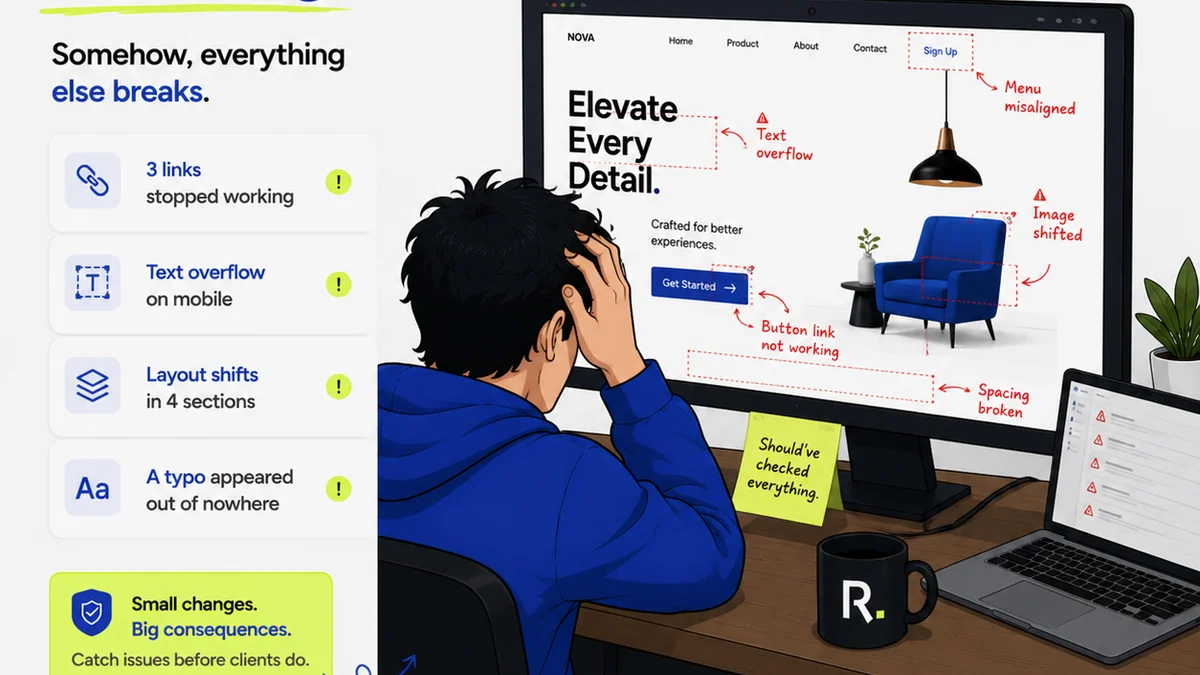
You're looking for feedback consolidation software. Maybe you think it's just about getting all your client comments into one place.
None of that is wrong. But it’s incomplete.
The hard truth? If your feedback tool doesn't actively improve your team's workflow, it's just another digital filing cabinet. It might collect comments, but it won't fix the underlying chaos of revisions, approvals, and quality control that plagues creative agencies.
1. Beyond Comments: The Core of Consolidation
The assumption is that feedback is just text. It’s not. It’s context. It’s intent. It’s history.
Effective feedback consolidation means capturing not just *what* was said, but *why* and *by whom*, and making that information actionable. It's about creating a single source of truth that prevents endless email chains and Slack threads from becoming the default project manager.
The Missing Context Problem
Client feedback often arrives fragmented:
- Emails with subjective notes
- Slack messages with urgent requests
- Verbal comments during calls
- Spreadsheets with conflicting edits
Without a system, these pieces get lost. Or worse, they get misinterpreted. This leads to rework, missed deadlines, and frustrated clients.
Why Centralization Isn't Enough
Simply dumping all feedback into one platform isn't the win. The real win is when that platform enables:
- Clear attribution: Who said what, and when?
- Version control: Which feedback applies to which creative version?
- Actionability: Is this a suggestion, an approval, or a revision request?
- Visibility: Can the whole team see the feedback trail?
This is where the operational power of good feedback consolidation software truly lies.
2. Streamlining Revisions and Approvals
Revisions and approvals are the lifeblood of agency work. They are also the biggest bottlenecks. Your feedback consolidation tool must directly address these pain points.
Visibility is Key
When a client provides feedback, it often triggers a cascade of actions. Your team needs to know:
- What needs to be changed?
- Who is responsible for the change?
- What is the priority of this change?
- Has this revision been approved?
A tool that just collects comments fails here. You need a system that maps feedback to specific tasks and tracks their status.
The Approval Black Hole
Approvals are notoriously tricky. Was the client happy with version 3, or version 4? Did they approve the copy, but not the design?
Good software makes approvals explicit and visible. It should allow for clear sign-offs on specific deliverables, preventing ambiguity down the line. This reduces the chance of scope creep disguised as
Frequently asked questions
What is the primary benefit of feedback consolidation software for agencies?
The primary benefit is moving beyond simply collecting comments to actively streamlining the entire revision and approval process. This reduces ambiguity, prevents rework, improves team efficiency, and ultimately leads to higher client satisfaction by ensuring everyone is working from a single, clear source of truth.
How can feedback consolidation software improve client communication?
By centralizing all feedback and approvals, the software provides a clear, documented history of client input. This transparency helps manage expectations, reduces misunderstandings, and allows teams to easily refer back to previous decisions, leading to more productive client conversations.
Is feedback consolidation software only for large agencies?
No, feedback consolidation software is valuable for agencies of all sizes. Small teams can benefit from the improved organization and reduced time spent chasing feedback, while larger agencies can leverage it to manage complex projects with multiple stakeholders and ensure consistent processes across teams.
What are the key features to look for beyond just comment collection?
Look for features like clear attribution of feedback, version control integration, explicit approval workflows, task management tied to feedback, and reporting capabilities. The software should facilitate actionable insights and clear communication, not just store comments.