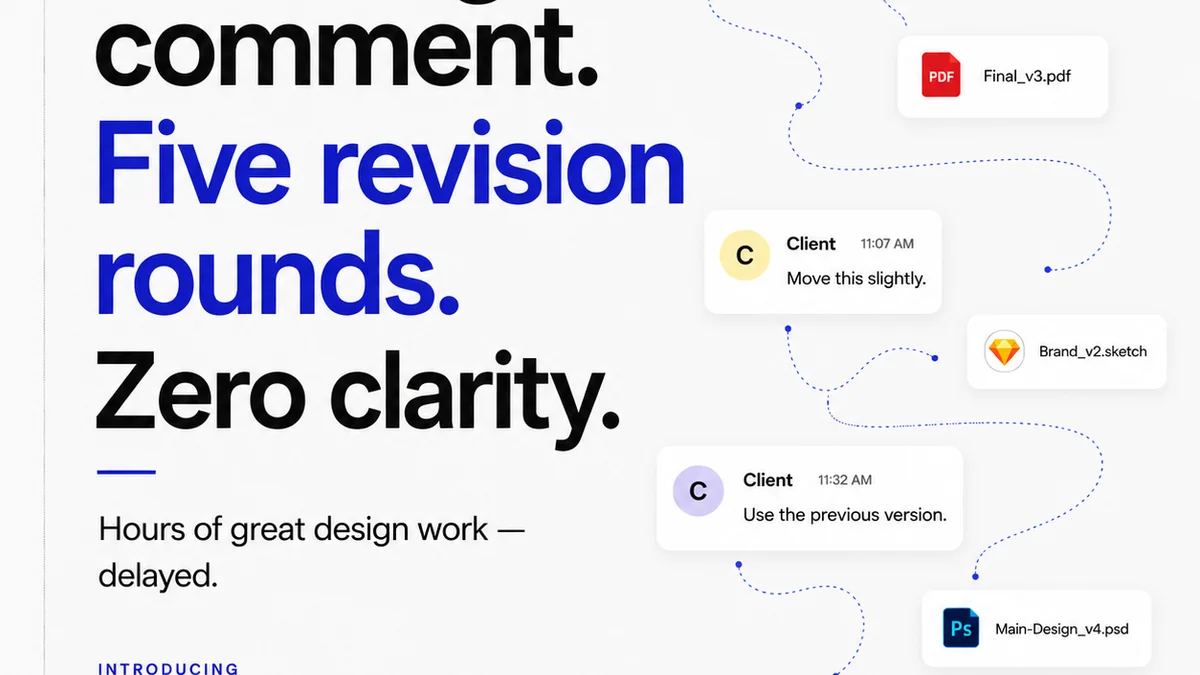
Everyone agrees that client feedback is crucial for great design. That it helps align expectations and ensure the final product hits the mark. None of that is wrong. But it’s incomplete.
The hard truth? Most feedback processes are chaotic. They’re a bottleneck, a source of frustration, and a drain on creative energy. They actively *prevent* great design, rather than enabling it.
1. The Myth of the "Good" Client
We often talk about needing
Frequently asked questions
What's the biggest mistake agencies make with client feedback?
The biggest mistake is treating feedback as a passive event rather than an active process. Agencies often wait for feedback to arrive, then react. The best approach is to proactively structure how feedback is gathered, organized, and actioned.
How can I ensure feedback is actionable?
Provide clear guidelines on what kind of feedback is needed at each stage. Use tools that allow for specific annotations and contextual comments. Always follow up with clients to clarify ambiguous points and confirm understanding before starting revisions.
What's the difference between revision and feedback?
Feedback is the client's opinion, suggestion, or critique. Revisions are the actual changes made to the design based on that feedback. Effective management ensures feedback is clearly understood before the revision process even begins.
How can technology help with managing feedback?
Technology, like dedicated feedback and review platforms, can centralize all client comments, track versions, manage approvals, and provide a clear audit trail. This eliminates scattered emails and spreadsheets, making the entire process more efficient and transparent.