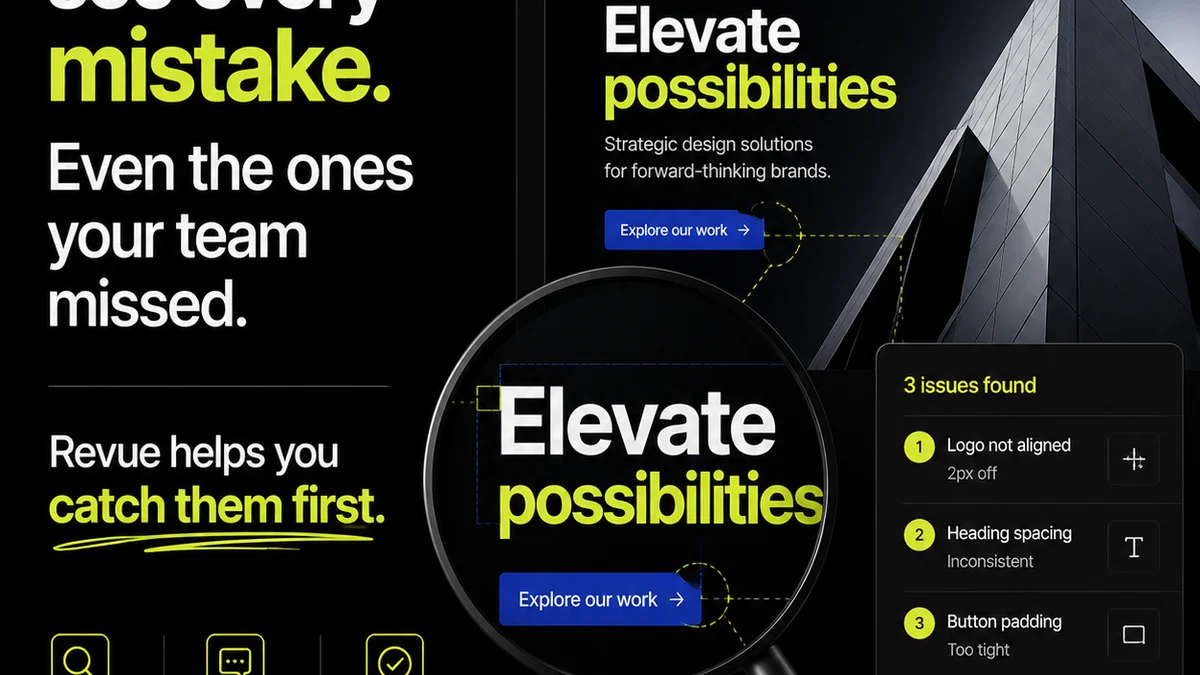
Everyone knows you need a system for handling client feedback. It’s the bedrock of agency operations. You probably think that means getting sign-offs, logging comments, and moving on.
None of that is wrong. But it’s incomplete.
The hard truth? Most agencies treat feedback management as a gatekeeping exercise, not a growth opportunity. This approach leaves money on the table and damages client relationships. A truly effective feedback process is about collaboration, clarity, and continuous improvement. It’s about turning subjective opinions into objective progress.
1. Define Your Feedback Loop
Before any project starts, you need to establish clear expectations around feedback. This isn't just about *when* feedback is given, but *how* it’s given and *who* gives it.
Define Stakeholders and Roles
Who has the final say? Who are the subject matter experts? Who is just providing a gut reaction? Clarifying this upfront prevents conflicting feedback later.
- Identify the primary decision-maker.
- List all key stakeholders involved in the review process.
- Outline the role of each stakeholder (e.g., strategic approval, technical review, aesthetic preference).
Establish Timelines and Cadence
Unrealistic timelines kill creativity and strain client relationships. Set clear expectations for turnaround times on both your end and the client's.
- Define review periods (e.g., 48 hours, 72 hours).
- Specify the number of review rounds included in the scope.
- Schedule regular check-ins to proactively address potential feedback bottlenecks.
Set Communication Channels
Email chains get lost. Slack messages become noise. Define where and how feedback should be submitted to ensure nothing slips through the cracks.
- Designate a primary tool for consolidated feedback (e.g., a project management platform, a dedicated review tool).
- Discourage ad-hoc feedback via personal emails or text messages.
- Train clients on how to use the designated tool effectively.
2. Standardize Feedback Collection
Vague, subjective feedback is the enemy of efficient revision. Your checklist should enforce clarity and actionability.
Mandate Specificity
Generic comments like “I don’t like it” or “Make it pop more” are useless. Train yourself and your clients to ask *why* and *what specifically* needs to change.
- Require feedback to be tied to specific elements on the page or screen.
- Ask clarifying questions immediately if feedback is unclear.
- Use annotation tools to pinpoint exact areas needing attention.
Categorize Feedback Types
Not all feedback is created equal. Differentiating between strategic, aesthetic, and technical input helps prioritize and address it appropriately.
- Strategic: Does this align with the project goals?
- Aesthetic: Is the look and feel right?
- Technical: Does it function as intended? Is it feasible?
- Preference: This is subjective and should be weighted accordingly.
Implement a
Frequently asked questions
What is the most crucial step in feedback management?
Defining clear communication channels and stakeholder roles upfront is paramount. This prevents confusion and ensures feedback is directed to the right people and processed effectively.
How can I make client feedback more actionable?
Mandate specificity. Require clients to tie feedback to specific elements and explain the 'why' behind their suggestions. Use annotation tools to pinpoint exact areas needing revision.
How many revision rounds should be included?
The number of revision rounds should be clearly defined in your project scope and contract. Typically, 2-3 rounds are standard, with additional rounds incurring extra costs.
What's the difference between strategic and preference feedback?
Strategic feedback relates to whether the creative aligns with project goals and objectives. Preference feedback is subjective, based on personal taste, and should be carefully considered against strategic goals.