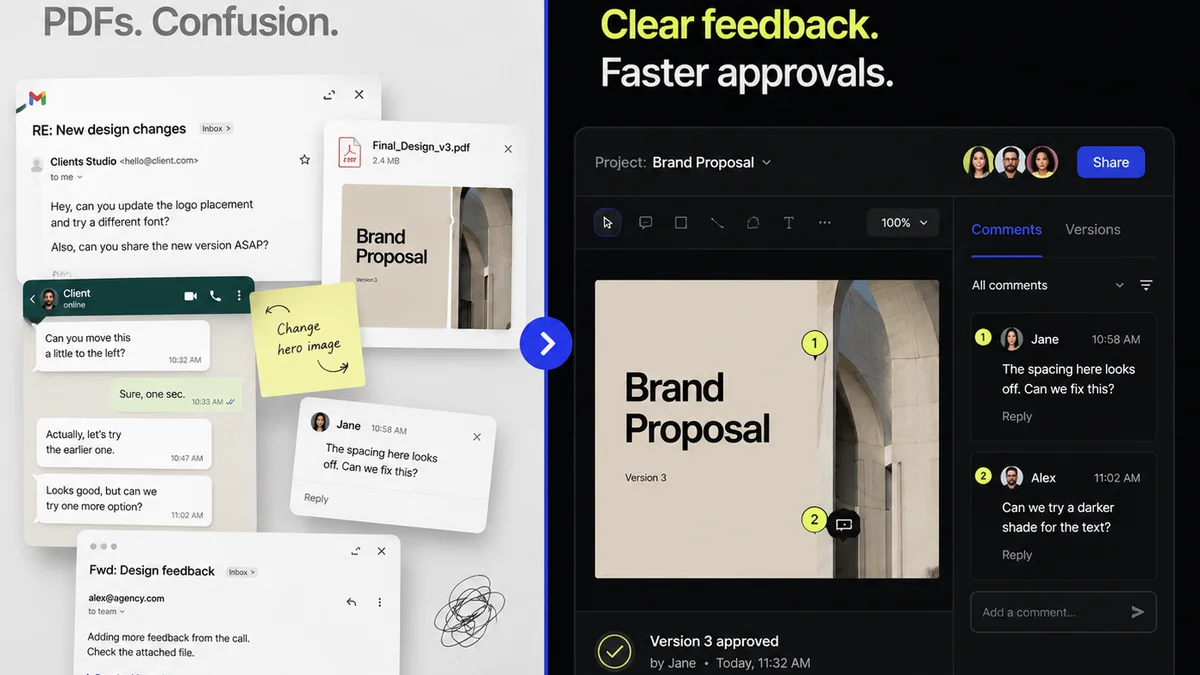
Everyone agrees that clear feedback is crucial for marketing teams. You've heard it a million times: better feedback means better creative, faster approvals, and happier clients. None of that is wrong. But it’s incomplete.
The hard truth is that most marketing feedback software doesn't solve the core problem: it just digitizes the chaos. It centralizes comments, sure, but it doesn't fundamentally change *how* feedback is given, received, or acted upon. The real challenge isn't just collecting feedback; it's managing it effectively to drive actual progress.
1. Beyond Basic Commenting: Context is King
Generic feedback tools treat every piece of feedback the same. They allow comments on a document or image, but lack the granular context needed for creative work. This leads to ambiguity, misinterpretation, and endless clarification cycles.
The Problem with Flat Feedback
Think about it. A client leaves a comment like “Make it pop more.” What does that even mean? Without context tied to a specific element, or a clear understanding of the project goals, it’s just noise.
Effective feedback software for marketing teams needs to go deeper. It should allow for:
- Annotation directly on specific design elements (e.g., a button, a headline, an image area).
- Categorization of feedback (e.g., typo, design suggestion, technical issue, strategy question).
- Linking feedback to project briefs or strategic objectives.
- Version control that clearly shows what feedback relates to which iteration.
When feedback is contextual, it’s actionable. When it’s not, it’s a time sink.
2. The Revision Nightmare: Visibility and Workflow
The biggest killer of creative momentum isn't bad feedback; it's the lack of visibility into the revision process. Marketing teams often struggle with:
- Knowing who is responsible for what feedback.
- Tracking the status of requested revisions.
- Understanding the history of changes and decisions.
- Communicating changes between internal teams and external clients.
Many tools offer a task list, but it’s often disconnected from the actual creative asset. This disconnect forces manual updates, leads to missed revisions, and creates a frustrating experience for everyone involved.
Solving the Workflow Bottleneck
Good marketing feedback software needs to integrate the feedback loop directly into the revision process. This means:
- Clear assignment of feedback items to specific team members.
- Status tracking for each piece of feedback (e.g., Open, In Progress, Resolved, Approved).
- Visual timelines or logs showing the evolution of feedback and revisions.
- Automated notifications for new feedback, assignments, and status changes.
This level of transparency prevents assumptions and keeps everyone aligned. It turns feedback from a passive comment into an active part of the project workflow.
3. Quality Control: From Feedback to Final Output
It’s not just about getting client approval. It’s about ensuring the final output meets quality standards, technical specifications, and strategic goals. Many feedback systems stop at client sign-off, leaving internal quality assurance as an afterthought.
This can lead to:
- Last-minute bugs or errors discovered just before launch.
- Inconsistent branding across different assets.
- Creative work that misses the mark strategically, despite client approval.
- Compliance or accessibility issues that weren't flagged early.
Building Quality In
The best software for marketing teams integrates quality checks seamlessly. This involves:
- Checklists for common QA tasks (e.g., link checks, spelling, responsiveness).
- Defined approval stages beyond just client sign-off (e.g., internal review, legal review).
- A clear audit trail of all feedback, revisions, and approvals for accountability.
- Integration with other tools to check technical specs or brand guidelines.
Shifting quality control from a final hurdle to an integrated part of the feedback and revision process saves time and prevents costly mistakes.
4. Beyond the Creative Asset: The Bigger Picture
Often, feedback tools are siloed. They exist only for the specific project they’re attached to. This makes it hard to learn from past feedback, identify recurring issues, or build a knowledge base.
The Value of Historical Data
Imagine if you could easily see:
- Common feedback themes from a specific client.
- Which types of creative assets typically generate the most revisions.
- The average time it takes to resolve feedback on different project types.
This kind of data is gold. It helps you refine your processes, anticipate client needs, and improve project scoping. Without a system that captures and organizes this information, you're constantly reinventing the wheel.
Truly effective software for marketing teams provides reporting and analytics that offer insights into your entire feedback lifecycle. It’s about continuous improvement, not just project completion.
Where Revue Fits In
Revue isn't just another commenting tool. It's built from the ground up to address the operational realities of creative teams managing client feedback.
We provide a centralized hub for all your creative assets and client communication. Instead of scattered emails and Slack messages, feedback lives directly alongside the work it pertains to. Our system is designed for clarity, offering:
- Centralized Feedback: All client comments, internal discussions, and stakeholder approvals in one place, tied to specific versions of your creative assets.
- Revision Management: Clear visibility into who said what, what changes were made, and the status of each revision request. This eliminates guesswork and streamlines the approval process.
- Quality Assurance Workflows: Customizable checklists and approval stages ensure that every piece of work goes through rigorous checks before final delivery, reducing errors and ensuring strategic alignment.
- Project Visibility: A clear audit trail and dashboard view provide transparency for your team and your clients, fostering trust and accountability.
Revue helps you move beyond simply collecting feedback to actively managing and optimizing your creative workflow, ensuring your team can deliver exceptional work efficiently.
Final Thought
The goal of any feedback system isn't just to gather opinions. It's to facilitate clear communication, drive efficient revisions, and ultimately produce better creative work. Are you using software that truly supports these goals, or just one that adds another layer to the existing complexity?
Frequently asked questions
What's the biggest mistake marketing teams make with feedback software?
The biggest mistake is choosing software that only digitizes existing chaotic feedback processes. Teams often opt for tools that simply allow comments without providing the necessary context, version control, or workflow integration needed to make feedback truly actionable.
How can software improve client approval processes?
Effective software improves client approvals by centralizing all feedback and revisions in one place, providing clear version history, assigning accountability for requested changes, and offering a transparent audit trail. This reduces ambiguity and speeds up the sign-off process.
What are the key features of effective marketing feedback software?
Key features include contextual annotation directly on assets, clear feedback categorization, robust version control, integrated revision tracking with status updates, customizable approval workflows, and historical data analysis for process improvement.
How does feedback software help with quality control?
By integrating customizable checklists and defined approval stages beyond client sign-off, feedback software ensures that internal quality checks, compliance, and strategic alignment are addressed throughout the revision process, not just at the very end.