Everyone thinks a marketing approval checklist for FinTech is all about ticking boxes for regulatory compliance. And sure, that’s a piece of the puzzle. But it’s a tiny piece.
The real truth? A comprehensive marketing approval process is your agency’s shield and sword. It protects your reputation, streamlines client relationships, and ensures every campaign hits the strategic mark, not just the legal one.
1. The Myth of the Single Compliance Review
Many agencies and FinTech clients operate under the assumption that one final legal or compliance review is enough. Throw the campaign assets over the wall, get a sign-off, and launch. Simple, right?
Wrong. This approach is a recipe for last-minute panic and misaligned messaging. It assumes compliance is a static, monolithic thing, rather than a dynamic part of the entire creative process.
The Real Bottleneck Isn’t Legal, It’s Communication
The actual bottleneck isn't the compliance officer’s signature. It’s the cascade of misinterpretations, missed strategic nuances, and branding inconsistencies that happen *before* that final sign-off. These issues surface late, causing expensive rework and client friction.
A marketing approval checklist needs to be built into the workflow from the start, not tacked on at the end.
2. Building a Multi-Stage Approval Workflow
A robust FinTech marketing approval process isn't a single gate; it's a series of gates, each with a specific purpose. This staged approach catches issues earlier, when they're cheaper and easier to fix.
Stage 1: Strategic Alignment Check
Before a single pixel is designed or a word is written, does the proposed campaign align with the client’s overall marketing strategy and business objectives? This isn't a compliance check; it's a gut check.
- Does it target the right audience?
- Does it reinforce the core brand message?
- Does it support the stated campaign goals?
- Is the tone appropriate for the FinTech sector?
This initial alignment prevents the team from creating beautiful assets that ultimately miss the strategic mark.
Stage 2: Creative Concept Review
Once the strategy is locked, the creative team develops concepts. This stage focuses on the core message and visual direction. Is it compelling? Is it on-brand? Does it avoid potential misinterpretations?
This is where you catch creative risks before they become expensive problems.
Stage 3: Content and Copy Review
Here, the focus shifts to the specifics of the messaging. This is where compliance *starts* to become a significant factor, but it’s not just about legal jargon.
- Are claims accurate and substantiated?
- Is the language clear, concise, and easy for the target audience to understand?
- Are there any potentially misleading statements?
- Does the copy adhere to brand voice guidelines?
Think about the clarity of content. If your audience can’t understand it, it’s useless, regardless of compliance.
Stage 4: Design and Asset Review
Visuals are critical in FinTech marketing. This stage ensures that all design elements are consistent with brand guidelines and effectively communicate the message.
- Are logos, colors, and typography used correctly?
- Are all visual assets high-quality and properly formatted?
- Do the visuals align with the copy and strategic goals?
- Are there any accessibility considerations? (e.g., sufficient color contrast)
Stage 5: Pre-Launch Compliance & Legal Review
This is the traditional gate everyone thinks of. Here, legal and compliance teams give their final sign-off, focusing on regulatory adherence, risk mitigation, and legal disclaimers.
- Does the final asset meet all industry regulations (e.g., FINRA, SEC, GDPR)?
- Are all necessary disclaimers present and correctly worded?
- Are there any potential legal liabilities?
This review should be a formality if the previous stages were executed correctly.
Stage 6: Final QA and Pre-Launch Check
Before hitting the publish button, one last check. This is a sanity check. Are all links working? Is the correct version being deployed? Are there any technical glitches?
This catches the small errors that can undermine an otherwise perfect campaign.
3. Defining Roles and Responsibilities
A checklist is useless without clear ownership. Who is responsible for what at each stage? Ambiguity here is the enemy of efficiency.
Clearly define:
- The approver for each stage.
- The reviewer for each stage.
- The timeline for each review.
- The criteria for approval/rejection at each stage.
This clarity prevents endless email chains and confusion about who needs to do what next.
4. The Technology Stack: Beyond Spreadsheets
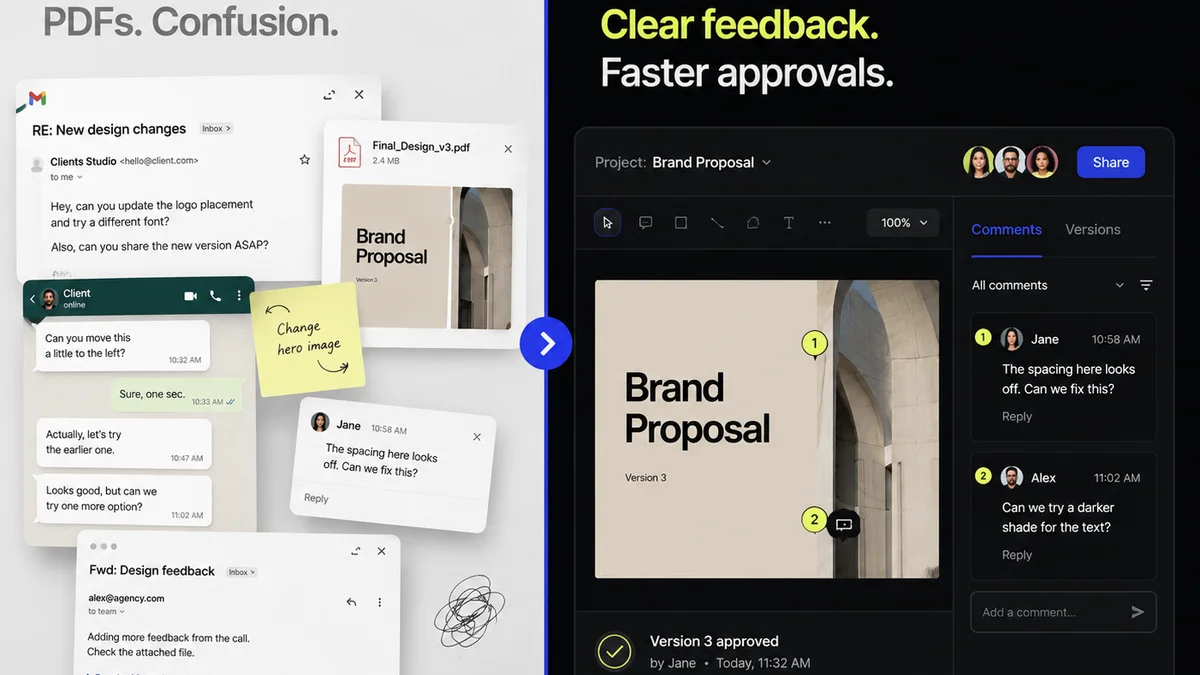
Managing this multi-stage process with spreadsheets and endless email threads is a losing battle. It’s slow, error-prone, and lacks visibility.
You need a system designed for creative workflow management.
Think about tools that offer:
- Centralized feedback and annotation
- Version control and revision history
- Clear approval workflows and status tracking
- Automated notifications and reminders
This isn’t about fancy software; it’s about operational rigor.
Where Revue Fits In
Revue provides the centralized platform needed to manage this complex approval process effectively. Instead of juggling disparate tools and communication channels, you can consolidate your workflow.
With Revue, you can:
- Centralize Feedback: Gather all stakeholder comments and annotations directly on the creative assets within a single platform. No more hunting through emails or Slack messages.
- Streamline Revisions: Track every iteration of a design or piece of copy. Revisions are clearly linked to the original brief and feedback, ensuring context is never lost.
- Automate Approvals: Set up custom approval workflows that map directly to your multi-stage process. Assign reviewers, set deadlines, and get clear status updates at a glance. This visibility ensures FinTech marketing campaigns move forward efficiently and compliantly.
- Maintain Quality Checks: Ensure that every piece of creative work meets your agency’s standards and client requirements before it ever reaches the final compliance gate.
Revue transforms the chaotic approval process into a structured, transparent, and efficient operation, crucial for the fast-paced FinTech sector.
5. Handling Feedback and Revisions
Even with a perfect process, feedback will come. The key is how you manage it.
Consolidate, Don't Scatter
All feedback should flow into a single system. This prevents conflicting comments and ensures everyone is working from the same set of instructions.
Distinguish Between Feedback Types
Is it a strategic suggestion, a minor copy edit, a compliance concern, or a purely aesthetic preference? Categorizing feedback helps prioritize and address it correctly.
The
Frequently asked questions
What are the key stages of a FinTech marketing approval checklist?
A robust FinTech marketing approval checklist typically includes stages for strategic alignment, creative concept review, content and copy review, design and asset review, pre-launch compliance and legal review, and a final QA check before launch.
Why is a multi-stage approval process important for FinTech?
FinTech marketing requires strict adherence to regulations and clear communication. A multi-stage process catches potential issues early, reduces costly rework, ensures strategic alignment, and builds client trust by demonstrating a rigorous, transparent workflow.
How can agencies manage FinTech marketing approvals more efficiently?
Agencies can manage approvals more efficiently by using dedicated workflow management tools like Revue, which centralize feedback, automate workflows, provide version control, and offer clear visibility into the approval status, moving beyond manual processes like spreadsheets and emails.
What is the difference between creative review and compliance review in FinTech marketing?
Creative review focuses on strategic alignment, brand messaging, and audience impact. Compliance review, typically the final stage, focuses strictly on adherence to industry regulations, legal requirements, and risk mitigation.