Everyone talks about FinTech marketing approval being complex. Regulatory hurdles, compliance checks, legal reviews – it’s a minefield. None of that is wrong. But it’s incomplete.
The hard truth is that compliance is only one layer. The real bottleneck for FinTech marketing approval isn't just the rules; it's the chaotic, inefficient workflow buried beneath them. Agencies and in-house teams get bogged down in endless email chains, scattered feedback, and version control nightmares, delaying launches and frustrating clients.
Let’s cut through the noise. This is your operational guide to getting FinTech marketing assets approved, faster and smoother.
1. Beyond Compliance: The Workflow Black Hole
FinTech marketing approval is often framed as a legal and compliance battle. You need sign-off from legal, compliance, risk, maybe even a specific regulatory body depending on the product.
This is true. But it’s not the whole story.
What kills most FinTech marketing projects is the sheer operational drag. Think about it:
- Endless email threads where feedback gets lost.
- Multiple versions of a single asset floating around.
- No clear ownership or accountability for review stages.
- Manual tracking of feedback and revisions.
- Last-minute, eleventh-hour comments that require massive rework.
- Difficulty proving who approved what, and when.
This is the workflow black hole. It’s not about the *content* of the compliance; it's about the *process* of getting there.
The Cost of Inefficiency
Delays in FinTech marketing approval mean:
- Missed market windows for product launches.
- Competitors gaining traction while you’re stuck in review.
- Wasted creative and account management hours chasing approvals.
- Damaged client relationships due to slow turnaround.
- Increased risk of errors due to rushed final checks.
The financial and reputational cost of a broken workflow far outweighs the cost of implementing a better system.
2. Mapping Your FinTech Marketing Approval Process
You can't fix what you don't understand. The first step is mapping your *actual* approval process, not the idealized one.
Grab a whiteboard or a shared document. Map every single step, from initial brief to final deployment.
Identify Key Stakeholders and Their Roles
Who needs to see what? Be specific.
- Legal: Reviewing disclaimers, terms, and regulatory claims.
- Compliance: Ensuring adherence to financial regulations (e.g., FINRA, SEC, FCA).
- Product Team: Verifying feature accuracy and messaging.
- Marketing Leads: Approving brand consistency and campaign strategy.
- Client Stakeholders: Final business approval.
- External Regulators (if applicable): Specific industry sign-offs.
For each stakeholder, define their specific review criteria and expected turnaround time. Be realistic.
Document Each Stage
Break down the approval journey:
- Creative Briefing
- Initial Concept/Copy Development
- Internal Creative Review
- Legal Review
- Compliance Review
- Product Team Review
- Client Internal Review
- Client Final Approval
- Deployment
This is a simplified example. Your process might have more stages or different sequences. The goal is clarity.
Visualize the Handoffs
Where does an asset move from one person or team to the next? These handoffs are critical points where delays and errors occur. Note the tools and methods used for each handoff (email, shared drive, project management tool).
3. Streamlining Feedback and Revisions
This is where most FinTech marketing approval processes break down. Feedback is often:
- Vague: “Make it better.”
- Conflicting: Legal says one thing, marketing another.
- Unstructured: Just a list of edits without context.
- Delayed: Sitting in someone’s inbox for days.
You need a system for structured, actionable feedback.
Centralized Feedback is Non-Negotiable
Stop relying on scattered emails. All feedback, comments, and annotations for a specific asset should live in one place.
This means using a dedicated tool where reviewers can comment directly on the asset itself – a PDF, an image, a video, a webpage. Context is everything.
Establish Clear Revision Protocols
Once feedback is given, how are revisions managed?
- Assign Ownership: Who is responsible for implementing the revisions?
- Track Changes: How are changes logged and communicated?
- Version Control: Ensure everyone is working on the latest approved version.
- Resubmission Process: Define how revised assets are sent back for re-review.
This isn’t just about making edits; it’s about managing the *flow* of those edits and ensuring they are addressed correctly.
Time-Boxing Review Cycles
Set clear, reasonable deadlines for each review stage. If a stakeholder doesn’t provide feedback within the agreed timeframe, what happens?
This requires buy-in from all parties. It’s a cultural shift, but essential for predictable timelines.
4. The Role of Technology in FinTech Approval
Manual processes are a recipe for disaster in FinTech marketing. Technology can automate, centralize, and bring visibility.
Project Management Tools
While not built specifically for creative approval, tools like Asana, Monday.com, or Jira can help track tasks, deadlines, and responsibilities. However, they often lack the granular, visual feedback capabilities needed for creative assets.
Digital Asset Management (DAM) Systems
DAMs are great for storing and organizing final assets, but they often fall short during the active review and approval stages. They might not offer robust annotation or workflow management features.
Specialized Creative Workflow Tools
This is where dedicated platforms shine. Tools designed for creative review and approval offer:
- Visual annotation: Comment directly on images, PDFs, videos.
- Version control: Easily compare versions and track changes.
- Centralized feedback: All comments in one place, linked to the asset.
- Customizable workflows: Define specific review stages and assign reviewers.
- Audit trails: Clear records of who reviewed, commented, and approved what, and when.
For FinTech, the audit trail is particularly crucial for compliance and risk management.
5. Where Revue Fits In
Getting marketing approval for FinTech products requires a robust system that handles complex requirements and multiple stakeholders efficiently. This is precisely where Revue can help.
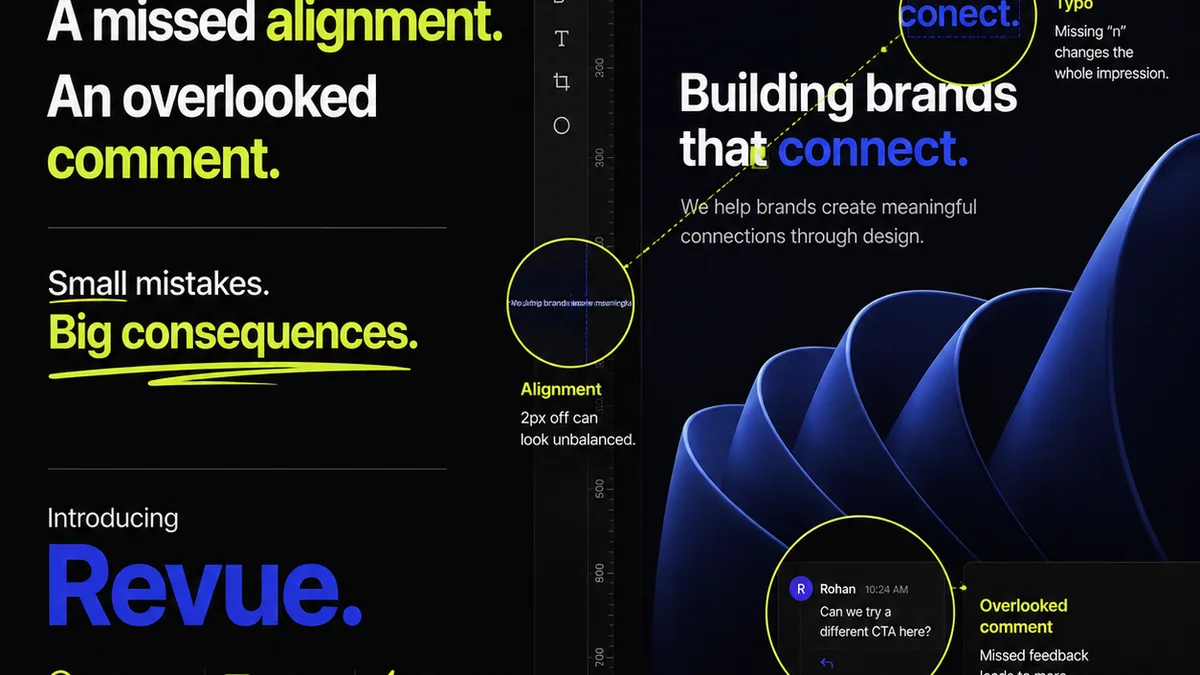
Revue provides a centralized platform designed to manage the entire creative review and approval lifecycle. Instead of juggling emails and spreadsheets, your team can:
- Centralize Feedback: Upload creative assets (designs, copy, videos) and gather all feedback in one place. Reviewers can add comments and annotations directly on the asset, eliminating confusion and lost messages.
- Manage Revisions with Visibility: Track every version of an asset. See exactly what changed between versions and who made the decisions. This clarity is vital for complex FinTech projects.
- Streamline Approval Workflows: Define custom approval stages, assign specific reviewers, and set deadlines. Get automated notifications when action is required, ensuring timely progress.
- Maintain Audit Trails: Revue automatically logs all activity – who viewed, commented, and approved what, and when. This creates an irrefutable record, essential for FinTech compliance and risk mitigation.
- Ensure Quality Checks: Beyond just approvals, use Revue to conduct thorough quality assurance, ensuring all requirements (brand, legal, product) are met before final sign-off.
By bringing structure and transparency to your creative workflow, Revue helps FinTech teams move faster, reduce errors, and ensure all marketing materials meet stringent regulatory and business standards.
6. Building a Culture of Efficient Approval
Technology is an enabler, but a process is only as good as the people using it.
You need to foster a culture that values efficient, clear communication and respects established workflows.
Educate Your Stakeholders
Ensure everyone involved understands the new process and the tools being used. Explain *why* it’s important – not just for the agency or internal team, but for the client and the business.
Set Clear Expectations
Communicate expected turnaround times, the format of feedback, and the consequences of delays. This needs to be agreed upon upfront.
Regular Process Reviews
Periodically review your approval process. What’s working? What’s not? Gather feedback from all stakeholders and make iterative improvements.
This isn't a one-and-done fix. It’s continuous improvement.
7. Final Thought
FinTech marketing approval is more than a compliance checkbox. It’s a critical operational process that, when managed poorly, can cripple your go-to-market strategy.
Are you still treating marketing approval as a legal formality, or are you optimizing it as a core business function?
Frequently asked questions
What are the biggest challenges in FinTech marketing approval?
Beyond regulatory compliance, the biggest challenges are operational inefficiencies: scattered feedback, poor version control, unclear responsibilities, and long, unpredictable review cycles, all of which delay launches and frustrate teams.
How can technology improve FinTech marketing approval?
Technology can centralize feedback, automate notifications, provide clear audit trails, manage versions effectively, and streamline communication. Dedicated creative workflow tools are particularly effective for visual feedback and process management.
Why is a clear audit trail important for FinTech approvals?
A clear audit trail provides irrefutable proof of who reviewed, commented on, and approved assets, and when. This is crucial for demonstrating compliance to regulators, mitigating risk, and resolving disputes.
How can agencies speed up FinTech marketing approval?
Agencies can speed up approvals by mapping and optimizing their workflow, centralizing feedback on assets, setting clear expectations and deadlines for reviewers, and using technology to automate and track the process.