Everyone talks about the speed and innovation in FinTech marketing. They say it’s about agile teams, rapid iteration, and staying ahead of the curve.
None of that is wrong. But it’s incomplete.
The real truth? Flawless execution in FinTech marketing hinges on one thing: ruthless collaboration. Not just talking, but deep, integrated teamwork that cuts through the noise and gets high-stakes creative projects approved and launched without a hitch.
1. The Illusion of 'Done' vs. True Approval
Many teams operate under the assumption that 'done' means the creative is finished and handed off. This is a dangerous oversimplification, especially in FinTech where regulatory scrutiny and brand consistency are paramount.
The hard truth is that 'done' is only the beginning of the real work: the review and approval cycle. This is where projects live or die.
Symptoms of Poor Approval Processes
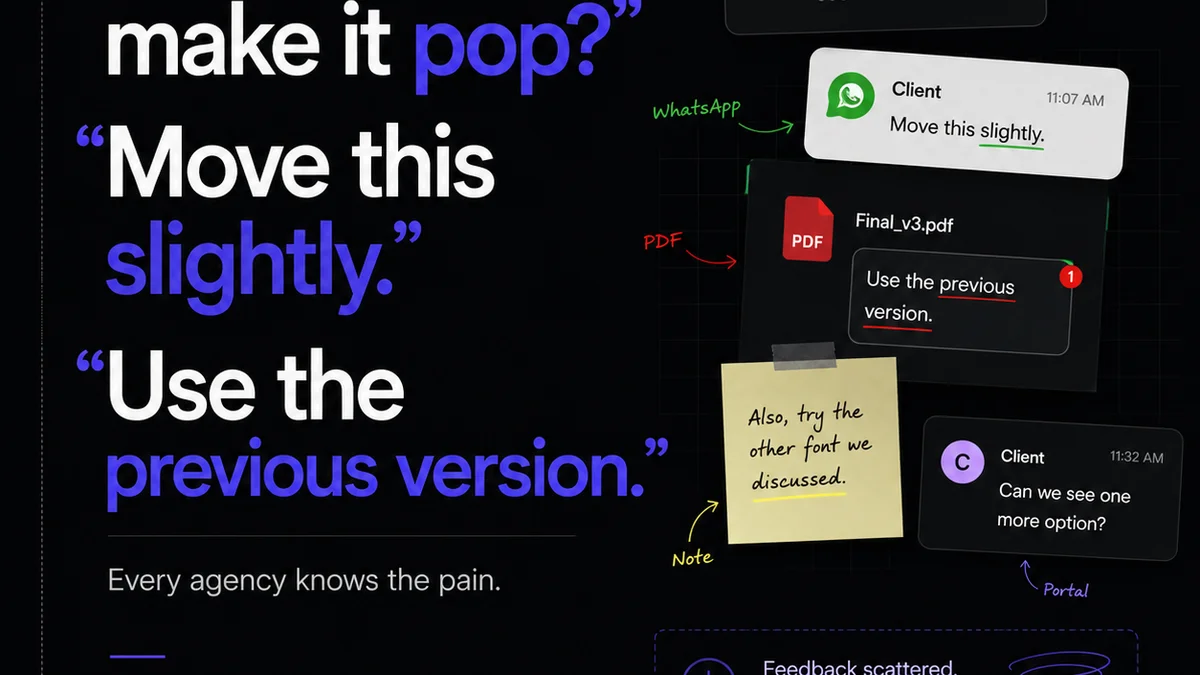
- Endless email chains with conflicting feedback.
- Key stakeholders missing from crucial review stages.
- Version control nightmares where the wrong asset goes live.
- Last-minute changes that derail launch dates.
These aren't just minor annoyances; they are project killers. They erode trust, waste resources, and can lead to costly compliance errors.
Establishing Clear Approval Workflows
A robust approval process isn't about bureaucracy; it's about clarity and accountability.
Define clear roles: who provides feedback, who approves, and who has final say.
Document every decision.
Set strict deadlines for feedback and approvals.
2. Bridging the Gap Between Creative and Compliance
FinTech marketing operates in a highly regulated environment. Claims need substantiation. Disclaimers must be visible. Brand messaging must align with legal and compliance guidelines.
The assumption is that creative teams and compliance teams speak the same language. They don't.
The hard truth is that bridging this gap requires more than just a quick email. It demands structured communication and integrated workflows.
Integrating Compliance Early
Compliance shouldn't be an afterthought; it must be baked into the creative process from day one.
This means involving compliance officers or legal reviewers much earlier than you might think.
Provide them with clear briefs and context for the creative work.
Tools for Harmonized Feedback
Trying to manage compliance feedback via scattered documents and emails is a recipe for disaster.
Centralized platforms allow for feedback to be logged against specific creative assets, with clear visibility for all stakeholders. This ensures that compliance concerns are addressed directly and cannot be overlooked.
3. Version Control: The Unsung Hero of FinTech Assets
In FinTech, a single misplaced decimal point or an outdated logo can have significant repercussions. The pressure to get marketing assets perfect the first time is immense.
The assumption is that teams are careful enough to avoid versioning errors. This is a gamble you can't afford to take.
The hard truth is that manual version control is a ticking time bomb. You need a system that manages revisions automatically and transparently.
The Perils of Manual Versioning
- Sending out an old PDF instead of the final approved version.
- Confusing stakeholders with multiple file names like `final_v2_really_final.ai`.
- Difficulty tracking who made what changes and when.
Automated Version Tracking
A digital asset management system or a dedicated feedback platform provides an audit trail for every iteration.
This ensures that only the latest, approved version is ever accessible for distribution.
It eliminates ambiguity and significantly reduces the risk of errors.
4. Stakeholder Alignment: Beyond the 'Yes' Man
Getting buy-in from diverse stakeholders—product, marketing, sales, legal, compliance, even C-suite—is critical in FinTech.
The assumption is that a quick meeting or a status update is enough to keep everyone aligned.
The hard truth is that true alignment requires continuous, visible communication and a shared understanding of project progress and decisions.
Identifying Key Stakeholders
Map out everyone who has a vested interest in the marketing campaign.
Understand their priorities and concerns.
This often includes teams you might not typically associate with creative output, like risk management or customer support.
Facilitating Transparent Communication
Regular, structured updates are essential.
But even better is a system where stakeholders can see the project evolve in real-time.
This transparency builds confidence and allows for proactive issue resolution, rather than reactive crisis management.
Where Revue Fits In
Managing FinTech marketing collaboration effectively requires tools that bring order to chaos.
Revue acts as the central nervous system for your creative workflow.
It provides a single source of truth for client feedback, ensuring that all comments and revisions are captured in one place, tied directly to the creative assets. This eliminates scattered email threads and lost feedback.
Visibility into the revision and approval process is paramount. Revue offers a clear audit trail, showing who reviewed what, when, and what decisions were made. This transparency is crucial for meeting FinTech's stringent requirements.
Furthermore, by centralizing feedback and approvals, Revue helps ensure that quality checks are performed on the correct, final versions of assets, minimizing the risk of errors and compliance breaches.
5. Measuring Success: Beyond Vanity Metrics
In FinTech, marketing success isn't just about likes or shares. It's about driving qualified leads, customer acquisition, and demonstrating ROI in a highly competitive, regulated space.
The assumption is that good creative automatically translates to good business outcomes.
The hard truth is that without a collaborative process that ensures accuracy and compliance, even the most creative campaigns can fail to deliver.
Defining Meaningful KPIs
Focus on metrics that directly impact business goals: conversion rates, cost per acquisition, customer lifetime value, and compliance adherence.
Connecting Process to Performance
A streamlined, collaborative workflow directly impacts these KPIs.
Faster approvals mean quicker time-to-market.
Fewer errors mean reduced rework and compliance fines.
Better stakeholder alignment leads to more effective, on-brand campaigns.
Final Thought
FinTech marketing isn't just about launching campaigns; it's about launching with absolute confidence.
It's about building trust not only with your customers but also within your own team and across departments.
Can your current collaboration process guarantee that confidence, or is it leaving critical gaps that could jeopardize your next big launch?
Frequently asked questions
How can creative and compliance teams in FinTech collaborate more effectively?
Integrate compliance reviews early in the creative process. Use centralized platforms like Revue to log feedback directly against assets, ensuring all concerns are documented and addressed systematically. Define clear roles for who provides feedback and who gives final approval.
What are the biggest risks of poor version control in FinTech marketing?
The biggest risks include launching outdated or incorrect assets, which can lead to significant compliance violations, financial penalties, brand damage, and loss of customer trust. Manual versioning is highly prone to error, making automated systems essential.
How does collaboration impact the speed of FinTech marketing campaigns?
Effective collaboration dramatically speeds up campaigns. When feedback is centralized, clear, and timely, the review and approval cycles are shortened. This reduces bottlenecks, prevents last-minute changes, and ensures assets can be launched on schedule.
What role does a feedback management tool play in FinTech marketing?
A feedback management tool acts as a single source of truth for all creative feedback and revisions. It provides an audit trail, improves transparency among stakeholders, streamlines the approval process, and minimizes the risk of errors, which is critical for compliance in FinTech.