Everyone knows Frame.io. If you work in video production, it’s practically a given. But many creative and marketing teams assume it’s the be-all and end-all for *all* client feedback and review. That's a mistake.
None of that is wrong. But it’s incomplete.
The hard truth? Frame.io is a video-first tool. When your agency handles a mix of video, static images, web proofs, and documents, relying solely on Frame.io for feedback creates friction, silos, and inefficiencies. You need a system built for diverse creative workflows, not just one discipline.
1. The Video-Centric Trap
Frame.io excels at video. Its timeline-based commenting, version control, and playback features are top-notch for film and motion graphics. It streamlines the review process for video assets beautifully.
But what happens when you need to review a PDF, a set of social media graphics, or a website mockup? You can’t upload those directly to Frame.io in a way that makes sense for review. You end up:
- Using email for static assets, losing context.
- Uploading PDFs as video files (a hack that breaks search and annotation).
- Using a separate tool entirely, leading to fragmented communication.
This isn't about Frame.io being bad; it's about it being specialized. Your agency’s work isn’t specialized. It’s varied.
The Cost of Context Switching
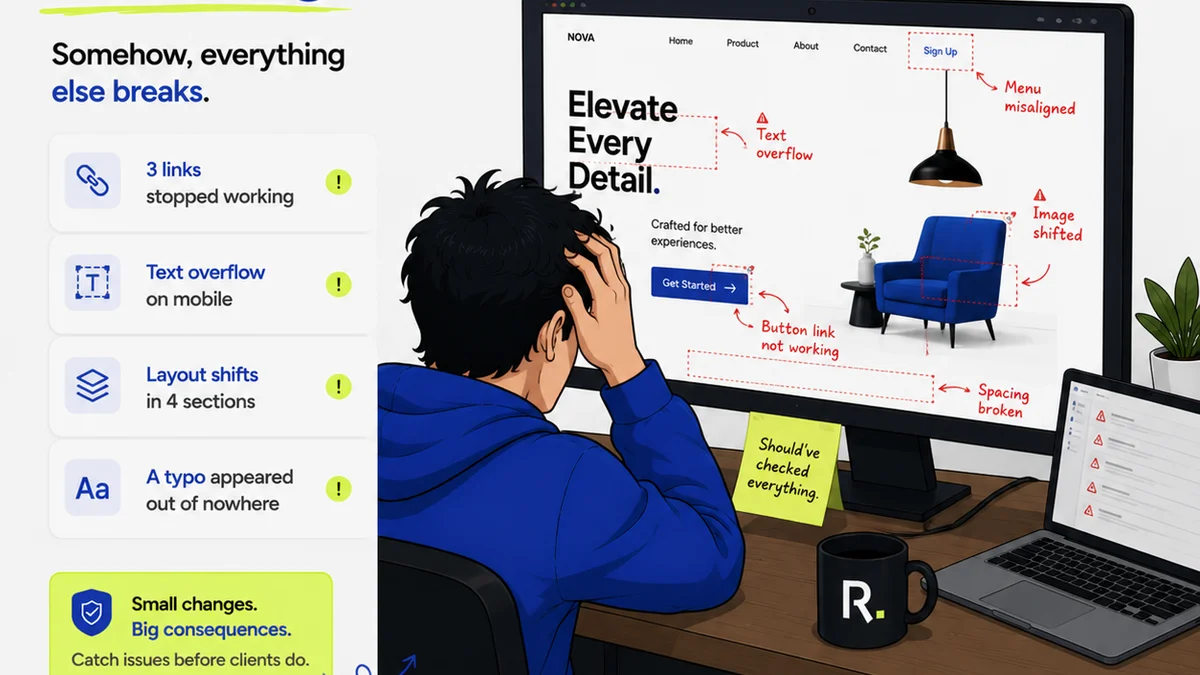
Every time a team member or client has to switch tools, platforms, or even just mental models, time and accuracy suffer. Information gets lost. Decisions get delayed. It’s a death by a thousand cuts for agency efficiency.
2. Beyond Annotation: The Need for Workflow Management
Feedback isn't just about leaving a comment on a video timeline. It’s about tracking what feedback is actionable, who is responsible for it, and what the status of each revision is. This is where video review tools often fall short for broader creative workflows.
Think about a typical campaign launch:
- Concept Mockups: Need clear, visual feedback on static images.
- Website Banners: Require specific feedback on dimensions, copy, and calls to action.
- Social Media Posts: Involve copy, image, and sometimes video elements, all needing approval.
- Client Presentations: Often delivered as PDFs requiring markup.
Frame.io’s strength is in its granular video feedback. But managing the *overall* project status, tracking approvals across multiple asset types, and ensuring everyone is working from the latest approved version? That’s a different beast entirely.
Version Control Chaos
While Frame.io has version control for video, managing multiple versions of static files, PDFs, or even different states of a web page within a single, cohesive system is often an afterthought. This leads to confusion about which file is the most current, which feedback applies to which version, and who signed off on what.
3. Collaboration Across Disciplines
Creative agencies are melting pots of talent: designers, copywriters, videographers, strategists, account managers. Effective collaboration means providing a unified platform where everyone can contribute and understand the feedback, regardless of their primary discipline.
If your design team lives in Figma or Adobe Creative Cloud, your video team uses Frame.io, and your copywriters use Google Docs, where does the client feedback live? How do you connect the dots?
A platform designed for diverse creative assets can centralize this. It allows for:
- Visual feedback on images and mockups.
- Timeline comments for video.
- Markup on PDFs and documents.
- Clear status tracking for every asset.
This unified approach eliminates the need for clients to learn multiple tools or for your team to juggle disparate feedback streams.
4. Client Experience Matters
Clients want simplicity. They want to see their feedback acknowledged and acted upon. They don't want to be onboarding onto a new tool for every single project type.
Presenting clients with a single, intuitive platform for all their creative reviews significantly enhances their experience. It reduces their cognitive load and builds trust. They see a streamlined process, which reflects positively on your agency’s professionalism and efficiency.
When clients have to navigate:
- A video platform for video.
- Email for PDFs.
- A separate tool for JPEGs.
- Another for website links.
…they don't see efficiency. They see a disorganized vendor.
Where Revue Fits In
This is precisely why tools like Revue are built. While Frame.io is a specialized solution for video, Revue is designed as a centralized hub for *all* creative feedback and approvals. It accommodates the reality of modern agency workflows.
Revue allows your team to:
- Upload and review static images, mockups, PDFs, and videos side-by-side.
- Provide precise, contextual feedback directly on any asset type.
- Track the entire revision history and approval status for every file.
- Ensure quality checks are integrated into the workflow, not an afterthought.
It’s about bringing all your creative assets and their associated feedback into one manageable system. No more fragmented communication. No more context switching. Just clear, consolidated progress tracking from concept to final delivery.
Final Thought
Is Frame.io a good tool? Yes, for video. But is it the right tool for managing *all* your agency's client feedback and approvals across diverse creative assets? For most agencies, the answer is likely no.
The real question is: are you optimizing your entire workflow for the exceptions, or for the rule?
Frequently asked questions
Can Frame.io be used for static design assets?
Technically, you can upload static files, but Frame.io isn't optimized for reviewing them. Its core strength is timeline-based annotation for video, which doesn't translate well to images or PDFs, leading to a clunky user experience for clients and teams.
What are the main drawbacks of using only video review software for an agency?
The primary drawback is fragmentation. Relying on a video-specific tool means you'll likely need separate systems or methods (like email) for static images, documents, and web proofs. This leads to siloed feedback, lost context, version control issues, and a poor client experience.
How does specialized design review software differ from Frame.io?
Specialized design review software, like Revue, is built to handle a wide range of creative assets (images, PDFs, videos, web links) within a single platform. It focuses on centralized feedback, unified workflow management, version tracking across all asset types, and clear approval statuses, offering a holistic solution for agency needs.
Why is a unified platform important for creative agencies?
A unified platform streamlines communication, reduces errors caused by fragmented feedback, improves client experience by offering a single point of contact for reviews, and enhances team efficiency by eliminating the need to switch between multiple tools. It provides a clear overview of project status and approvals.