Everyone’s talking about generative AI. You see the headlines. You hear the buzz. The assumption? That generative AI tools are here to revolutionize creative workflows overnight, automating everything and making agency life a breeze. None of that is wrong. But it’s incomplete.
The hard truth is that generative AI isn't a magic wand. It’s a powerful, complex, and often unpredictable new tool that demands a strategic, operational approach. For creative agencies and in-house teams, successful integration isn’t about adopting the latest shiny object. It’s about understanding where these tools fit into your existing processes, managing their output, and ensuring quality and client satisfaction.
1. Understanding the Generative AI Landscape
Generative AI refers to artificial intelligence capable of producing novel content, from text and images to code and music. For creative professionals, the most visible applications right now are in text generation (like ChatGPT) and image generation (like Midjourney or DALL-E 2).
These tools work by learning patterns from vast datasets and then using that knowledge to create new outputs based on prompts. The results can be astonishingly good, but also wildly inconsistent.
Text Generation
Tools like ChatGPT can draft copy, brainstorm ideas, summarize research, and even write basic code. They are excellent for overcoming writer’s block or generating initial drafts.
Image Generation
Platforms like Midjourney, Stable Diffusion, and DALL-E 2 can create unique visuals from text descriptions. This opens up new possibilities for concept art, mood boards, and even final assets, though often with significant editing required.
The Underlying Technology
These models are often based on large language models (LLMs) or diffusion models. Their power comes from scale, but their limitations stem from the data they were trained on and the inherent ambiguity of human language and artistic intent.
2. The Operational Realities for Agencies
Generative AI tools are not plug-and-play solutions. They require significant human oversight and integration into established workflows. Simply handing over a prompt to a junior designer won’t yield professional results without guidance.
Here’s what agencies need to consider:
- Prompt Engineering: Crafting effective prompts is a skill in itself. It’s an iterative process of refinement to get the desired output.
- Output Variability: AI doesn’t always understand nuance or context. Expect to generate multiple options and select the best, or iterate heavily.
- Ethical and Legal Considerations: Copyright, intellectual property, and the potential for bias in AI-generated content are critical issues that need careful management.
- Integration, Not Replacement: AI should augment, not replace, human creativity and critical thinking. Your team’s expertise is more valuable than ever in guiding and refining AI output.
The biggest misconception is that AI will eliminate the need for skilled creatives. The opposite is true: it elevates the need for strategic thinkers who can harness these tools effectively.
3. Strategic Implementation: Where to Start
Adopting generative AI tools requires a plan. Don’t just jump in; think strategically about how they can solve specific problems within your agency.
Identify Pain Points
Where are your bottlenecks? Is it initial copy drafting? Generating mood board imagery? Brainstorming campaign concepts? Start with AI applications that address these specific challenges.
Pilot Projects
Begin with small, low-stakes pilot projects. Test different tools and workflows. See what works and what doesn’t before rolling out broadly.
Training and Skill Development
Invest in training your team on prompt engineering, ethical AI use, and post-processing of AI-generated content. This isn’t just about learning a new tool; it’s about developing a new way of working.
Establish Guidelines
Develop internal guidelines for AI use. This should cover:
- When and how to use AI tools.
- How to review and edit AI-generated content.
- Disclosure policies for clients.
- Data privacy and security protocols.
This structured approach ensures consistency and manages risks.
4. Quality Control: The Human Element is Crucial
This is where many agencies stumble. AI can generate content quickly, but ensuring that content meets your agency’s quality standards and client expectations is paramount. This is not an automated process.
Review and Refinement
Every piece of AI-generated content needs human review. This includes fact-checking (for text), aesthetic evaluation (for images), and ensuring it aligns with brand guidelines and project objectives.
Brand Consistency
AI models don’t inherently understand your client’s brand voice or visual identity. Your team must ensure AI outputs are consistent with established brand standards. This often involves significant editing and art direction.
Client Communication
Be transparent with clients about AI usage. Explain how it benefits their project (e.g., faster ideation, cost savings) while assuring them that human expertise remains central to the creative process and final output.
Your agency’s reputation is built on quality. AI is a tool to help achieve that quality, not a shortcut around it.
5. The Future of Generative AI in Creative Workflows
Generative AI is evolving at breakneck speed. What seems cutting-edge today will be standard tomorrow. Agencies that embrace this evolution strategically will gain a significant competitive advantage.
Look for tools that integrate more seamlessly into existing creative software. Expect AI to become more specialized, offering fine-tuned models for specific industries or tasks.
AI as a Collaborator
The most effective use of AI will be as a collaborator. Think of it as an incredibly fast, albeit sometimes quirky, junior assistant that can handle repetitive tasks or provide initial sparks of creativity.
The Importance of Human Oversight
As AI capabilities grow, the value of human discernment, critical thinking, and strategic oversight will only increase. The ability to guide AI, curate its output, and infuse it with genuine creative intent will become a core agency competency.
The best generative AI tools for creative teams are not just about the AI itself, but how well they integrate with human expertise and established creative processes.
Where Revue Fits In
Managing AI-generated content, like any other creative asset, requires robust workflow management. This is where a platform like Revue becomes essential.
Centralizing client feedback on AI-generated drafts ensures everyone is working from the same, up-to-date version. Tracking revisions and approvals provides clear visibility into the decision-making process, especially crucial when iterating on AI outputs.
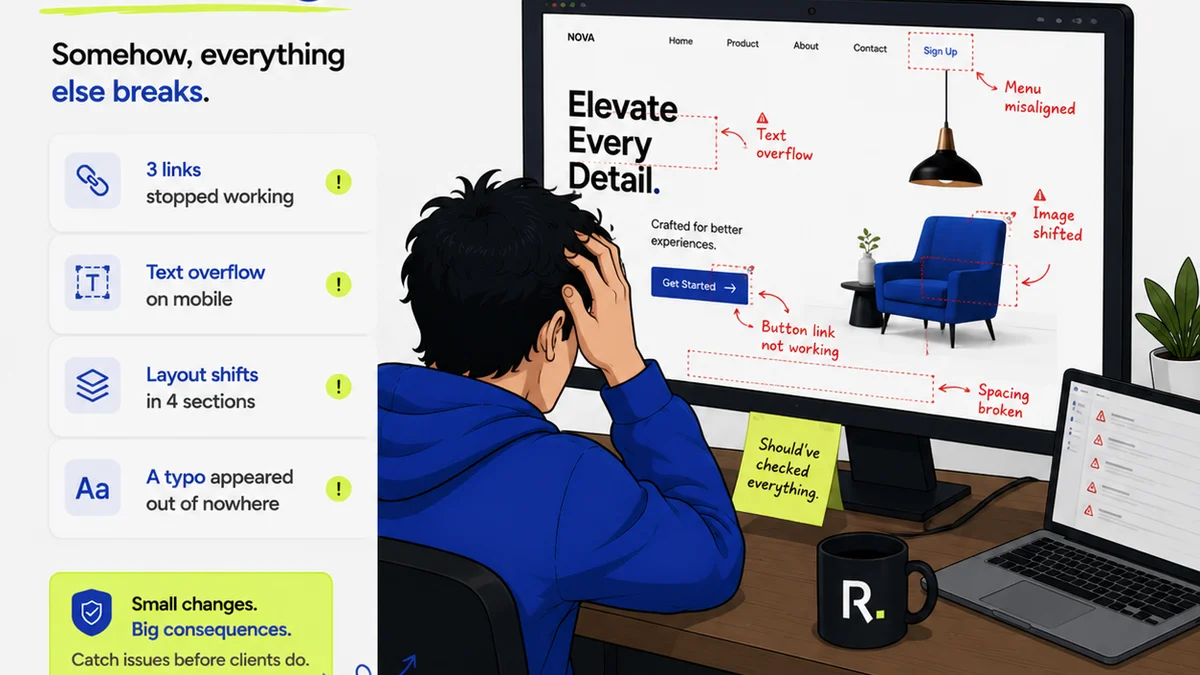
Furthermore, Revue’s quality check features can help ensure that even AI-assisted creative work meets your agency’s high standards before final delivery. It brings order to the creative chaos, whether the starting point is human imagination or AI generation.
Final Thought
Generative AI is undeniably powerful. But its true value for creative agencies lies not in its autonomous capabilities, but in its potential to amplify human creativity when guided by strategic insight and rigorous process. Are you ready to move beyond the hype and build the operational frameworks to truly leverage these tools?
Frequently asked questions
Are generative AI tools replacing human creatives?
No, generative AI tools are best viewed as augmentative. They can automate certain tasks and speed up ideation, but human creativity, strategic thinking, and critical oversight remain essential for quality and nuanced output.
What is 'prompt engineering' and why is it important?
Prompt engineering is the skill of crafting effective text inputs (prompts) to guide AI models to produce desired outputs. It’s crucial because the quality and relevance of AI-generated content directly depend on the clarity and specificity of the prompt.
How can agencies ensure quality control with AI-generated content?
Quality control involves rigorous human review, fact-checking, aesthetic evaluation, and ensuring alignment with brand guidelines and project objectives. AI outputs require significant editing and art direction to meet agency standards.
What are the main ethical concerns with generative AI?
Key ethical concerns include copyright and intellectual property rights, potential biases in AI-generated content due to training data, and the need for transparency with clients about AI usage.
How can platforms like Revue help manage AI-generated content?
Revue helps by centralizing feedback on AI drafts, tracking revisions and approvals, and facilitating quality checks, ensuring that AI-assisted creative work is managed within a structured workflow, similar to any other project asset.