The common wisdom for agencies working with government clients is simple: win the bid, get the contract, deliver the work. It sounds straightforward. But that’s only half the story. For many, the real challenge—and the key to unlocking sustainable growth—isn’t in the bid process itself, but in what happens *after* the ink dries.
The hard truth? Without a deliberate, strategic client onboarding process, government contracts become a source of operational drag, not predictable growth.
1. The Illusion of Contractual Certainty
Winning a government contract feels like a win for the books. You’ve secured funding, you know the scope, and you have a defined timeline. It’s easy to assume the revenue is locked in and predictable.
But contracts are just the starting point. The actual execution, the nuances of agency relationships, and the complex stakeholder landscapes within government entities create a volatile environment.
Scope Creep vs. Scope Clarification
The term 'scope creep' is often used pejoratively. But in government work, it’s frequently a symptom of poor initial alignment during onboarding. Without a clear, shared understanding of deliverables, success metrics, and communication protocols established upfront, what looks like creep is often just the natural evolution of needs that weren't fully captured.
Stakeholder Identification and Engagement
Government projects rarely involve a single point of contact. There are layers of approval, oversight committees, end-users, and policy experts. Failing to identify and map these stakeholders during onboarding means you’re navigating blind. This leads to:
- Delayed decisions
- Conflicting feedback
- Missed compliance requirements
- Costly rework
This isn't just about communication; it's about building the foundational relationships that ensure smooth project progression.
2. Onboarding as a Revenue Protection Strategy
Think of onboarding not as a administrative hurdle, but as your first line of defense against revenue leakage. Government contracts are often large and complex, making them susceptible to inefficiencies that erode profit margins.
Defining Communication Cadence and Channels
When and how will you communicate? Who needs to be in the loop? What are the expectations for response times? Establishing these protocols during onboarding prevents the endless 'who should I ask about this?' loop that plagues many projects.
This clarity reduces the back-and-forth that eats up billable hours without moving the project forward. It sets clear expectations, which is crucial when working with public sector entities.
Establishing Clear Deliverable Sign-offs
Government projects require rigorous documentation and formal approval. Without a defined sign-off process agreed upon during onboarding, you risk delivering work that is technically correct but doesn't meet the specific, often unwritten, expectations of key stakeholders.
This means:
- Defining what constitutes a 'final' deliverable.
- Identifying the specific individuals authorized to approve.
- Setting timelines for feedback and approval cycles.
This structured approach prevents the 'silent approval' or the last-minute 'we don't like it' that can derail timelines and budgets.
3. The Operational Bottleneck of Undefined Processes
Many agencies, especially those new to government work, underestimate the operational complexity. They assume the contract details are enough.
The reality is that government agencies have their own internal processes, procurement rules, and reporting requirements that can be opaque to external partners.
Integrating with Government Workflows
Your onboarding must include understanding and integrating with the client’s existing systems and workflows. This might involve:
- Learning their specific project management tools.
- Adhering to their data security and privacy protocols.
- Understanding their budget allocation and invoicing procedures.
This integration isn't optional; it’s a prerequisite for efficient delivery and continued engagement.
Setting Realistic Expectations for Timelines
Government procurement and approval cycles can be notoriously slow. A robust onboarding process helps manage these realities. It involves educating the client on your agency’s capacity and internal processes while also understanding their constraints.
This mutual understanding allows for more realistic project planning and avoids the frustration that arises when one party expects rapid turnaround and the other is bound by bureaucratic timelines.
4. Onboarding for Scalable Growth
How does a more effective onboarding process translate to business growth? It’s about creating a foundation for repeatable success and expansion.
Reduced Churn and Increased Retention
When clients feel understood, supported, and confident in the process from day one, they are far more likely to continue with your agency for future projects. Strong onboarding builds trust, which is paramount in long-term government partnerships.
Improved Project Profitability
By clarifying scope, defining communication, and establishing clear approval paths early on, you minimize costly misunderstandings and rework. This directly impacts project profitability, freeing up resources and improving cash flow.
Enhanced Agency Reputation
Consistently delivering successful projects, characterized by smooth communication and predictable outcomes, builds a strong reputation within government circles. This leads to better contract renewals and new opportunities, often through word-of-mouth or competitive bidding based on proven performance.
Data Collection for Future Bids
A well-structured onboarding process inherently involves gathering critical information about the client, their needs, and the project's success factors. This data is invaluable for refining future proposals and understanding where your agency excels and where improvements are needed.
Where Revue Fits In
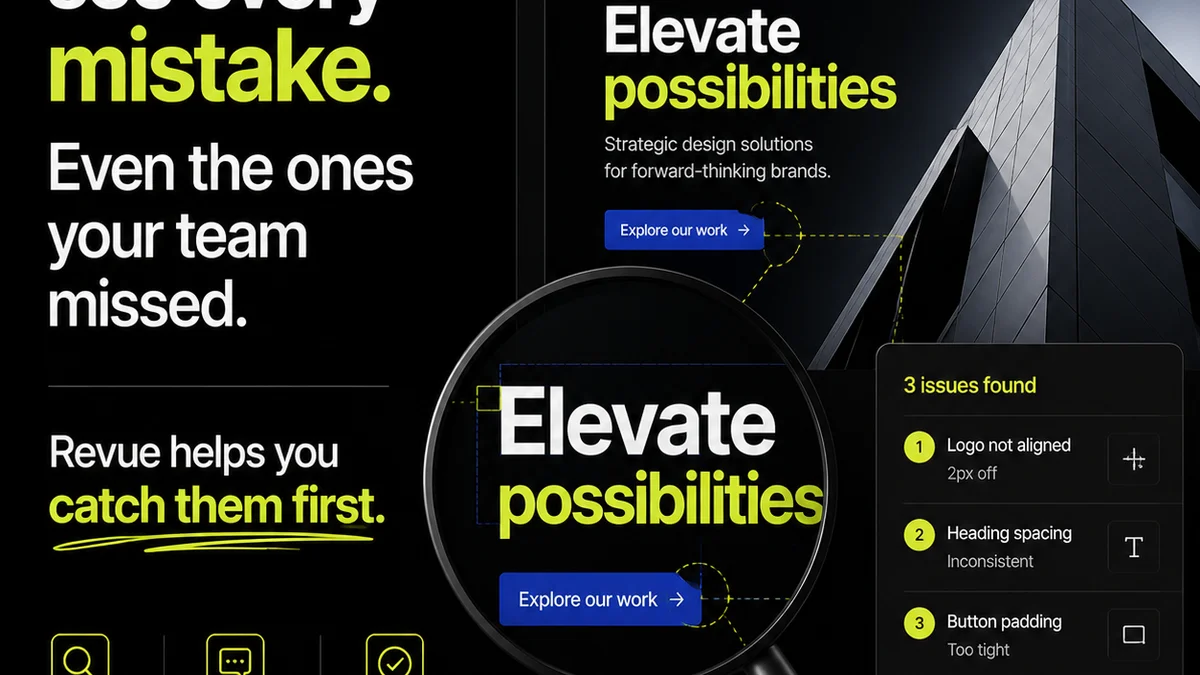
Managing complex government projects requires clear communication, streamlined feedback, and transparent approvals. This is precisely where Revue excels.
By centralizing client feedback within a single platform, you eliminate the fragmented communication chains that often plague government work. All stakeholders can see the feedback, understand the context, and track revisions.
This visibility is critical for managing scope and ensuring alignment. With clear revision histories and approval workflows, you can demonstrate progress, manage expectations, and ensure that all parties are working from the same understanding.
Revue helps agencies maintain quality control by providing a definitive record of decisions and approvals, reducing the risk of errors or misinterpretations that can lead to costly rework.
5. Beyond the Contract: Building Long-Term Partnerships
Government contracts are rarely one-off deals. They are often the beginning of a longer relationship. Your onboarding process sets the tone for this entire partnership.
The Culture of Collaboration
Effective onboarding fosters a collaborative environment. It’s not just about delivering a service; it’s about becoming a trusted partner to the government entity.
This means:
- Proactively identifying potential challenges and offering solutions.
- Demonstrating flexibility within contractual bounds.
- Maintaining open lines of communication, even when things are going well.
Measuring Onboarding Success
How do you know if your onboarding is working? Look for tangible signs:
- Reduced time spent clarifying requirements post-contract.
- Fewer unexpected change requests.
- Positive feedback from client stakeholders on process clarity.
- Faster approval cycles.
- Increased likelihood of contract renewal.
These metrics directly correlate with operational efficiency and revenue stability.
Final Thought
Is your agency treating client onboarding as a necessary administrative task, or as a strategic imperative for growth in the government sector? The difference isn't just in efficiency; it's in the predictability and scalability of your business.
Frequently asked questions
Why is client onboarding crucial for government contracts?
Government contracts are complex and involve multiple stakeholders. Effective onboarding establishes clear communication channels, defines expectations, identifies all key players, and sets protocols for feedback and approvals. This prevents misunderstandings, reduces rework, and ensures smoother project execution, which is vital for predictable revenue and long-term partnerships.
How does onboarding impact an agency's revenue?
A robust onboarding process protects revenue by clarifying scope, minimizing scope creep, and ensuring timely approvals, thereby reducing costly delays and rework. It also builds trust, leading to higher client retention rates and increased opportunities for future contracts, directly contributing to scalable business growth.
What are the key elements of successful government client onboarding?
Key elements include clearly defining communication cadence and channels, establishing formal deliverable sign-off procedures, identifying and mapping all stakeholders, integrating with the client's existing workflows and systems, and setting realistic expectations for project timelines based on government processes.
How can agencies measure the success of their onboarding process?
Success can be measured by tracking reduced time spent clarifying requirements, fewer unexpected change requests, faster approval cycles, positive feedback from client stakeholders regarding process clarity, and ultimately, an increased likelihood of contract renewal and new business opportunities.