Everyone assumes healthcare design QA software is just about HIPAA compliance. None of that is wrong. But it’s incomplete.
The real truth? The right QA software for healthcare design is a workflow accelerator. It’s your first line of defense against costly errors that impact patient safety, brand reputation, and operational efficiency.
1. Beyond Compliance: The True Cost of Bad Design in Healthcare
Healthcare is a high-stakes environment. Design flaws aren’t just aesthetic annoyances; they can have serious consequences.
Think about a patient portal where critical information is hard to find. Or a medical device interface that’s confusing to operate. Or even internal training materials that misrepresent a procedure.
These aren't hypothetical. They happen. And they lead to:
- Patient confusion and anxiety.
- Medication errors.
- Delayed diagnoses or treatments.
- Increased support calls and staff burden.
- Damage to the institution's reputation.
- Potential legal and regulatory penalties.
Compliance checklists are necessary, but they’re only a fraction of the picture. True quality assurance in healthcare design means anticipating user needs and potential failure points before they manifest.
2. Essential Features for Healthcare Design QA Software
When evaluating software, don’t get distracted by bells and whistles. Focus on the core capabilities that directly address the unique challenges of healthcare design.
Centralized Feedback and Version Control
Healthcare projects often involve numerous stakeholders: clinicians, administrators, IT, legal, marketing, and patients. Managing feedback from all these groups via email or scattered documents is a recipe for disaster.
Look for software that allows all feedback to be consolidated in one place, linked directly to the design asset. Version control is non-negotiable. You need to track every iteration, understand what changed, and revert if necessary.
Visual Annotation and Commenting
Static screenshots or PDFs aren’t enough. You need tools that allow reviewers to pinpoint specific elements on a design – a button, a label, an icon – and leave contextual comments. This eliminates ambiguity.
Features like markups, callouts, and the ability to @mention specific team members ensure feedback is clear and actionable.
Approval Workflows and Audit Trails
Formal sign-offs are critical in healthcare. Your QA software must support configurable approval workflows. This means defining who needs to approve what, in what order.
Crucially, it must maintain a complete audit trail. Every review, every comment, every approval (or rejection) should be logged with timestamps and user details. This is vital for accountability and regulatory scrutiny.
Accessibility Checking
Designing for accessibility is not optional in healthcare. Patients and providers have diverse needs, including visual impairments, motor disabilities, and cognitive differences. Adhering to standards like the Web Content Accessibility Guidelines (WCAG) is paramount.
Your QA tool should ideally include or integrate with tools that can automatically check for common accessibility issues:
- Color contrast ratios.
- Proper heading structures.
- Alt text for images.
- Keyboard navigation support.
- Form field labels.
Manual testing is still required, but automated checks catch many basic errors early.
Security and Data Privacy
This is where healthcare design QA software truly diverges from other industries. You are likely dealing with Protected Health Information (PHI) or other sensitive data, even in design mockups.
Ensure the software you choose meets stringent security standards. Look for features like:
- Role-based access controls.
- Data encryption (in transit and at rest).
- Compliance certifications (e.g., SOC 2, ISO 27001).
- Clear data handling and retention policies.
Understand how the platform protects your data and your clients' data. A breach here is catastrophic.
Integration Capabilities
Your QA process shouldn’t exist in a vacuum. It needs to connect with your existing toolchain.
Consider integrations with:
- Design tools (Figma, Sketch, Adobe XD).
- Project management software (Jira, Asana, Trello).
- Communication platforms (Slack, Microsoft Teams).
Seamless integration reduces manual data entry, minimizes errors, and keeps everyone in sync.
3. The Human Element: Training and Adoption
Even the most advanced software is useless if your team doesn't use it effectively.
Consider the learning curve. Is the interface intuitive? Is comprehensive training material available? Does the vendor offer support?
Adoption is key. If the tool is cumbersome or difficult to understand, people will revert to old habits – email chains, hallway conversations, lost feedback.
Invest time in training and championing the tool. Highlight how it makes their jobs easier and the final product better.
4. Where Revue Fits In
Revue isn't a specialized healthcare QA tool. We don't do automated HIPAA scans or pixel-perfect accessibility checks.
But we excel at centralizing the feedback loop for creative projects, including those in the healthcare sector.
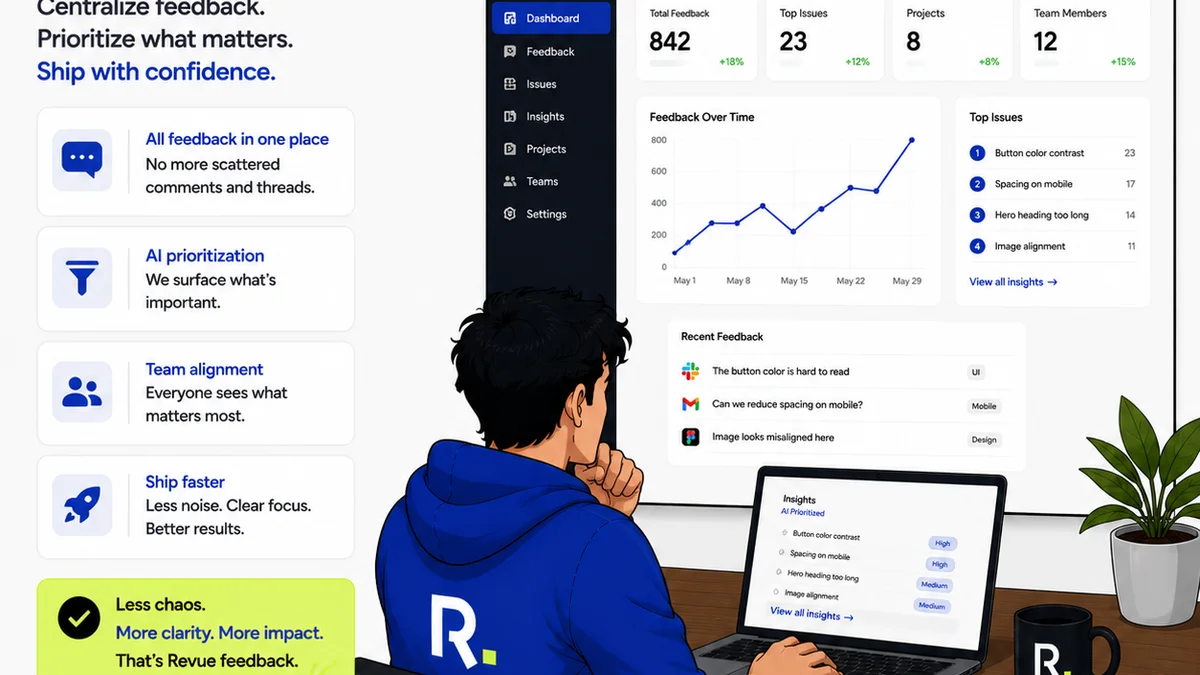
Revue provides a single source of truth for client feedback and revisions. When you upload design mockups, website wireframes, or even video storyboards, clients can comment directly on the assets.
This means:
- No more sifting through endless email threads to find that one crucial comment.
- Clear, contextual feedback tied directly to the visual element.
- A visible history of revisions and approvals, providing an essential audit trail.
- Reduced miscommunication and faster turnaround times.
While Revue focuses on the *creative* QA process – ensuring the design meets the brief and client expectations – it complements specialized compliance tools. It streamlines the communication and approval stages, which are often the most time-consuming and error-prone parts of the workflow.
5. Making the Choice: A Practical Approach
Choosing the right healthcare design QA software requires a clear understanding of your specific needs.
Start by mapping your current workflow. Identify the biggest pain points. Where do errors most frequently occur? Who are the key stakeholders in your review process?
Then, prioritize features based on impact. Compliance is table stakes. But workflow efficiency, clear communication, and robust audit trails are what will truly move the needle.
Don't be afraid to trial multiple solutions. Get your team involved in the evaluation process. Their buy-in is critical for successful adoption.
Final Thought
Is your current QA process a necessary evil, or a strategic advantage? The right software transforms it from a bottleneck into a catalyst for better, safer, and more effective healthcare design.
Frequently asked questions
What is the primary difference between general design QA software and healthcare-specific QA software?
While general design QA software focuses on aesthetic and functional review, healthcare-specific QA software must also rigorously address compliance (like HIPAA), patient safety implications, accessibility for diverse user needs (patients and providers), and robust security protocols for sensitive data.
How important is accessibility checking in healthcare design QA?
Extremely important. Healthcare services must be usable by everyone, including individuals with disabilities. Adhering to standards like WCAG ensures that patient portals, applications, and informational materials are accessible to all users, preventing exclusion and improving care.
Can a tool like Revue replace specialized healthcare design QA software?
Revue is excellent for centralizing creative feedback, managing revisions, and streamlining client approvals. It handles the communication and workflow aspects of QA. However, it does not replace specialized healthcare QA software that offers automated compliance checks, deep security features for PHI, or specific accessibility auditing tools required for healthcare environments.
What are the risks of inadequate QA in healthcare design?
Inadequate QA in healthcare design can lead to patient confusion, medication errors, delayed treatment, increased staff workload, damage to the institution's reputation, and significant legal or regulatory penalties. It directly impacts patient safety and trust.