You think picking a design agency for healthcare marketing is about finding a team with a strong portfolio and a good understanding of your brand. That’s the easy part. Everyone says they can design. They show you pretty pictures. But in healthcare, pretty pictures aren’t enough. Not by a long shot.
The hard truth? Healthcare marketing design requires a specialized blend of creativity, regulatory savvy, and a deep understanding of patient journeys. Get it wrong, and you’re not just looking at a redesign; you’re risking compliance violations, eroding patient trust, and missing critical business goals.
1. The Compliance Tightrope Walk
Healthcare is one of the most regulated industries. HIPAA, FDA guidelines, ADA accessibility standards – these aren't suggestions; they are non-negotiable requirements. A design agency needs to understand these deeply, not just at a surface level.
This means scrutinizing how they handle sensitive patient data in visuals, ensuring website accessibility for all users, and understanding the nuances of claims and disclaimers. It’s about building trust through responsible design.
a. Understanding HIPAA's Reach
Even in marketing materials, patient privacy is paramount. How does the agency propose to use imagery? Are they aware of the implications of showing identifiable patient information, even indirectly? They should have clear protocols for obtaining model releases and anonymizing any visual representations of patient scenarios.
b. Accessibility as a Standard
Designing for accessibility isn't just a nice-to-have; it's a legal and ethical imperative. Think WCAG 2.1 AA standards as a baseline. Does the agency have a proven track record of designing accessible websites, apps, and marketing collateral? This includes color contrast, keyboard navigation, and semantic HTML structure.
c. Navigating FDA and Other Regulations
For pharmaceutical or medical device companies, FDA regulations on advertising and promotion are stringent. For hospitals, state and federal marketing guidelines apply. Your agency must be able to interpret and apply these rules to creative output, ensuring claims are substantiated and language is precise.
2. Beyond Brand Awareness: Driving Patient Action
Healthcare marketing isn't just about looking good. It’s about guiding patients toward specific actions: booking appointments, signing up for wellness programs, understanding treatment options, or choosing a provider. Your agency needs to understand these conversion paths.
This requires a strategic approach to user experience (UX) and user interface (UI) design, tailored to the healthcare context. It’s about making complex information digestible and actionable.
a. Mapping the Patient Journey
A good healthcare agency will want to understand the entire patient journey, from initial symptom recognition to post-treatment follow-up. Where do potential patients look for information? What are their pain points? How can design alleviate those anxieties and provide clarity?
This informs everything from website navigation to the content hierarchy on a brochure.
b. Designing for Trust and Empathy
Patients are often at their most vulnerable when interacting with healthcare providers. Design plays a critical role in building trust and conveying empathy. This means considering:
- Tone of voice in copy and visuals.
- Imagery that reflects diversity and inclusivity.
- Clear, jargon-free communication.
- Easy-to-find contact information and support.
c. Data-Driven Design Decisions
Are they using data to inform their design? Look for agencies that talk about A/B testing landing pages, analyzing user behavior on their website, and using analytics to optimize conversion rates. This isn't just about aesthetics; it's about performance.
3. Understanding the Healthcare Ecosystem
Healthcare is a complex ecosystem with multiple stakeholders: patients, physicians, administrators, insurers, and regulators. An agency that understands these dynamics can create more effective communication strategies.
They need to speak the language of healthcare and understand its unique challenges and opportunities.
a. Physician and Provider Audiences
If your target audience includes healthcare professionals, the agency must understand their busy schedules, their need for credible data, and the specific channels they trust. Design for a physician audience differs greatly from patient-facing design.
b. Hospital and Health System Operations
For larger institutions, design needs to align with operational realities, brand consistency across multiple departments, and the specific goals of the health system (e.g., patient acquisition, community health initiatives, physician recruitment).
c. The Role of Technology
Telehealth, patient portals, wearable tech – the healthcare landscape is rapidly evolving. An agency should be forward-thinking, understanding how design can integrate with and enhance these technological advancements.
4. Evaluating an Agency's Process and Culture
Beyond their portfolio and stated expertise, how does the agency actually work? Their process will significantly impact the success of your project and the ease of your collaboration.
Look for transparency, clear communication, and a culture that aligns with your own.
a. Discovery and Strategy Phase
A thorough discovery process is crucial. Does the agency ask deep questions about your business objectives, target audience, and competitive landscape? A strong strategy should precede any design work.
b. Collaboration and Feedback Loops
How do they manage client feedback? Are there clear stages for review and approval? A structured process minimizes confusion and ensures everyone is aligned. This is where tools that centralize feedback become invaluable.
c. Project Management and Accountability
Who will be your point of contact? How do they track progress and manage timelines? A reliable agency will have robust project management practices and be accountable for delivering on their promises.
Where Revue Fits In
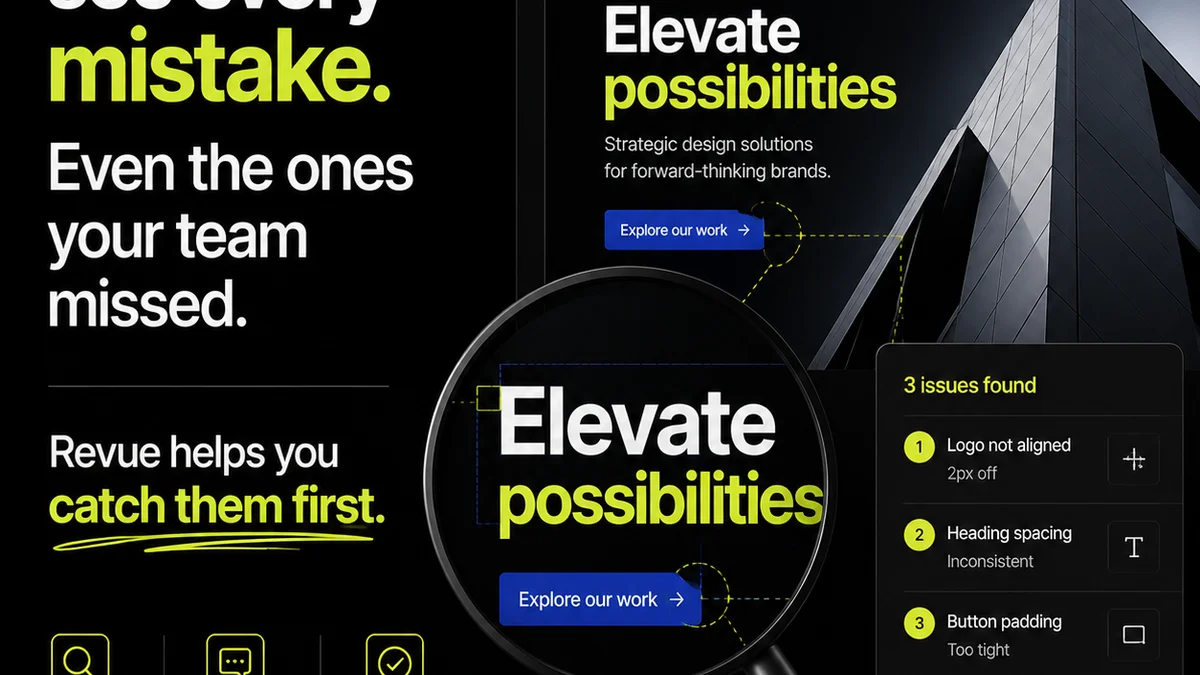
Managing creative projects, especially in a complex field like healthcare, generates a lot of feedback. Emails, Slack messages, random notes – it all adds up, creating confusion and delays. This is where a centralized platform like Revue becomes essential.
Revue helps by:
- Centralizing Client Feedback: All comments, annotations, and approvals live in one place, linked directly to the creative asset. No more hunting through disparate communication channels.
- Streamlining Revisions: Track every version, understand the context of each change, and manage the revision process efficiently. This visibility is critical when navigating compliance requirements.
- Ensuring Quality Checks: Use the platform to run through your internal quality assurance checklists, ensuring accessibility standards, brand consistency, and adherence to regulatory guidelines before final delivery.
This level of control and clarity minimizes errors, speeds up approvals, and ensures that your design projects meet both creative and compliance objectives.
5. The Retainer Model: A Partnership for Growth
Opting for a retainer model with a healthcare design agency signifies a commitment to ongoing growth and adaptation. It’s not just about a single project; it’s about building a long-term relationship focused on achieving strategic objectives.
A retainer allows for proactive rather than reactive design efforts.
a. Proactive Strategy and Execution
With a retainer, the agency becomes an extension of your team. They can anticipate needs, plan campaigns in advance, and continuously optimize based on performance data. This proactive approach is vital in the fast-paced healthcare environment.
b. Cost Predictability and Efficiency
Retainers offer predictable monthly costs, making budgeting easier. It also fosters efficiency, as the agency becomes deeply familiar with your brand, audience, and internal processes, reducing ramp-up time on new projects.
c. Deepening Expertise and Trust
The longer an agency works with you, the deeper their understanding of your specific challenges and opportunities becomes. This builds a strong foundation of trust and allows for more strategic, impactful design solutions over time. They become true partners in your success.
Final Thought
Choosing a healthcare design agency is a strategic decision that impacts patient perception, regulatory standing, and business outcomes. Are you looking for a vendor who can execute tasks, or a partner who understands the intricate landscape of healthcare and can help you navigate it with confidence and creativity?
Frequently asked questions
What are the key regulations I should ensure my healthcare design agency understands?
Your agency must be knowledgeable about HIPAA for patient privacy, ADA and WCAG for accessibility, and any industry-specific regulations like FDA guidelines for advertising and promotion. They should demonstrate how their design process accounts for these requirements.
How can I assess an agency's understanding of the patient journey?
Ask them to walk you through how they'd map a typical patient journey for your services. Look for an agency that discusses user empathy, conversion paths, and how design can address patient anxieties and information needs.
What's the benefit of a retainer model for healthcare design?
A retainer establishes a long-term partnership, allowing for proactive strategy, consistent brand messaging, and continuous optimization based on data. It provides cost predictability and deepens the agency's understanding of your specific healthcare niche.
How does a tool like Revue help in managing healthcare design projects?
Revue centralizes all client feedback, streamlines revision tracking, and aids in quality assurance checks, ensuring accessibility and compliance. This reduces miscommunication and speeds up the approval process, which is critical in a regulated industry.