Everyone’s talking about AI in healthcare design, personalized patient journeys, and hyper-realistic VR simulations. And sure, those are part of the picture.
But that’s the surface-level stuff. The real shifts agencies need to prepare for in 2026 aren’t just about shiny new tech or patient-centric buzzwords. They’re about fundamental changes in how healthcare organizations operate, how they procure services, and what they *truly* value in their design partners.
The hard truth? Healthcare design in 2026 will be defined by operational integration, regulatory pragmatism, and the relentless pursuit of measurable outcomes. Agencies that focus only on aesthetics or novel features will be left behind.
1. The Data-Driven Diagnosis: Beyond Pretty Pixels
Healthcare organizations are drowning in data. They’re hungry for design that doesn’t just look good, but *does* good – and can prove it.
This means a move away from purely subjective feedback loops. Clients will demand tangible evidence of design's impact:
- Reduced patient wait times
- Improved diagnostic accuracy
- Increased patient adherence to treatment plans
- Streamlined clinical workflows
- Enhanced staff efficiency
- Better patient satisfaction scores
For agencies, this translates to a need for deeper collaboration with data analysts, clinical informaticists, and operations managers from day one. Design thinking must be fused with data science.
The Proof is in the Performance
Your portfolio needs to showcase not just beautiful interfaces, but interfaces that demonstrably improved key performance indicators (KPIs). Think A/B testing results, before-and-after workflow analyses, and patient outcome reports.
This isn't about guessing what might work. It's about designing for measurable impact.
2. Navigating the Regulatory Maze: Compliance as a Competitive Edge
Healthcare is one of the most heavily regulated industries on the planet. For 2026, expect regulatory demands to become even more stringent, especially around data privacy (HIPAA in the US, GDPR in Europe), security, and accessibility.
Many agencies see compliance as a hurdle. Forward-thinking agencies will see it as a differentiator.
Designing with compliance baked in from the start is far more efficient and effective than retrofitting later. This means:
- Deep understanding of WCAG (Web Content Accessibility Guidelines) for all digital touchpoints.
- Proactive implementation of data security best practices in UI/UX design.
- Designing for auditability and clear data provenance.
- Building flexible systems that can adapt to evolving regulations.
Clients are increasingly looking for partners who can navigate this complexity without hand-holding, turning potential roadblocks into smooth pathways.
Accessibility Isn't Optional
Consider the WCAG guidelines. They are not suggestions; they are requirements for inclusive design. For healthcare, where user needs span a vast spectrum, this is non-negotiable. Designing accessible interfaces isn't just about compliance; it's about ethical patient care.
3. The Interoperability Imperative: Seamless Systems, Not Silos
Healthcare systems are notoriously fragmented. Data often lives in silos, making it difficult to get a complete picture of a patient’s health or an organization’s operations.
The trend for 2026 is towards greater interoperability – the ability of different IT systems, devices, and applications to access, exchange, use, and coordinate on data in a coordinated manner, within and across organizational, regional, and national boundaries.
For design agencies, this means:
- Designing interfaces that can integrate with Electronic Health Records (EHRs) and other clinical systems.
- Creating user experiences that are consistent across multiple platforms and devices.
- Understanding data exchange standards like HL7 FHIR.
- Developing modular design systems that can be easily adapted by different teams and systems.
Your design work needs to play well with others. It needs to fit into a larger ecosystem.
Designing for the Ecosystem
Think about how your designs will connect with existing hospital IT infrastructure. Can a new patient portal seamlessly pull data from the EHR? Can a clinician’s dashboard aggregate information from various diagnostic tools? This level of integration is becoming table stakes.
4. The Human-Centered Tech Integration: AI as a Co-Pilot, Not a Replacement
AI is here, but its most impactful application in healthcare design for agencies won't be replacing humans. It will be augmenting them.
Expect AI to be leveraged for:
- Automating repetitive design tasks (e.g., generating design variations, initial wireframing based on prompts).
- Personalizing user experiences at scale (e.g., tailoring content, interface elements based on user profile and behavior).
- Predictive analytics for user needs (e.g., anticipating when a patient might need support or a clinician might need specific information).
- Enhancing accessibility features through AI-powered tools.
The key is that AI should enhance the human element of care and design, not diminish it. Agencies must guide the ethical and effective implementation of these tools.
AI: The Augmentation Engine
The goal isn't to build fully autonomous AI designers. It's to build tools and experiences where AI acts as a powerful assistant, freeing up human creativity and empathy for the complex, nuanced aspects of healthcare delivery and design.
5. The Evolving Patient & Provider Experience: Beyond the Transaction
Healthcare is shifting from a transactional model to a relational one. Patients are becoming more informed and empowered consumers, and providers are seeking less burnout and more meaningful engagement.
Design plays a critical role in fostering these relationships.
This means designing for:
- Empathy and trust
- Clear, accessible communication
- Supportive digital environments
- Reduced cognitive load for both patients and providers
- Seamless transitions of care
The focus moves from simply facilitating a medical procedure to supporting the entire health journey.
Designing for Trust
In healthcare, trust is paramount. Your designs must exude reliability, clarity, and a genuine concern for the user's well-being. This impacts everything from information architecture to microcopy.
Where Revue Fits In
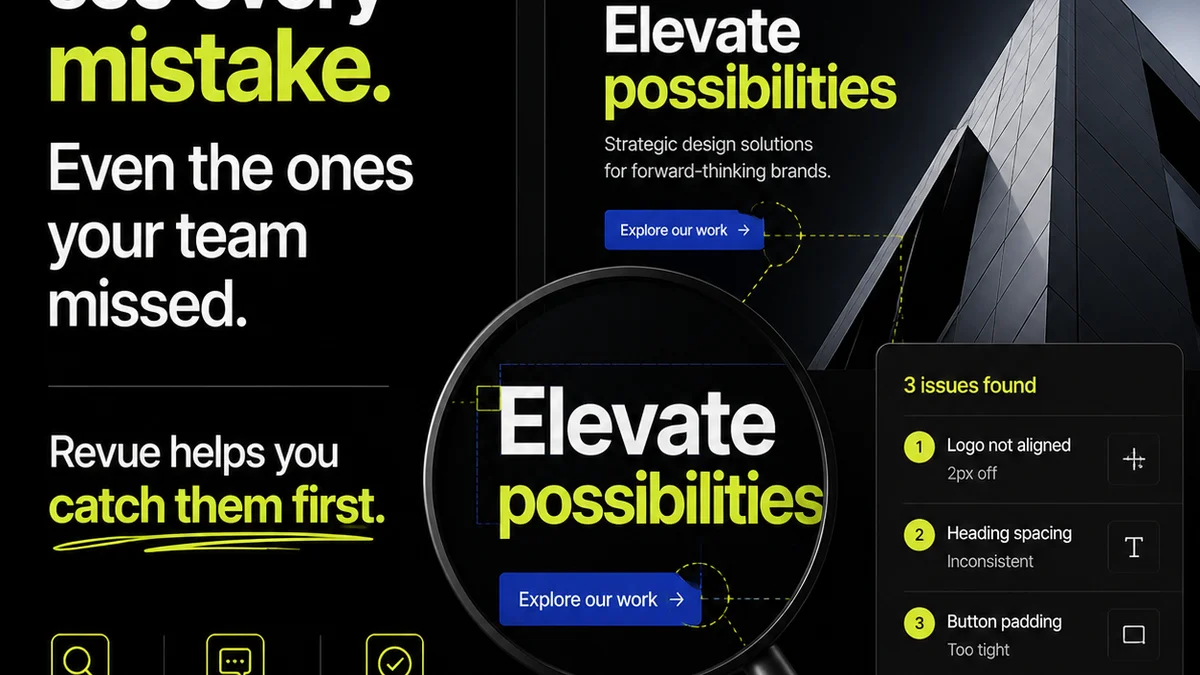
Managing complex healthcare design projects requires precision, clarity, and accountability. This is where a centralized feedback and approval platform like Revue becomes indispensable.
Imagine rolling out a new patient portal designed to meet stringent accessibility standards. Stakeholders include clinical staff, IT security, legal, and patient advocacy groups. Feedback will come from multiple sources, in various formats, and at different stages.
Without a system like Revue:
- Feedback gets lost in email threads.
- Revisions are tracked manually, leading to errors.
- Approval statuses are unclear, causing delays.
- Auditing compliance becomes a nightmare.
Revue provides a single source of truth:
- Centralized Feedback: All comments, annotations, and revisions live in one place, linked directly to the design asset. No more hunting through emails or Slack messages.
- Streamlined Revisions: Easily track versions, see what's changed, and manage the revision process efficiently.
- Clear Approvals: Define clear workflows and get documented sign-offs, crucial for regulatory and internal accountability.
- Quality Assurance: Ensure all feedback and required changes are addressed before launch, minimizing risk.
For agencies working in the high-stakes healthcare sector, operational efficiency isn't just about speed; it's about accuracy, compliance, and ultimately, patient safety.
Final Thought
The design trends for 2026 in healthcare aren't just about aesthetics; they're about operational realities. Will your agency be ready to move beyond the superficial and build designs that are integrated, compliant, and demonstrably effective?
Frequently asked questions
What is the most significant operational shift for design agencies in healthcare for 2026?
The most significant shift is towards operational integration and measurable outcomes. Healthcare clients will increasingly demand design solutions that demonstrably improve KPIs like patient wait times, diagnostic accuracy, and staff efficiency, rather than focusing solely on aesthetics.
How important is regulatory compliance in healthcare design trends for 2026?
Regulatory compliance, including data privacy (HIPAA, GDPR) and accessibility (WCAG), is becoming a critical competitive edge. Agencies that proactively design with compliance in mind will be more efficient and trusted partners than those who treat it as an afterthought.
How can design agencies prepare for the trend of healthcare interoperability?
Agencies need to understand how their designs will integrate with existing systems like EHRs, adhere to data exchange standards (e.g., HL7 FHIR), and create consistent user experiences across platforms. Designing modular systems that can adapt to different integrations is key.
What role will AI play in healthcare design for agencies in 2026?
AI will primarily serve as an augmentation tool, automating repetitive tasks, personalizing user experiences, and providing predictive insights. The focus will be on enhancing human capabilities and ethical implementation, not replacing human designers or caregivers.