You think managing Illustrator artwork reviews is about having the latest version of Adobe Illustrator and a good eye. None of that is wrong. But it’s incomplete.
The hard truth? Isolated tools and manual processes kill creative agency efficiency. They create bottlenecks, introduce errors, and frustrate both your team and your clients. For US teams especially, where project velocity is key, this is a non-starter.
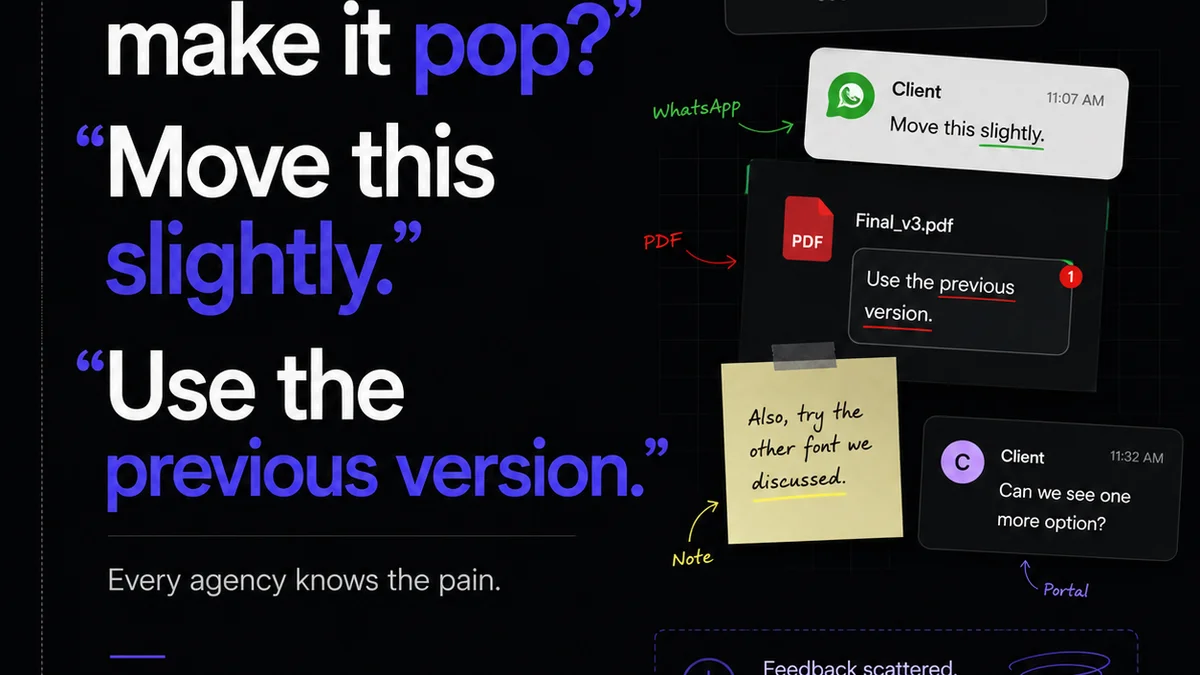
1. The Problem with Scattered Feedback
Email chains longer than a CVS receipt. Slack messages lost in the ether. Comments scribbled on screenshots. Sound familiar?
This is the reality for many agencies when it comes to reviewing Illustrator files. Each piece of feedback lives in its own silo, making it nearly impossible to track what’s been addressed, what’s pending, and what’s been missed.
The Domino Effect of Disorganization
It starts small. A missed comment on a logo variant. A revision requested on the wrong version of an infographic.
Then it snowballs:
- Endless back-and-forth emails trying to clarify feedback.
- Wasted hours hunting for specific comments.
- Revision cycles that stretch from days to weeks.
- Client frustration and damage to your agency’s reputation.
- Team members second-guessing which version is the
Frequently asked questions
What are the main challenges in reviewing Illustrator artwork?
The primary challenges include managing scattered feedback across multiple channels (email, chat, comments), tracking revisions effectively, ensuring everyone is working on the latest version, and maintaining clear communication with clients and team members.
Can cloud storage solutions replace dedicated review tools?
While cloud storage helps with file sharing, it lacks the specialized features for contextual feedback, version control specific to creative assets, and streamlined approval workflows that dedicated tools offer. They don't centralize the conversation around the artwork itself.
How do these tools improve client collaboration?
Dedicated review tools allow clients to provide feedback directly on the artwork, often with visual annotation tools. This reduces misinterpretation, speeds up the feedback loop, and provides a clear audit trail, leading to a more efficient and transparent collaboration.
Are these tools only for large agencies?
No, these tools are beneficial for agencies of all sizes. Smaller teams can gain significant efficiency by centralizing feedback and streamlining approvals, freeing up valuable time for creative work rather than administrative tasks.