Everyone talks about clear communication. They say better briefs, more stakeholder alignment, and sharper feedback loops are the keys to a smoother design review process. None of that is wrong. But it’s incomplete.
The hard truth? Your agency’s design review process is likely a bottleneck because you’re treating it like a series of isolated conversations, not a connected workflow. You’re drowning in feedback because you lack a system for managing it.
1. The Illusion of 'Quick' Feedback
We’ve all been there. A client needs a quick revision. A designer sends over a draft. Feedback comes back in a flurry of emails, Slack messages, and maybe even scribbled notes on a PDF.
It feels fast. It feels efficient.
But it’s not. This fragmented approach creates hidden costs:
- Wasted time hunting for the latest version.
- Misinterpreted feedback due to lack of context.
- Endless back-and-forth on minor details.
- Burnout from constant context switching.
- Delayed project timelines.
You’re not speeding things up; you’re just creating more work downstream.
2. Why 'More Tools' Doesn't Mean 'Better Process'
Many agencies try to solve this by adopting more tools. A new project management platform here, a dedicated feedback app there. They assume more technology equals better control.
This often leads to tool sprawl.
Your team ends up juggling:
- Email for initial requests and final approvals.
- Slack for quick questions and status updates.
- A cloud storage service for file sharing.
- A separate tool for design mockups.
- Spreadsheets for tracking revisions.
Each tool operates in a silo. Information gets lost. Context is fractured. You’re not streamlining; you’re complicating.
3. The Real Cost of Ambiguity
Ambiguous feedback kills creativity and productivity. When instructions are vague, designers are forced to guess.
What does 'make it pop' actually mean?
What does 'more modern' entail?
When feedback isn't tied directly to the specific design element it refers to, interpretation becomes a major hurdle. This leads to revisions that miss the mark, requiring even more rounds of feedback.
It’s a cycle of frustration for everyone involved.
4. Establishing Clear Revision & Approval Workflows
A robust design review process needs structure, not just more communication channels. This means defining clear steps for feedback, revisions, and final approvals.
Defining Feedback Stages
Not all feedback is created equal. Differentiate between:
- Initial Concepts: Broad feedback on direction and strategy.
- Detailed Revisions: Specific critiques on layout, copy, and visual elements.
- Final Polish: Minor tweaks before sign-off.
Each stage requires a different type of input and a different review approach.
Setting Approval Gates
Clearly define who needs to approve what, and at which stage. This prevents scope creep and ensures accountability. Use a clear sign-off mechanism so everyone knows when a stage is officially complete.
Centralizing Communication
The biggest win comes from consolidating feedback. Instead of scattered messages, all comments, questions, and approvals should live in one place, directly linked to the creative asset.
5. Bridging the Gap: From Static Files to Dynamic Feedback
Traditional methods of review often involve exporting static files (PDFs, JPEGs) and then gathering feedback. This creates a disconnect.
The design tool itself is the source of truth. Feedback should happen there, or be directly integrated with it.
Imagine:
- Stakeholders commenting directly on a design mockup.
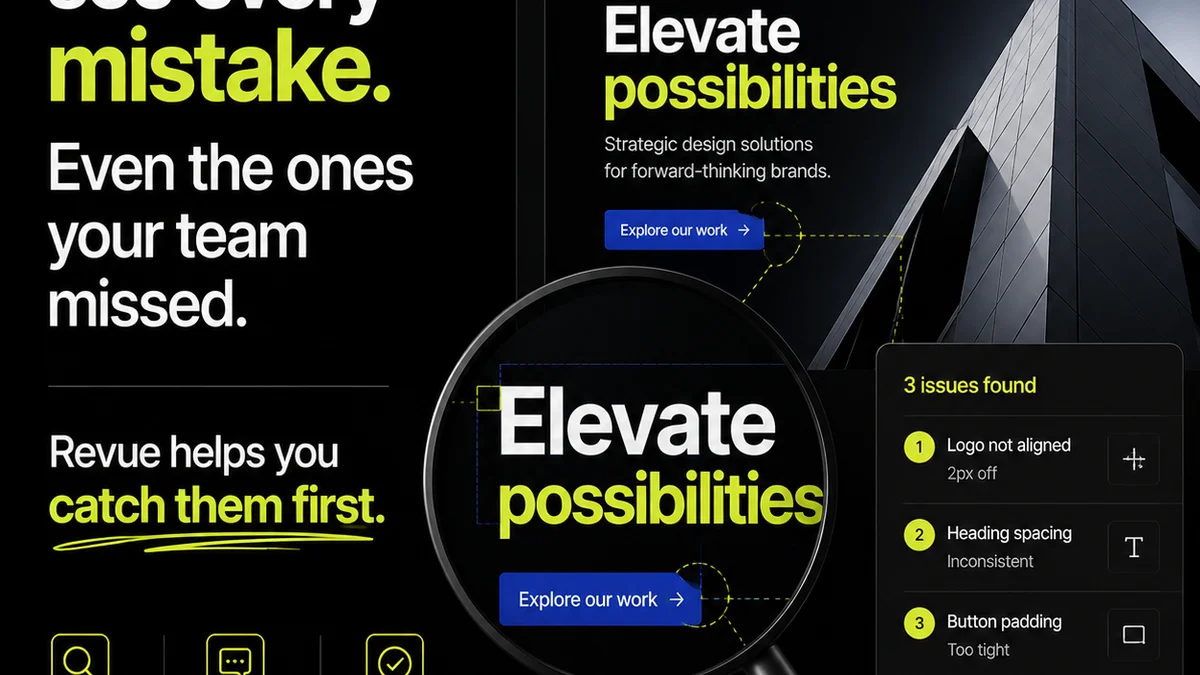
- Designers seeing feedback attached to the exact pixel it relates to.
- Version history automatically tracked without manual effort.
- Approvals logged with timestamps and user attribution.
This is the power of integrating feedback into the creative workflow, not layering it on top.
6. Where Revue Fits In
Managing client feedback, revisions, and approvals efficiently is core to agency operations. Without a centralized system, these processes become chaotic, leading to delays and misunderstandings.
Revue is built to bring order to this chaos. It acts as the single source of truth for all creative feedback, streamlining the entire review cycle.
Here’s how:
- Centralized Feedback: Consolidate all client comments, stakeholder input, and internal critiques into one platform, directly linked to the creative assets. No more hunting through emails or Slack threads.
- Revision Management: Track every iteration of a design. See exactly what changed, who requested it, and when. This clarity prevents confusion and ensures everyone is working from the latest version.
- Clear Approvals: Define and manage approval stages. Get explicit sign-offs from stakeholders, with a clear audit trail. This eliminates ambiguity and accelerates project completion.
- Quality Assurance: Use the structured feedback and approval history to ensure all requirements are met before final delivery.
By centralizing these critical steps, Revue helps agencies reduce back-and-forth, minimize errors, and deliver exceptional creative work faster.
7. The Human Element: Beyond the Tools
Technology can solve many workflow problems, but it can’t replace good human judgment or client relationships.
Even with the best tools, you still need:
- Empathy: Understand the client's perspective and business goals.
- Clarity: Frame feedback constructively, even when it’s critical.
- Proactiveness: Anticipate potential issues and address them early.
- Trust: Build strong relationships where feedback is seen as collaborative, not adversarial.
Your process should support these human interactions, not hinder them.
Final Thought
Is your agency’s design review process a point of pride, or a source of silent frustration? The difference often lies not in the talent of your designers, but in the structure of your workflow. By moving beyond scattered conversations and embracing a centralized, systematic approach, you can transform feedback from a roadblock into a catalyst for better creative outcomes.
Frequently asked questions
What are the biggest challenges in agency design review?
Common challenges include fragmented feedback across multiple channels (email, Slack, etc.), lack of context for feedback, difficulty tracking revisions and versions, ambiguous critiques, and unclear approval processes, all of which lead to delays and frustration.
How can I make design feedback more actionable?
Make feedback actionable by ensuring it's specific, tied to the exact design element it refers to, and delivered within a structured process. Clearly define feedback stages (e.g., conceptual vs. detailed) and use tools that allow for contextual comments directly on the design.
What is the role of approvals in the design review process?
Approvals serve as critical gatekeeping points, ensuring stakeholders agree with the work at specific stages before moving forward. A clear approval workflow prevents scope creep, establishes accountability, and provides an audit trail for project sign-offs.
How can technology improve design review?
Technology can improve design review by centralizing all feedback and communication in one place, enabling direct commenting on designs, automating version tracking, and providing clear audit trails for approvals. This reduces manual effort and minimizes misinterpretations.