Everyone agrees brand consistency is critical. It’s the bedrock of recognition and trust. So, you probably think your team’s quality assurance (QA) process is locked in. You’ve got a brand guide. You’ve got a checklist. You’re good, right?
None of that is wrong. But it’s incomplete.
The hard truth? Brand consistency QA isn't a task. It's a system. And most systems are failing because they focus on the wrong things.
1. The Illusion of the Brand Guide
Your brand guide is essential. It’s the rulebook. But a rulebook is useless if no one reads it, understands it, or can easily reference it when they’re in the thick of creation. The problem isn't the guide itself, but how it's integrated (or not) into the daily workflow.
The Accessibility Gap
Is your brand guide a static PDF buried on a shared drive? Or is it a living, breathing resource that designers and reviewers can access in seconds, right where they’re working?
If it’s the former, you have an accessibility problem. And accessibility problems breed inconsistency.
Context is King
Brand guidelines often exist in a vacuum. They tell you *what* to do (e.g., use hex code #0070D2 for primary blue) but rarely *why* or *when* in a specific context. Is this a primary call-to-action button? A secondary link? An informational element?
Different applications require different interpretations, even within brand rules. A static checklist can’t capture this nuance.
The Living Document Myth
Brands evolve. Guidelines need updates. But how often are they actually updated? And more importantly, how are those updates communicated and enforced across all projects and team members? A guide that’s not actively maintained is a ticking time bomb for inconsistency.
2. Deconstructing the 'Checklist Mentality'
The typical brand consistency QA process relies heavily on checklists. Redundant logos? Wrong color? Typo in the tagline?
These are surface-level checks. They catch the obvious errors, but they miss the subtle deviations that erode brand identity over time.
The Problem with 'Good Enough'
Checklists often lead to a 'good enough' mentality. As long as the box is ticked, the pressure is off. This encourages glancing rather than scrutinizing. It prioritizes speed over depth.
Beyond the Visual: Tone and Voice
Brand consistency isn’t just visual. It's also about tone and voice. Does the copy align with the brand’s personality? Is it speaking to the right audience in the right way?
A visual checklist can’t assess this. It requires a deeper understanding and a different kind of review.
The Human Element: Bias and Fatigue
Reviewers are human. They get tired. They develop biases. They might overlook an error because they’ve seen it a hundred times, or conversely, flag something that’s actually fine because they’re having an 'off' day.
Relying solely on manual, checklist-based QA introduces significant risk.
3. Building a Robust Brand Consistency QA System
A truly effective brand consistency QA process moves beyond simple checks. It’s built on integration, clarity, and continuous improvement.
Integrate Brand Assets and Rules
Make brand assets and guidelines easily accessible within the tools your team uses daily. Think design software plugins, centralized asset libraries, and project management tools that link directly to brand resources.
For example, a designer using Adobe Illustrator should be able to pull approved logos and color palettes without leaving the application.
Establish Clear Review Workflows
Define who reviews what, when, and how. This isn't just about assigning tasks; it's about ensuring reviewers have the context and understanding needed to assess brand consistency effectively.
- Define Reviewer Roles: Who is responsible for visual QA? Who handles tone of voice?
- Set Review Cadence: When should reviews happen? At concept, during development, before final delivery?
- Provide Review Criteria: Beyond a checklist, what are the qualitative aspects to look for?
Leverage Technology for Efficiency
Technology can automate many of the repetitive aspects of brand QA, freeing up human reviewers for more nuanced tasks.
Automated checks can flag incorrect color usage, font sizes, or logo placement against predefined rules. This isn't about replacing human judgment, but augmenting it.
Foster a Culture of Brand Ownership
Brand consistency isn't just the responsibility of the QA team or the brand manager. Everyone on the team needs to understand and care about maintaining brand integrity.
Regular training, open communication, and celebrating examples of strong brand adherence can build this culture.
4. Where Revue Fits In
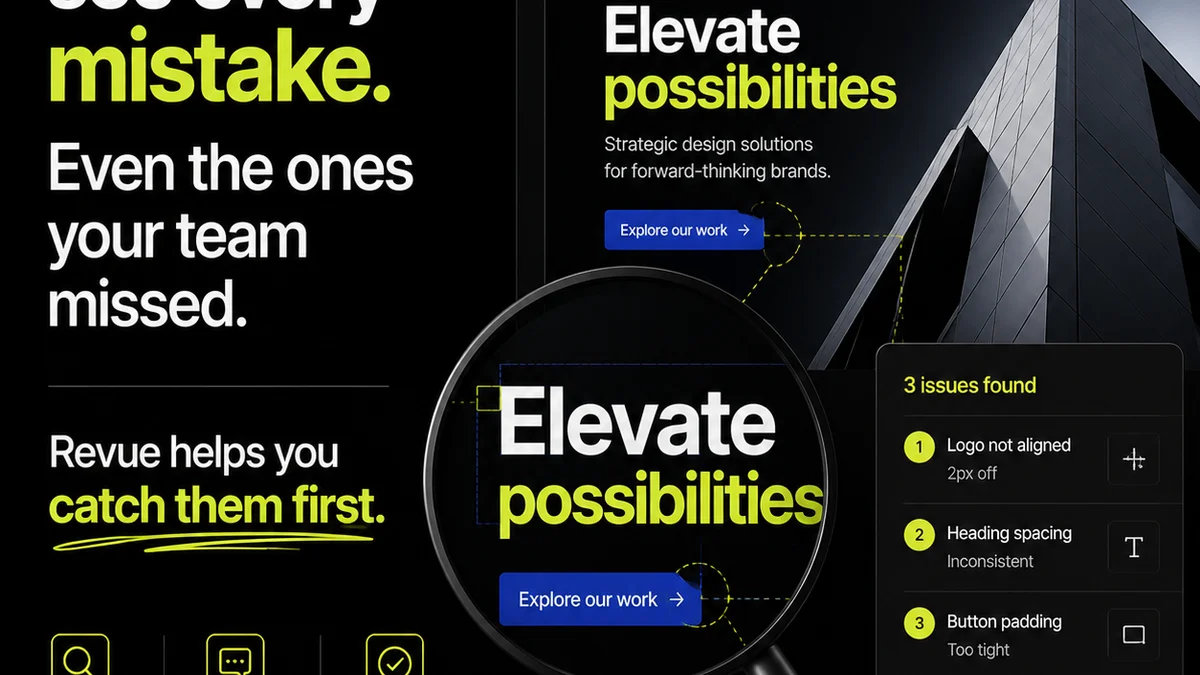
Managing brand consistency across multiple projects and clients can feel like juggling chainsaws. This is where a centralized platform like Revue becomes invaluable.
Revue is designed to streamline the creative feedback and approval process, directly impacting your ability to maintain brand consistency.
Centralized Feedback and Context
Instead of scattered email threads or chat messages, all feedback lives in one place, attached to the specific creative asset. This provides crucial context for reviewers, ensuring they understand the project goals and the brand’s role within them.
Clear Revision and Approval Trails
Revue offers a clear, auditable trail of all revisions and approvals. This visibility means you can easily track how a piece of creative evolved, identify where deviations might have occurred, and ensure that final approvals align with brand standards.
Streamlined Quality Checks
By centralizing assets and feedback, Revue helps facilitate more thorough quality checks. Reviewers can easily reference brand guidelines or previous versions within the platform, making it simpler to spot inconsistencies before they go live.
It helps move QA from a reactive, checklist-based activity to a proactive, integrated part of the creative workflow.
5. The Continuous Improvement Loop
Brand consistency QA isn’t a 'set it and forget it' operation. It requires ongoing refinement.
Post-Project Audits
After a project is delivered, conduct a brief audit. What worked well in terms of brand consistency? What were the pain points? Where did inconsistencies creep in?
Use these insights to update your brand guide, refine your checklists, or adjust your review workflows.
Feedback Loops with Clients
Clients are your ultimate brand guardians. Incorporate their feedback on brand consistency into your internal processes. What do they notice? What are their concerns?
This external perspective is invaluable for identifying blind spots.
Training and Onboarding
Ensure that new team members are thoroughly onboarded on brand guidelines and the QA process. Regular refreshers for existing team members are also crucial, especially as brands evolve.
Consistency is built through shared understanding.
Final Thought
Is your brand consistency QA process a shield protecting your brand, or a series of hurdles that slow down your creative output? The difference lies in treating it not as a task to be checked off, but as a dynamic system that requires constant attention, the right tools, and a culture of shared responsibility.
What are you *really* checking for when you check for brand consistency?
Frequently asked questions
What's the biggest mistake agencies make with brand consistency QA?
The biggest mistake is treating brand consistency QA as a simple checklist. This approach often misses nuanced deviations in tone, voice, and application, focusing only on superficial visual elements. A robust system requires more integration and understanding than a static list can provide.
How can I make brand guidelines more accessible to my team?
Ensure your brand guidelines are not just a static PDF. Integrate them directly into the tools your team uses daily, like design software plugins or centralized asset libraries. Make them easy to find and reference in the context of their work.
Besides visual elements, what else should brand consistency QA cover?
Brand consistency QA must also cover tone and voice. Does the copy align with the brand's personality? Is it speaking to the right audience in the right way? This requires a deeper review than just visual checks.
How does a platform like Revue help with brand consistency QA?
Revue centralizes feedback and approvals, providing clear context for reviews. It creates an auditable trail of revisions, making it easier to track how creative assets evolve and to ensure final versions adhere to brand standards. This streamlines the quality check process.