Everyone wants better client feedback. It’s the holy grail of creative agency work. Get it right, and projects flow. Get it wrong, and you’re stuck in endless revision cycles, watching budgets and deadlines evaporate.
Most advice focuses on communication skills, active listening, and asking clarifying questions. None of that is wrong. But it’s incomplete.
The hard truth? Your client feedback problems aren’t usually about communication. They’re about your feedback process.
1. The Illusion of Clarity
Clients often don’t know exactly what they want until they see it. This isn’t a failing on their part; it’s human nature. They’re reacting to visual or functional stimuli, not abstract concepts.
This leads to feedback like:
- “Make it pop more.”
- “I don’t like it, but I don’t know why.”
- “Can we try something… different?”
- “This feels a bit… flat.”
You can ask a hundred clarifying questions, but if the underlying process doesn’t support this iterative discovery, you’re still guessing.
Why Clarifying Questions Fall Short
Your clarifying questions are only as good as the context you provide. If a client is looking at a single static image and you ask, “What do you mean by ‘pop’?”, they might point to colors, fonts, or layout. But maybe they’re thinking about the *feeling* the design evokes, which they can’t articulate without seeing it in motion or in context.
This is where the real work begins: building a system that allows for this emergent clarity.
2. The Feedback Loop from Hell
A broken feedback loop is a project killer. It’s characterized by:
- Late feedback: Comments arriving days or weeks after a deliverable, when the team has already moved on.
- Disparate feedback: Comments coming from multiple people, via email, Slack, text, and carrier pigeon, often contradicting each other.
- Vague feedback: As discussed, the “make it pop” variety.
- Unactionable feedback: Notes that are subjective or impossible to implement without significant guesswork.
- Delayed approvals: Projects stalled because the client is “thinking about it.”
This isn’t just frustrating; it’s expensive. Every hour spent deciphering bad feedback or waiting for a vague “yes” is an hour that eats into your profit margin and pushes back your next project.
The Root Cause: Lack of Structure
The assumption is that if everyone is “communicating,” feedback will be fine. But communication without a clear, structured channel is just noise. Agencies often rely on email threads or shared folders, which quickly become unwieldy.
When feedback lives in scattered documents, emails, and chat logs, it’s impossible to get a clear picture of the project’s status or the client’s true needs. The entire team is operating on incomplete or outdated information.
3. The Myth of the “One-Shot” Creative
Many teams still operate under the assumption that they can deliver a perfect creative piece on the first try. This is a recipe for disaster in today’s complex digital landscape.
Clients rarely have the perfect brief. Stakeholders change their minds. Market conditions shift. Your job isn’t to predict the future; it’s to build a process that adapts.
Embrace Iteration, Don’t Fear It
The most successful agencies don’t aim for perfection upfront. They aim for clarity through iteration. This means:
- Phased deliverables: Presenting work in stages (e.g., wireframes, mockups, interactive prototypes) so feedback can be given on specific aspects before the entire piece is built.
- Contextual reviews: Showing the work *in situ*. A website mockup is more effective when shown on a device mockup. A video is better with sound.
- Clear decision-makers: Identifying who has the final say early on.
This iterative approach requires a system that makes managing these multiple versions and feedback points easy, not a chore.
4. Accountability and Ownership
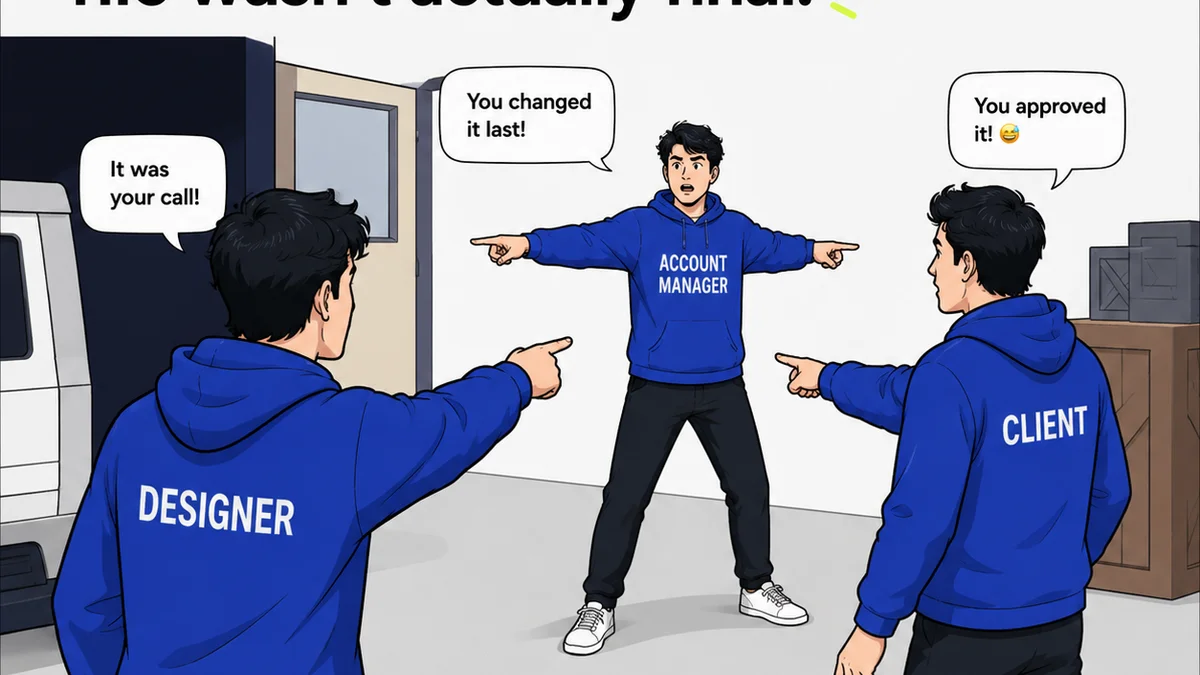
Who is responsible for the feedback? Who is responsible for the approval? When feedback is scattered, accountability dissolves.
A client might say, “Marketing said to do X,” but when you ask marketing, they say, “We never signed off on that.” This blame game is unproductive and damages client relationships.
Establishing Clear Lines
A robust feedback process needs clear ownership:
- Defined stakeholders: Knowing exactly who needs to review and approve at each stage.
- Centralized comments: A single source of truth for all feedback and decisions.
- Version control: Tracking changes and understanding which version is the current “master.”
- Formal approvals: A clear mechanism for signing off, not just implied agreement.
This structure ensures that when a decision is made, it’s documented and owned, preventing “he said, she said” scenarios.
Where Revue Fits In
Managing client feedback effectively is the core challenge Revue solves. It’s not just about collecting comments; it’s about structuring the entire feedback and approval workflow.
- Centralized Feedback Hub: Instead of digging through emails or Slack channels, all client comments, annotations, and discussions live directly on the creative asset itself, within Revue. This eliminates ambiguity and ensures everyone is looking at the same version.
- Revision Management: Easily upload new versions of your work. Clients can compare versions side-by-side, providing context for their feedback and making it clear what has changed and what still needs attention.
- Approval Workflows: Set up clear approval stages. Clients can formally approve or reject specific versions, creating an auditable trail and preventing scope creep. No more guessing if a client’s casual “looks good” actually means approval.
- Reduced Miscommunication: By consolidating feedback and approvals, Revue minimizes the chances of misinterpreting requests or missing critical notes. This saves time, reduces rework, and keeps projects moving forward.
Revue transforms feedback from a chaotic mess into a streamlined, actionable process.
Final Thought
The goal isn’t just to get feedback; it’s to get *good* feedback that leads to great work. This requires moving beyond basic communication tactics and building a fundamentally sound feedback system.
Are you treating client feedback as a communication problem, or are you addressing the underlying process flaws that cause it?
Frequently asked questions
What is the biggest mistake agencies make with client feedback?
The biggest mistake is treating client feedback solely as a communication issue. While communication skills are important, the root cause of most feedback problems lies in a lack of a structured, centralized process for collecting, organizing, and acting on feedback.
How can I get more specific feedback from clients?
Provide context. Present work in stages and show it in situ (e.g., on a device mockup). Use tools that allow for direct annotation on the creative asset. Clearly define stakeholders and decision-makers to avoid conflicting input.
What's the difference between feedback and approval?
Feedback is input or suggestions on creative work. Approval is the formal sign-off that a piece of work meets the required standards and is ready to move to the next stage or be considered complete. A good process clearly distinguishes between the two.
How does a centralized feedback system help?
A centralized system, like Revue, acts as a single source of truth. All feedback, comments, and decisions are in one place, linked to the specific asset and version. This eliminates confusion, reduces misinterpretation, and provides an auditable trail, preventing endless back-and-forth.