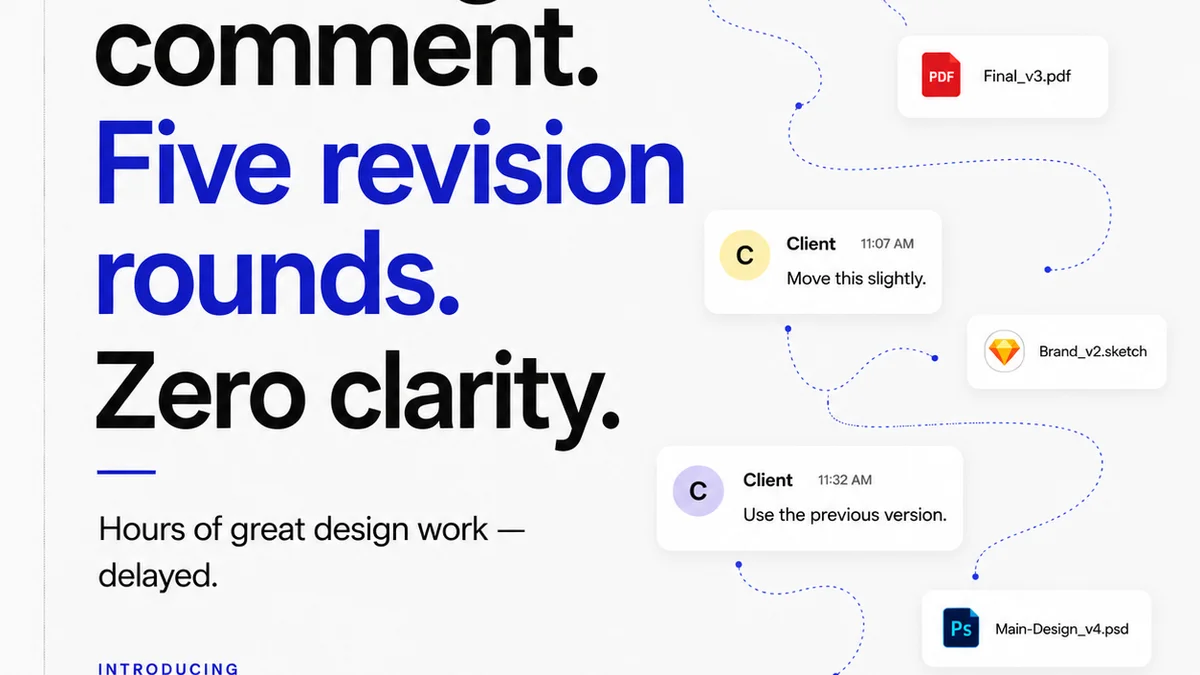
Everyone says client feedback is the hardest part of agency life. That it’s subjective. That clients just don’t *get* design. None of that is wrong. But it’s incomplete.
The real problem isn't the feedback itself. It's how you collect, process, and act on it. It’s an operational breakdown, not a creative one.
1. The Illusion of 'Good Enough' Feedback
We accept feedback as it comes. An email here, a Slack message there, a scribbled note on a PDF. We tell ourselves we can sort it out later. We think our talented team can decipher the vague instructions and connect the dots.
This is where most agencies trip up. They treat feedback like a passive input, rather than an active, critical part of the creative process. It becomes a bottleneck, a source of endless revisions, and a drain on profitability.
The
Frequently asked questions
What are the most common problems with client feedback?
Common issues include vagueness, contradictions, late delivery, lack of context, and feedback from unintended stakeholders. These often stem from poor communication channels and unclear review processes.
How can agencies ensure feedback is actionable?
Establish clear review guidelines upfront, use structured feedback tools that allow for specific annotations, and schedule regular check-ins to clarify points. Always ask 'why' behind a suggestion.
Can technology really improve client feedback?
Yes, specialized tools can centralize feedback, provide version control, track communication, and streamline approvals. This reduces miscommunication and speeds up the revision process significantly.
What's the best way to handle contradictory feedback?
Identify the source and intent behind each piece of feedback. If it's from different stakeholders, facilitate a discussion to align priorities. If it's a client contradicting themselves, gently point out the previous direction and seek clarification on the new priority.