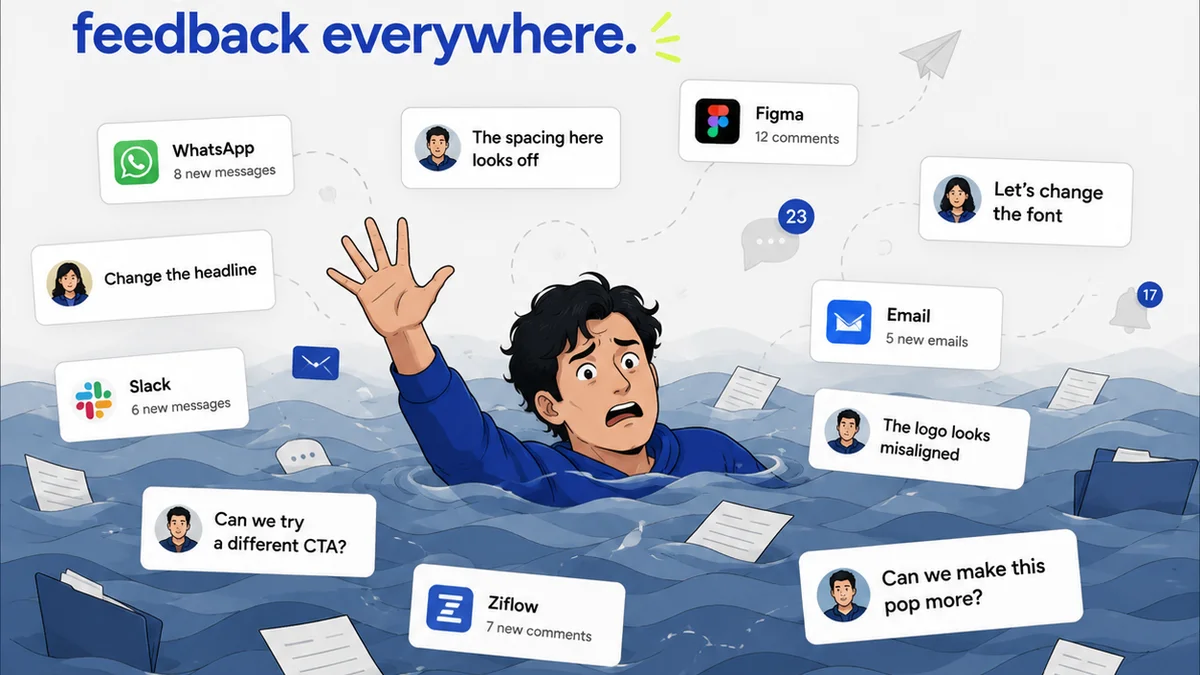
Everyone talks about streamlining client feedback. They say you need better communication. Clearer briefs. More check-ins. None of that is wrong. But it’s incomplete. It misses the fundamental breakdown: feedback isn't just about talking. It’s about systems. Or, more often, the lack thereof.
The hard truth? Your agency probably isn’t *bad* at communication. It’s likely bad at managing the *process* of feedback. This is where projects get lost, deadlines slip, and good work turns mediocre.
1. The Illusion of 'Simple' Feedback
We assume clients understand the impact of their words. A single comment like “make it pop” or “I don’t love it” sounds minor. But to your team, it’s a black box. What does “pop” mean? Which part of the design isn’t resonating?
This ambiguity is the enemy of efficient creative work. It forces endless, often unfocused, revisions.
Symptoms of Poor Feedback Management
- Endless revision cycles on the same elements.
- Misinterpretations leading to work that misses the mark.
- Team frustration and burnout from rework.
- Scope creep disguised as
Frequently asked questions
What's the biggest mistake agencies make with client feedback?
Assuming feedback is just about communication. The real issue is often the lack of a structured system to capture, organize, and act on that feedback, leading to ambiguity and rework.
How can I get more specific feedback from clients?
Provide clear frameworks for feedback. Instead of open-ended questions, ask about specific elements or objectives. Using tools that allow for annotated feedback directly on the creative asset can also prompt more targeted responses.
What are the benefits of a centralized feedback system?
A centralized system reduces the risk of missed feedback, eliminates version control issues, provides a clear audit trail, and ensures all stakeholders are working from the same information. This leads to fewer misunderstandings and more efficient revisions.
How does improving feedback impact team morale?
Clear, actionable feedback reduces the frustration of endless, ambiguous revisions. When teams understand the 'why' behind changes and have a clear path forward, their morale and job satisfaction improve significantly.