Everyone assumes creative change management is about managing difficult clients. That they’re indecisive, pushy, or just don’t know what they want. None of that is wrong. But it’s incomplete.
The hard truth? Poor change management often stems from internal process breakdown, not just client behavior. Your agency’s own workflows are likely creating the chaos you blame on others.
1. The Illusion of 'Good Enough' Feedback
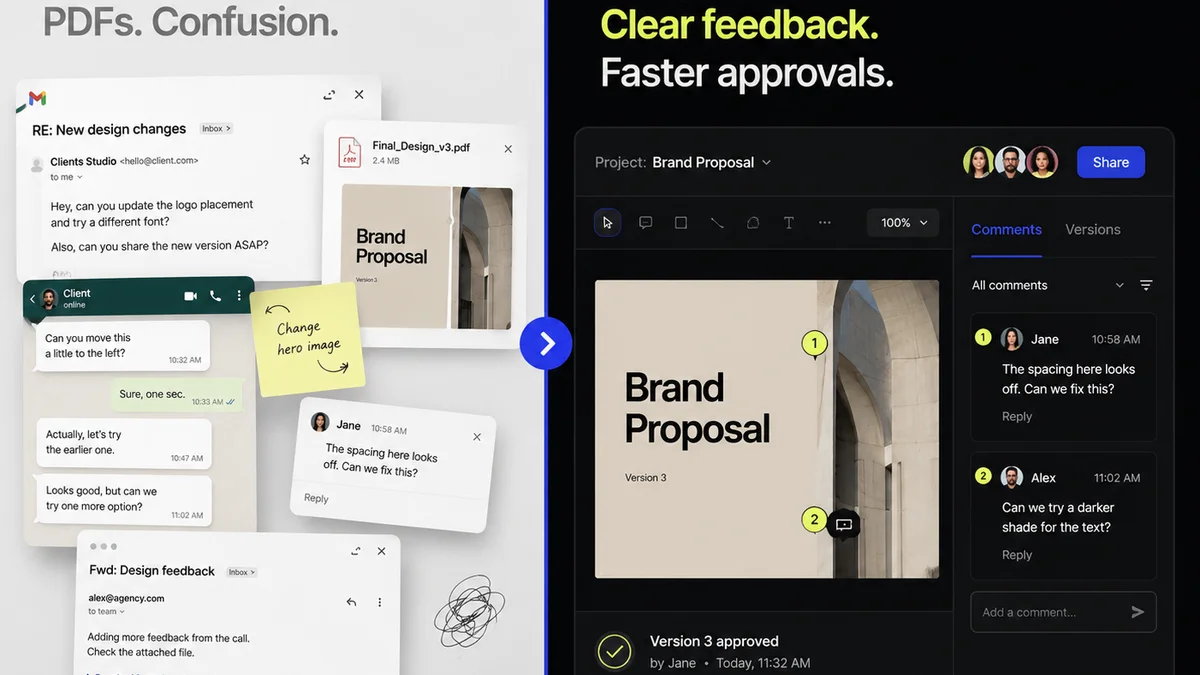
We’ve all been there. A client sends a sprawling email with bullet points, screenshots, and vague directives like “make it pop.” You and your team try to decipher it, implement what you *think* they mean, and send it back. Then the cycle repeats.
This isn’t client-driven chaos; it’s a failure to establish a structured feedback loop from the start. You’re treating feedback like a passive data dump instead of an active, collaborative process.
Assumptions That Sabotage Feedback
- Assumption: Clients understand creative jargon.
- Assumption: Clients can articulate visual needs precisely.
- Assumption: Email is an adequate tool for detailed feedback.
- Assumption: A single feedback round is sufficient.
The real problem isn’t that clients *can’t* give good feedback. It’s that you haven’t built a system to *elicit* it effectively.
2. Revision Rounds: The Hidden Cost
Most agencies have a line item for “revisions” in their proposals. It’s a necessary evil, right? But what if those revisions aren’t just extra work; they’re a symptom of something deeper? Uncontrolled scope creep disguised as ‘minor tweaks’ bleeds your profitability and burns out your team.
Every unscheduled, poorly documented change request eats into your margins. It’s not just about the hours spent; it’s about the opportunity cost of what your team *could* be doing.
The Stealthy Drain of Scope Creep
- Unclear project scope at kickoff.
- Lack of a defined approval process for each stage.
- No clear definition of what constitutes a “round” of revisions.
- Failure to track and quantify the time spent on changes.
You can’t manage what you don’t measure. Without clear tracking, ‘minor’ changes accumulate into major profit killers.
3. Approval Paralysis: The Bottleneck Nobody Sees
The final approval step. It’s supposed to be the finish line. But often, it becomes a black hole. Stakeholders go silent, internal champions get pulled into other meetings, or the work gets endlessly nitpicked by someone who wasn’t involved in earlier stages.
This isn’t just frustrating; it’s a major operational inefficiency. Delayed approvals mean delayed launches, missed market opportunities, and increased holding costs for your agency.
Symptoms of Approval Paralysis
- Long delays between submitting work and getting sign-off.
- Requests for changes that contradict earlier decisions.
- Key decision-makers suddenly unavailable for review.
- A general sense of uncertainty about who has the final say.
The bottleneck isn't always the client; it’s often your internal process for routing and securing approvals.
4. Quality Control: The Last Line of Defense (That Fails)
You’ve managed feedback, handled revisions, and navigated approvals. Now, the final QC check. But if your earlier processes were weak, this is where the cracks really show. Inconsistencies, missed details, and outright errors slip through because the foundation was shaky.
Effective change management isn't just about controlling client requests; it’s about ensuring the integrity of the creative output at every stage. A robust QC process is the result of strong preceding steps, not a substitute for them.
Why QC Fails Under Pressure
- Rushed reviews due to approval delays.
- Lack of standardized checklists or QA protocols.
- Team members assuming someone else caught the error.
- Insufficient time allocated for thorough review.
A strong QC process depends on clear communication and accountability throughout the project lifecycle.
Where Revue Fits In
Let’s be blunt: managing creative feedback, revisions, and approvals manually is a recipe for disaster. Spreadsheets, endless email threads, and scattered file versions create the exact chaos we’ve discussed.
Revue is built to solve this. It centralizes client feedback, making it clear, contextual, and actionable. No more deciphering vague emails or hunting for the latest version.
- Centralized Feedback: All client comments live on the asset itself, tagged and organized.
- Revision Visibility: Track every change, who requested it, and when. See the complete history.
- Streamlined Approvals: Define clear approval workflows and get timely sign-offs, reducing bottlenecks.
- Built-in Quality Checks: Ensure all feedback and revisions are addressed before final delivery.
By providing a single source of truth for creative projects, Revue helps you regain control over the change process, turning a source of friction into a predictable, manageable part of your workflow.
Final Thought
The next time a project goes sideways with endless changes, resist the urge to blame the client. Look inward. Is your process set up to *prevent* chaos, or does it inadvertently invite it? Improving creative change management isn't about being tougher on clients; it's about being smarter with your own systems.
Frequently asked questions
What is the biggest mistake agencies make in creative change management?
The biggest mistake is assuming the problem lies solely with the client. Agencies often fail to implement structured feedback loops, clear approval processes, and robust tracking, which inadvertently create the conditions for chaotic change requests.
How can I get clearer feedback from clients?
Shift from passive email collection to active elicitation. Use tools that allow for contextual comments directly on the creative asset. Define specific feedback stages and clearly communicate what type of input is needed at each point. Avoid creative jargon and ask clarifying questions.
How do I prevent scope creep during revisions?
Clearly define the project scope and deliverables at the outset. Establish a formal process for submitting and tracking all change requests. Define what constitutes a 'round' of revisions and ensure all changes are documented and approved before implementation. Quantify the time spent on changes.
What role does technology play in managing creative changes?
Technology, like centralized feedback platforms, plays a crucial role by providing a single source of truth. It helps organize feedback, track revisions, streamline approvals, and ensure clear communication, thereby reducing ambiguity and manual errors that lead to uncontrolled changes.