Everyone talks about improving creative operations. They point to new software, faster computers, or agile methodologies. And none of that is wrong.
But it’s incomplete.
The hard truth is that great creative operations aren't built on tools alone. They’re built on clarity, process, and people.
Let’s dig into what that really means for your agency or in-house team.
1. Define 'Good' Operations for Your Team
What does “improved creative operations” even look like for you? If you can’t define it, you can’t achieve it.
Is it faster turnaround times? Fewer errors? Happier clients? More predictable revenue?
Most teams jump straight to solutions without understanding the problem. They buy software to fix “communication issues” or “slow approvals” without knowing what success looks like.
Start with the desired outcome. What are the specific, measurable results you want to see?
Symptoms of Poor Operations
- Endless internal debates about project status.
- Last-minute client requests causing chaos.
- Team members consistently overworked or underutilized.
- Creative output that misses the mark due to unclear briefs.
- Frequent scope creep that erodes profitability.
- Clients who are confused about the process or deliverables.
These aren’t just minor annoyances. They’re direct indicators of operational friction.
2. Map Your Current Workflow (The Unvarnished Truth)
You can’t fix what you don’t understand. Most teams *think* they know their workflow, but the reality is often messier.
Grab a whiteboard or a digital canvas. Map out every step of a typical project, from initial brief to final delivery. Be brutally honest.
Where do handoffs happen? What tools are used at each stage? Where are the bottlenecks?
Don’t just map the ideal process. Map what *actually* happens. Include the workarounds, the email chains, the Slack messages that bypass the official channels.
Key Questions to Ask
- Who is responsible for each task?
- What information is needed at each stage?
- Where does feedback get lost or misinterpreted?
- How are revisions tracked and managed?
- What are the approval gates? Who owns them?
- How is project scope managed and communicated?
This exercise is often eye-opening. You’ll see redundancies, unnecessary steps, and points of potential failure you never realized existed.
3. Standardize Your Core Processes
Once you’ve mapped the reality, you can start to standardize. This isn’t about stifling creativity; it’s about creating a reliable framework so creative energy isn't wasted on administrative overhead.
Focus on the repeatable elements of your work.
Key Processes to Standardize
- Briefing: Develop a comprehensive creative brief template that covers all essential information. Mandate its use.
- Feedback: Establish clear channels and formats for client and internal feedback. Define who provides feedback and when.
- Revisions: Create a system for tracking revision rounds, scope, and associated costs.
- Approvals: Define clear approval stages and responsible parties. Make sign-offs unambiguous.
- Asset Management: Implement a system for organizing and storing final assets.
- Quality Assurance: Build a checklist for final review before delivery.
Standardization creates predictability. It reduces ambiguity and ensures everyone is working from the same playbook.
4. Embrace Structured Feedback and Approvals
This is where many creative operations break down. Feedback is often vague, contradictory, or delivered through inefficient channels.
Approvals can become black holes where projects languish.
You need a system that makes feedback actionable and approvals transparent.
Best Practices for Feedback & Approvals
- Centralize: All feedback and approvals should live in one place.
- Contextualize: Feedback needs to be tied directly to the creative asset being reviewed.
- Clarify: Ensure feedback is specific, constructive, and actionable. Train clients and internal stakeholders on how to give good feedback.
- Version Control: Clearly label and manage different versions of the work.
- Time-Bound: Set clear turnaround times for feedback and approvals.
- Ownership: Designate who is responsible for gathering, consolidating, and acting on feedback.
This isn't about making clients jump through hoops. It’s about ensuring their input is captured effectively and that the creative team has clear direction, minimizing wasted effort.
5. Implement Smart Technology, Not Just More Technology
The market is flooded with tools promising to revolutionize creative operations. Don’t fall into the trap of adopting every new shiny object.
Technology should solve specific problems identified in your workflow mapping. It should streamline, not complicate.
Consider tools that integrate well and serve a clear purpose:
- Project Management: For task tracking, timelines, and resource allocation.
- Creative Collaboration / Proofing: For centralized feedback, annotations, and approvals.
- Asset Management (DAM): For organizing and distributing final files.
- Communication: For team-wide announcements and quick chats (but avoid making it the primary feedback channel).
The goal is a cohesive tech stack that supports your standardized processes, not a collection of disconnected tools that create more work.
Where Revue Fits In
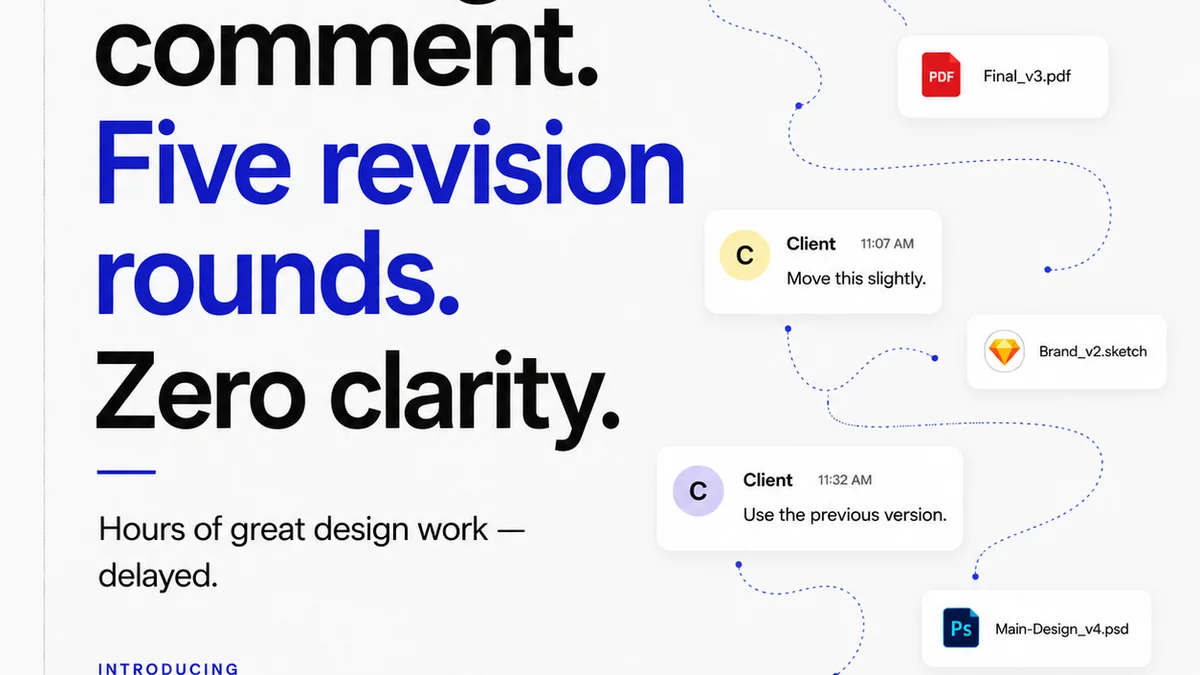
Managing creative feedback and approvals is a notorious pain point. Emails get lost, versions get confused, and crucial comments are missed.
Revue is built to address these specific operational challenges.
It provides a centralized platform where clients and stakeholders can leave precise, contextual feedback directly on creative assets. This eliminates the ambiguity of email threads and Slack messages.
Revision tracking becomes clear. You can see who approved what, when, and which version was signed off. This visibility is critical for accountability and for managing scope.
By consolidating feedback and approvals, Revue helps teams move faster, reduce errors, and ensure everyone is aligned on the final deliverable. It’s about bringing order to the creative chaos.
6. Foster a Culture of Process Ownership
Even the best processes and tools will fail if your team doesn't buy in.
Improvement isn't just about implementing new systems; it's about changing mindsets.
Team members need to understand *why* these processes exist and how they benefit everyone, including themselves.
Promoting Process Ownership
- Communicate Clearly: Explain the rationale behind new workflows and tools.
- Train Thoroughly: Ensure everyone knows how to use the systems correctly.
- Lead by Example: Management must adhere to the established processes.
- Seek Feedback: Regularly ask the team what's working and what's not within the operational framework.
- Iterate: Be willing to refine processes based on team input and evolving needs.
When people feel invested in the operational framework, they become its strongest advocates. This shared ownership is key to sustainable improvement.
7. Measure, Analyze, and Iterate
Creative operations aren't a set-it-and-forget-it endeavor. Continuous improvement requires ongoing attention.
Track key metrics related to your initial goals. Are you seeing faster turnaround times? Reduced errors? Improved client satisfaction?
Use this data to identify areas that still need work. Are there specific project types that consistently cause bottlenecks? Are certain clients or stakeholders struggling with the feedback process?
Regularly review your workflows and tools. What’s still efficient? What’s become cumbersome?
The operational landscape is always shifting. Your processes should adapt with it.
Final Thought
Improving creative operations is a journey, not a destination. It requires a commitment to understanding your unique workflow, standardizing key steps, leveraging technology wisely, and fostering a culture of continuous improvement.
Stop chasing the latest software fad. Start by clarifying your goals, mapping your reality, and building a framework that empowers your team to do their best creative work, efficiently and effectively.
What’s the single biggest operational bottleneck you’re facing right now, and what’s one small step you can take this week to address it?
Frequently asked questions
What are the key components of good creative operations?
Good creative operations are built on clear processes, effective communication, standardized workflows for tasks like briefing and approvals, and the right technology to support these elements. It’s about creating a predictable and efficient environment for creative teams.
How can I effectively manage client feedback?
Centralize feedback in one platform, ensure it's contextual and specific to the asset, clarify actionable requests, and establish clear timelines for feedback and revisions. This prevents misinterpretations and wasted effort.
Is it better to have fewer tools or more tools for creative operations?
It’s better to have the *right* tools that integrate well and serve specific, identified needs. Adopting too many disconnected tools can create more complexity and administrative overhead than it solves. Focus on tools that streamline your core, standardized processes.
How do I get my team to adopt new operational processes?
Communicate the 'why' behind the changes, provide thorough training, lead by example, and actively seek team feedback for iteration. Fostering a sense of ownership is crucial for long-term adoption.