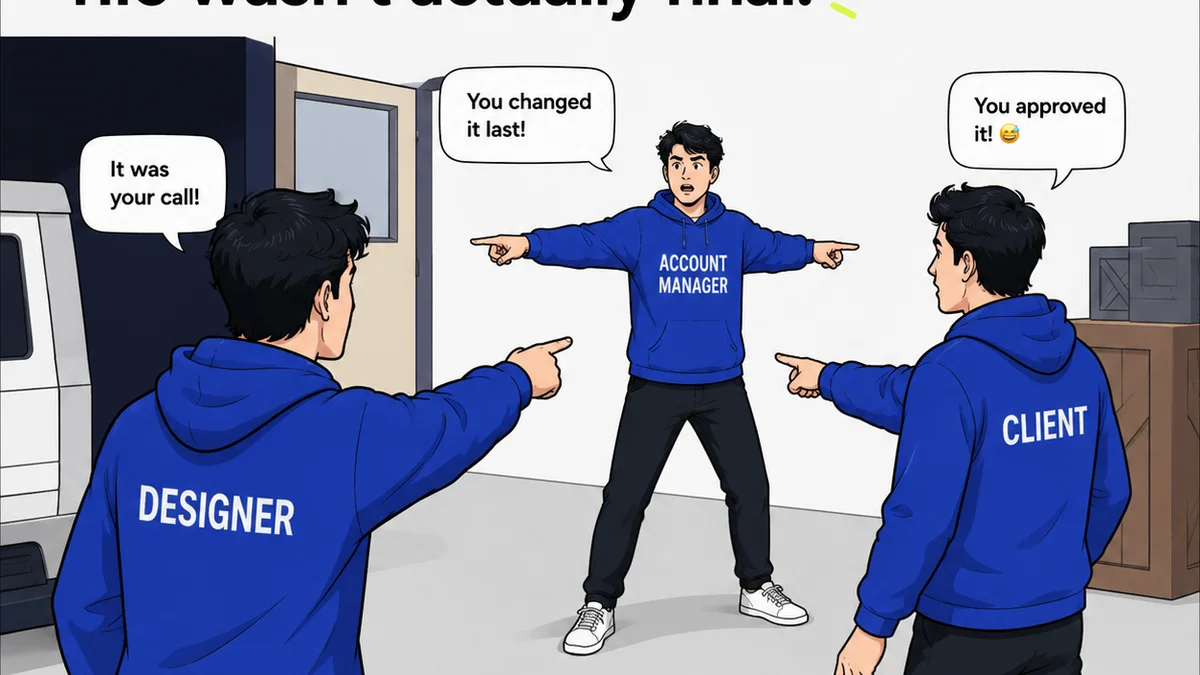
Everyone talks about improving creative operations. They mention agile sprints, better project management software, or hiring more people. None of that is wrong. But it’s incomplete.
The deeper truth? Improving creative operations isn't about adopting the latest trend. It's about ruthlessly optimizing the core processes that deliver client work. It’s about visibility, accountability, and control.
1. The Illusion of Control: Why Chaos Creeps In
Agencies often feel busy, but that busyness doesn’t always translate to profitable, high-quality output. Where does the disconnect happen?
It starts with assumptions. We assume our teams know the exact status of every project. We assume feedback is clear. We assume revisions are tracked. We assume approvals happen on time. These assumptions are dangerous.
Without a centralized system, information gets scattered. Emails get lost. Slack messages are missed. Feedback lives in disparate documents or verbal conversations. This fragmentation is the breeding ground for errors, delays, and frustration.
The Symptoms of Poor Operations
- Endless
Frequently asked questions
What are the biggest mistakes agencies make when trying to improve operations?
The biggest mistake is focusing on tools or buzzwords without addressing core process gaps. Agencies often chase the latest software or methodology without understanding their specific bottlenecks. Another common error is assuming everyone is on the same page regarding project status or feedback, leading to miscommunication and rework. Finally, not establishing clear ownership and accountability for each step in the workflow causes tasks to fall through the cracks.
How can I get my team to adopt new operational processes?
Start with 'why.' Explain how the new process benefits them directly – less confusion, fewer late nights, clearer direction. Involve them in the process design where possible. Provide thorough training and ongoing support. Celebrate early wins and acknowledge the effort involved. Make it easy to comply and hard to revert to old ways.
What's the role of technology in improving creative operations?
Technology is an enabler, not a silver bullet. The right tools provide visibility, automate repetitive tasks, and centralize communication. However, technology must support well-defined processes. Implementing software without fixing broken workflows will only amplify existing problems. Focus on how tools can facilitate clear feedback, track revisions, and streamline approvals.
How does better creative operations impact client relationships?
Significantly. Improved operations lead to more predictable timelines, clearer communication, and higher quality deliverables. Clients appreciate transparency and efficiency. When you can confidently provide status updates, manage revisions effectively, and ensure final approvals are smooth, you build trust and reduce client anxiety, leading to stronger, long-term partnerships.