Everyone thinks improving in-house creative operations means faster turnaround times and more output. That’s the shiny surface. But it’s not the whole story.
The real goal isn't just speed; it's predictable, high-quality output with less chaos. It’s about building a system that works, not just pushing more work through a broken one.
1. Map Your Actual Workflow, Not the Ideal One
You think you know how creative work gets done in your team. You're probably wrong.
Most teams operate on assumptions and tribal knowledge. This leads to bottlenecks you can't see and inefficiencies everyone feels but nobody can pinpoint.
The Assumption vs. The Reality
Assumption: The brief goes to the designer, they design, it goes to the reviewer, they approve, done.
Reality: The brief gets lost. The designer asks clarifying questions via Slack, which get missed. The reviewer gives vague feedback in a PDF comment. Revisions go back to the wrong version. The final file is exported incorrectly.
You need to document the *actual* path. Every step. Every handoff. Every tool used. Every communication channel.
How to Map It
- Start at the kickoff meeting.
- Trace the journey of a single asset (e.g., a social media post, a landing page).
- Note who touches it, what software they use, how feedback is given, how approvals are tracked.
- Identify points of delay, miscommunication, or re-work.
This isn't about blame. It's about understanding the terrain.
2. Standardize Your Briefing Process
A vague brief is the enemy of good creative operations. It’s the root cause of endless revisions and scope creep.
If you’re not briefing properly, you’re setting yourself up for failure before the creative even starts.
What Makes a Good Brief?
It needs to be more than just a list of deliverables. A solid brief includes:
- Clear objectives: What are we trying to achieve with this creative?
- Target audience: Who are we talking to?
- Key message: What’s the one thing they must take away?
- Mandatories: Brand guidelines, legal disclaimers, specific calls to action.
- Deliverables: Exact specifications (dimensions, file types, formats).
- Timeline: Specific deadlines for drafts, reviews, and final delivery.
- Context: Links to relevant research, past campaigns, or competitor examples.
Standardize this. Create a template. Make it mandatory for every project.
Use a centralized system to house briefs, ensuring they’re accessible and not buried in emails.
3. Centralize Feedback and Approvals
Email chains. Slack DMs. Google Docs comments. PDF annotations. Sticky notes on a monitor.
This is not a workflow; it’s a digital scavenger hunt.
When feedback is scattered, you lose context, miss crucial comments, and waste time chasing down revisions.
The Cost of Dispersed Feedback
- Misinterpretation of feedback.
- Oversights of critical comments.
- Version control nightmares.
- Endless back-and-forth clarification.
- Delayed timelines.
You need a single source of truth for all feedback and approvals. A place where stakeholders can see the creative, leave clear, contextual comments, and where you can track the approval status definitively.
This eliminates ambiguity and ensures everyone is working from the same, most up-to-date version.
4. Implement Clear Roles and Responsibilities
Who is responsible for what? If this question causes a pause, your operations are weak.
Ambiguity here leads to dropped balls, duplicated efforts, and frustration.
Define the Key Players
- Project Manager/Creative Ops Lead: Oversees the entire process, manages timelines, resources, and communication.
- Creative Lead/Art Director: Responsible for creative quality, guiding designers, and ensuring brand consistency.
- Designer/Creator: Executes the creative work.
- Stakeholder/Reviewer: Provides feedback and approvals. Needs to understand their role in the process.
- Final Approver: The ultimate sign-off authority.
Make these roles explicit for every project. Document who is responsible for feedback, who gives final approval, and who manages the project’s workflow.
5. Automate Where Possible, Standardize Everywhere Else
Creative teams are often resistant to process. They see it as bureaucracy that stifles creativity.
But well-designed processes, especially those that handle repetitive tasks, free up creatives to do their best work.
What to Automate/Standardize
- Onboarding new projects: Use intake forms and templates.
- File naming conventions: A simple, consistent system saves hours.
- Asset delivery: Standardize export settings and delivery folders.
- Reporting: Automate status updates where feasible.
- Feedback collection: Use a tool that centralizes comments and reduces manual collation.
Focus on automating the administrative burden, not the creative act itself.
6. Build in Quality Assurance (QA)
QA isn't just for software. It's crucial for creative output.
A final check before delivery can catch errors that undermine all the hard work that came before.
The QA Checklist
What should your QA process include? Depending on the deliverable, it might cover:
- Brand adherence: Are logos, colors, and fonts used correctly?
- Accuracy: Is all copy correct? Are product details accurate?
- Technical specs: Is the file format correct? Are dimensions right? Is it optimized for the intended platform?
- Accessibility: For digital assets, are color contrasts sufficient? Are alt texts provided? (See WCAG fundamentals for more on accessibility standards).
- Link integrity: Do all links work?
- Usability: Does the design make sense? Is the call to action clear?
A dedicated QA step prevents embarrassing mistakes and ensures a professional final product.
Where Revue Fits In
Managing creative operations for an in-house team often feels like juggling. You need a system that brings order to that chaos.
Revue provides a centralized hub for your creative workflow. It’s where you can:
- Centralize client feedback: All comments and revisions live in one place, linked directly to the asset. No more hunting through emails or Slack messages.
- Manage revisions and approvals: Track the status of every version, see who has reviewed what, and get clear sign-offs. This provides visibility and accountability.
- Run quality checks: Ensure all feedback has been addressed and that the final asset meets all requirements before it’s delivered.
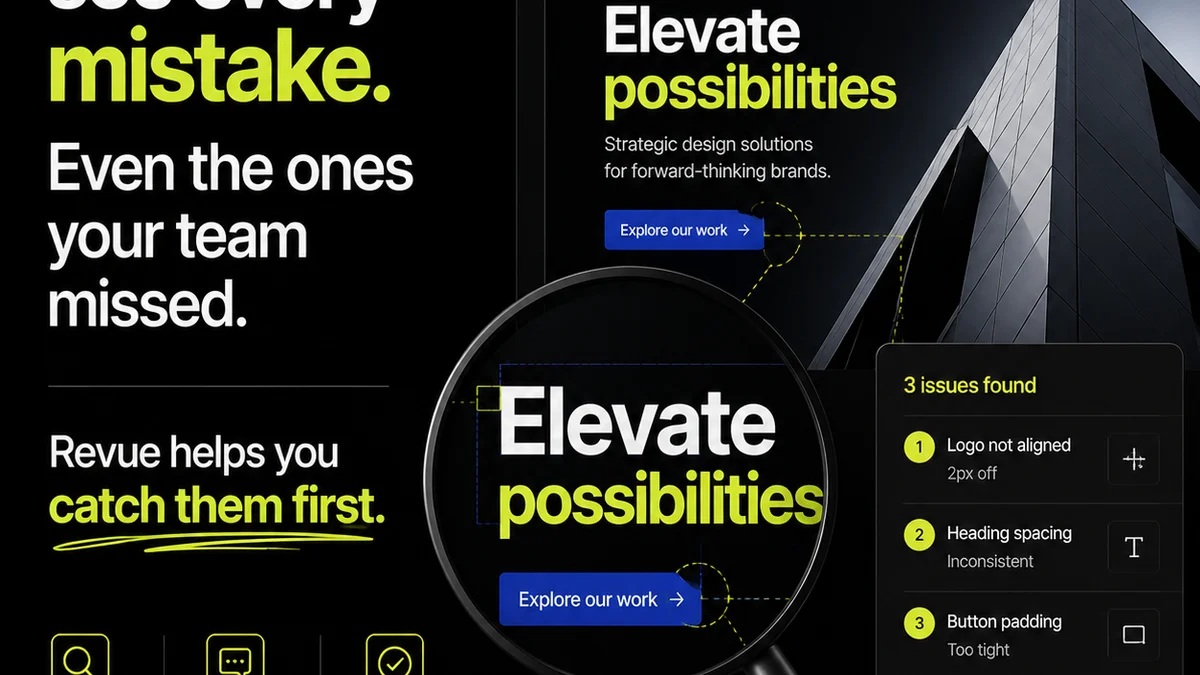
By streamlining these critical stages, Revue helps in-house teams move faster, reduce errors, and deliver better creative work consistently.
Final Thought
Improving creative operations isn't about adding more rules or more software. It’s about intelligent design of your team’s workflow.
It’s about creating clarity where there’s confusion, and predictability where there’s chaos.
What’s the single biggest point of friction in your team’s current creative process? And what’s one small step you can take this week to smooth it out?
Frequently asked questions
What are the key components of good creative operations?
Key components include standardized briefing, centralized feedback and approvals, clear roles and responsibilities, efficient project management, and robust quality assurance processes. The goal is predictable, high-quality output.
How can I reduce endless revisions in my creative process?
Reduce revisions by implementing a standardized, detailed briefing process. Ensure all stakeholders provide clear, consolidated feedback in a single location, and establish a defined approval process to prevent scope creep and miscommunication.
What's the difference between an ideal workflow and an actual workflow?
An ideal workflow is the theoretical, efficient path work *should* take. An actual workflow is how work *really* gets done, often involving workarounds, communication gaps, and informal processes. Improving operations requires mapping and optimizing the actual workflow.
How does technology help improve creative operations?
Technology, like centralized feedback platforms, can automate repetitive tasks, improve communication, provide a single source of truth for feedback and approvals, and offer visibility into project status. This reduces manual effort and minimizes errors.