Everyone talks about improving creative operations workflow. Usually, that means buying new software or implementing a rigid process. None of that is wrong. But it’s incomplete.
The hard truth is that most workflow problems aren't about tools or templates. They’re about communication breakdowns, unclear expectations, and a lack of visibility. Fixing those takes more than just a new Kanban board.
1. The Myth of the 'Perfect' Process
Agencies and creative teams love to design processes. We map them out, document them, and then... rarely follow them perfectly. Why?
Because reality is messy. Client feedback is vague. Stakeholders change their minds. Unexpected urgent requests land on desks. A process that’s too rigid becomes a roadblock. A process that’s too loose becomes chaos.
The Real Goal: Adaptability, Not Rigidity
Your goal isn't to build an uncrackable system. It's to build a resilient one.
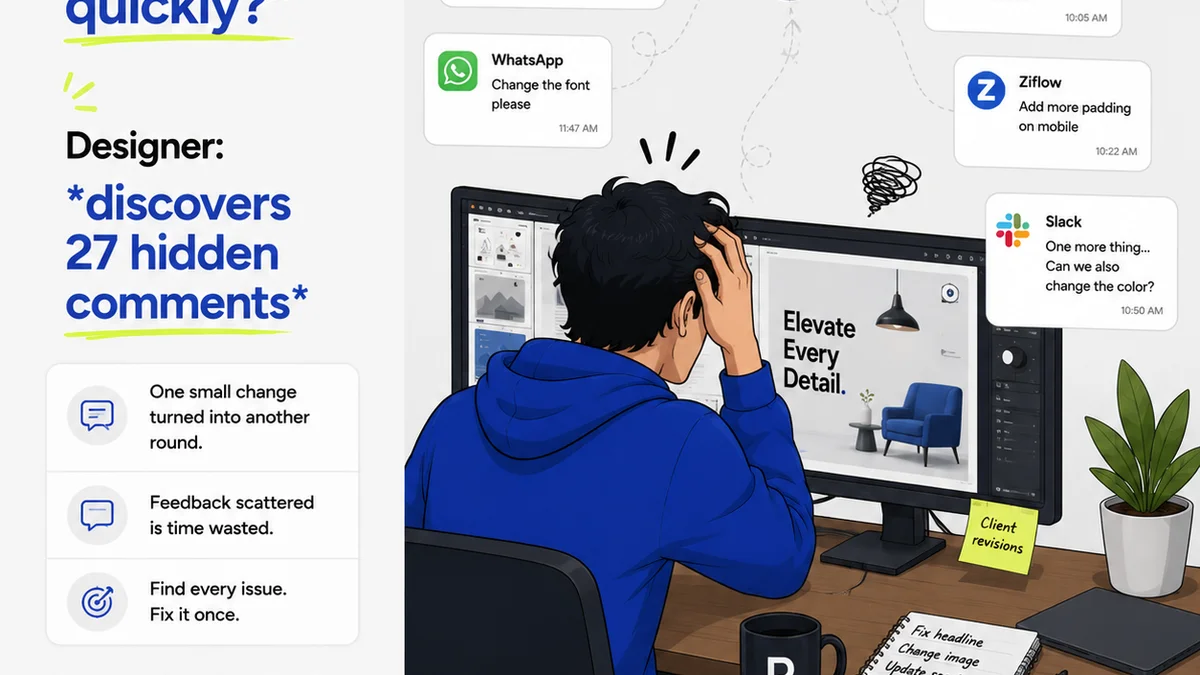
Think about the last time a project went sideways. Was it because the software failed, or because nobody knew who was supposed to approve the latest draft? Was it the lack of a Gantt chart, or the fact that the client provided feedback in a Slack message, an email, and a quick phone call?
The true aim of improving your creative operations workflow is to make it easier to handle the inevitable deviations without derailing the entire project.
2. Unpacking the Bottlenecks
Where does work actually get stuck? You know the symptoms:
- Endless revision loops.
- Delayed approvals.
- Team members waiting on each other.
- Confusion over the latest version.
- Last-minute panic.
These aren't random occurrences. They’re symptoms of deeper issues in your creative operations workflow.
Common Culprits
- Feedback Fragmentation: Client input scattered across email, Slack, calls, and random documents.
- Approval Ambiguity: No clear understanding of who needs to sign off, when, and on what.
- Version Control Nightmares: Multiple versions of a file circulating, leading to confusion and rework.
- Scope Creep Without Control: New requests added without proper evaluation or impact assessment.
- Lack of Project Visibility: Team members and stakeholders don't know the status or next steps.
Identifying these specific choke points is crucial. You can't fix what you don't understand.
3. Centralizing Feedback: The Single Source of Truth
This is where most teams stumble. They assume a shared drive or a project management tool is enough. It’s not.
The problem isn't just *where* feedback lives, but *how* it’s collected and acted upon. If you're getting feedback via a dozen different channels, you’re already losing time and context.
The Power of Consolidated Input
Imagine this: Every piece of client feedback, every stakeholder comment, every revision request, all logged in one place. Directly attached to the creative asset itself.
This eliminates the need to hunt through email chains or Slack threads. It ensures everyone is working from the same, most up-to-date information. It provides a clear audit trail.
This isn't about adding another tool; it's about making the tools you have work together, or choosing one that consolidates these functions. The goal is a single, undeniable source of truth for all project communication.
4. Streamlining Revisions and Approvals
This is often the biggest drain on creative resources. The endless back-and-forth. The waiting game.
Many teams try to solve this with more meetings or stricter deadlines. But the real issue is often a lack of clarity and accountability.
Defining the Path to Approval
Who needs to approve? What are the criteria for approval? What happens if feedback is conflicting?
Establishing clear approval workflows is non-negotiable. This means:
- Designating specific approvers for each stage.
- Setting clear deadlines for feedback and approvals.
- Defining the scope of each review.
- Having a process for resolving conflicting feedback.
Visibility is key here. When everyone can see who needs to approve next and what the status is, the pressure to act increases naturally. It removes the
Frequently asked questions
What is the biggest mistake agencies make when trying to improve their workflow?
Focusing solely on tools or rigid processes without addressing underlying communication issues and lack of visibility. A process that doesn't account for real-world messiness will inevitably fail.
How can I reduce the time spent on revisions?
Centralize all feedback in one place, establish clear approval chains with designated approvers and deadlines, and ensure version control is strictly managed to avoid confusion.
What are the key benefits of a centralized feedback system?
It creates a single source of truth, eliminates confusion from scattered communication, provides an audit trail, and ensures everyone is working from the most current information, saving significant time and reducing errors.
How does visibility improve creative operations?
When team members and stakeholders can easily see project status, upcoming tasks, and pending approvals, it creates natural accountability and reduces delays caused by uncertainty or lack of awareness.