Everyone *says* they want high-quality creative work. Agencies and clients alike. It’s the first thing clients ask for, the last thing we promise. But what does that actually mean in practice?
It’s not just about catching typos or making sure the logo is the right size. That’s a tiny part of it. True creative quality assurance is a systemic issue, baked into your entire workflow.
The Hard Truth About Creative Quality
The real reason creative QA often fails isn’t a lack of attention to detail. It’s a lack of a defined, repeatable process. It’s treating quality as a final check, not a continuous thread.
This leads to:
- Last-minute scrambles to fix issues.
- Client frustration over “obvious” mistakes.
- Internal finger-pointing between teams.
- Missed deadlines and budget overruns.
- A general feeling of chaos, not craft.
This isn’t about assigning blame. It’s about admitting that your current approach to creative quality assurance probably isn’t working as well as you think.
1. Define What “Done” Actually Means
Before you can check for quality, you need to know what quality looks like for *this specific project*. Generic checklists are a start, but they’re rarely enough.
Project-Specific Deliverables
What are the exact files required? What are the technical specifications for each? Think:
- File formats (JPG, PNG, PDF, MP4, etc.)
- Resolution and dimensions
- Color profiles (RGB, CMYK)
- Font embedding
- Accessibility standards (WCAG guidelines, for example)
These aren’t suggestions; they’re requirements. Document them clearly.
Brand and Creative Guidelines
Is the work on-brand? Does it adhere to the established brand book?
- Logo usage (clear space, minimum size, color variations)
- Typography (correct fonts, weights, hierarchy)
- Color palette (approved HEX, RGB, CMYK values)
- Tone of voice and messaging consistency
- Imagery style and guidelines
This is where visual consistency is born. Or dies.
Client Mandates and Legal Requirements
What are the non-negotiables from the client or regulatory bodies?
- Disclaimers and legal copy
- Call-to-action accuracy
- Compliance with advertising standards
- Platform-specific rules (e.g., social media ad policies)
Ignoring these can have serious consequences.
2. Standardize Your QA Process
A standardized process removes guesswork and ensures consistency. It tells everyone involved exactly what to do and when.
The QA Checklist: More Than a To-Do List
A good QA checklist is project-agnostic but category-specific. It’s a tool, not a crutch. It should cover:
- Technical Checks: File specs, links, functionality, responsiveness.
- Brand Alignment: Logo placement, color usage, typography, tone.
- Content Accuracy: Spelling, grammar, punctuation, factual correctness.
- Design Integrity: Layout, visual hierarchy, alignment, consistency across assets.
- Client Feedback Implementation: All requested revisions are correctly made and signed off.
Your checklist should evolve. Update it based on common errors or new project types.
Who Owns QA?
This is crucial. QA should not be an afterthought dumped on the most junior person. It needs dedicated ownership.
Ideally, QA is a shared responsibility, but with a clear lead. This could be:
- A dedicated QA specialist.
- A senior designer or art director.
- A project manager with a strong eye for detail.
The key is that this person has the authority and the time to do it right.
When Does QA Happen?
This is the contrarian part. Quality assurance isn't just a final step. It needs to be integrated throughout the workflow.
- Pre-production QA: Reviewing briefs, understanding requirements.
- Mid-production QA: Checking in on drafts, ensuring alignment.
- Pre-delivery QA: The final, thorough check before client submission.
- Post-delivery QA: Reviewing live assets or campaign performance for unexpected issues.
Catching errors early saves massive amounts of time and money.
3. Integrate Feedback Loops Effectively
Client feedback is the lifeblood of creative work. But chaotic feedback is the death of quality and sanity.
Centralize All Feedback
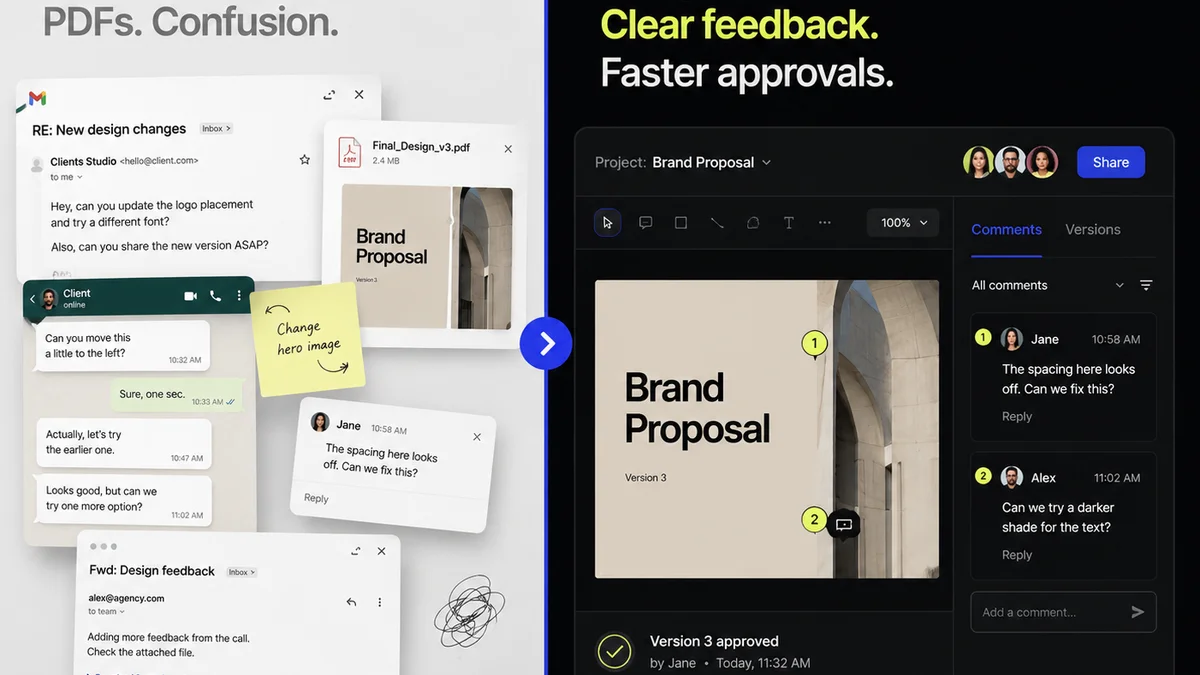
Scattered feedback across emails, Slack messages, and random documents is a recipe for disaster. You *need* a single source of truth for all client comments.
This means moving away from email chains and into a system designed for creative collaboration. A system where comments are attached directly to the visual asset.
Clarify Feedback Ambiguity
Vague feedback like “make it pop” or “I don’t like it” is useless. Your QA process must include a step for clarifying these comments.
- Direct Communication: Schedule calls to discuss subjective feedback.
- Ask Probing Questions: “What specifically about this isn’t working?” “What are you hoping to achieve with this change?”
- Visual Annotation: Use tools that allow clients to mark specific areas.
If the client can't articulate the problem, they can't articulate the solution. And you can't QA a solution that doesn't exist.
Track Revision History
Knowing what changed, when, and why is vital for QA. You need to be able to trace the evolution of an asset.
This helps answer questions like:
- Was this specific revision requested?
- Who approved this change?
- Did this revision introduce new issues?
Transparency here prevents “scope creep” and ensures all parties are aligned on the final output.
4. Empower Your Team
A strong QA culture isn’t built on rules alone. It’s built on empowered individuals.
Training and Onboarding
Ensure every team member understands the QA process and their role in it. This isn’t just for designers; it’s for account managers, project managers, and strategists too.
New hires need to be onboarded into your quality standards from day one.
Provide the Right Tools
Equip your team with the software and resources they need to perform QA effectively. This includes:
- Project management software
- Feedback and annotation tools
- Brand guideline repositories
- Accessibility checkers
If the tools are clunky or nonexistent, the process will suffer.
Foster a Culture of Accountability
Quality is everyone’s job. Encourage team members to flag potential issues, even if it’s not “their” responsibility. Create an environment where constructive criticism is welcomed, not feared.
This means celebrating quality wins and learning from mistakes without punitive measures.
Where Revue Fits In
Improving creative QA isn't about adding more steps; it's about making the existing steps smarter and more integrated. That’s where a platform like Revue comes in.
Revue centralizes client feedback, making it impossible for comments to get lost in email threads or Slack channels. Every piece of feedback is tied directly to the specific version of the creative asset it pertains to.
This provides clear visibility into the revision history. You can see exactly who requested what, when it was actioned, and who approved the final version. This traceability is gold for QA.
Furthermore, Revue streamlines the revision and approval process. This means fewer misunderstandings and a clearer path to final sign-off, reducing the likelihood of last-minute errors slipping through.
By bringing structure and clarity to the feedback and revision cycle, Revue helps build quality assurance directly into your creative workflow, rather than treating it as a bolted-on final step.
Final Thought
Are you managing creative quality, or is it managing you?
The difference lies in treating QA not as a task, but as a discipline. A discipline that requires process, clarity, and the right tools. It’s about moving from reactive firefighting to proactive quality building.
What’s one small change you can implement today to make your creative QA more robust?
Frequently asked questions
What is the most common mistake agencies make with creative QA?
The most common mistake is treating creative QA as a final, isolated step rather than integrating it throughout the entire project lifecycle. This leads to last-minute issues, rushed fixes, and potential client dissatisfaction.
How can I ensure client feedback is clear and actionable for QA?
Centralize all feedback in one platform, use tools that allow for visual annotation, and train your team to ask clarifying questions when feedback is vague. Always confirm understanding before proceeding with revisions.
Who should be responsible for creative quality assurance?
While quality is a team effort, clear ownership is vital. This could be a dedicated QA specialist, a senior team member, or a project manager. The key is that this person has the authority and time to ensure standards are met.
How does a centralized feedback tool help with QA?
Centralized tools like Revue ensure all feedback is documented, version-controlled, and directly linked to the asset. This eliminates lost comments, provides a clear revision history, and makes it easier to verify that all required changes have been made correctly.