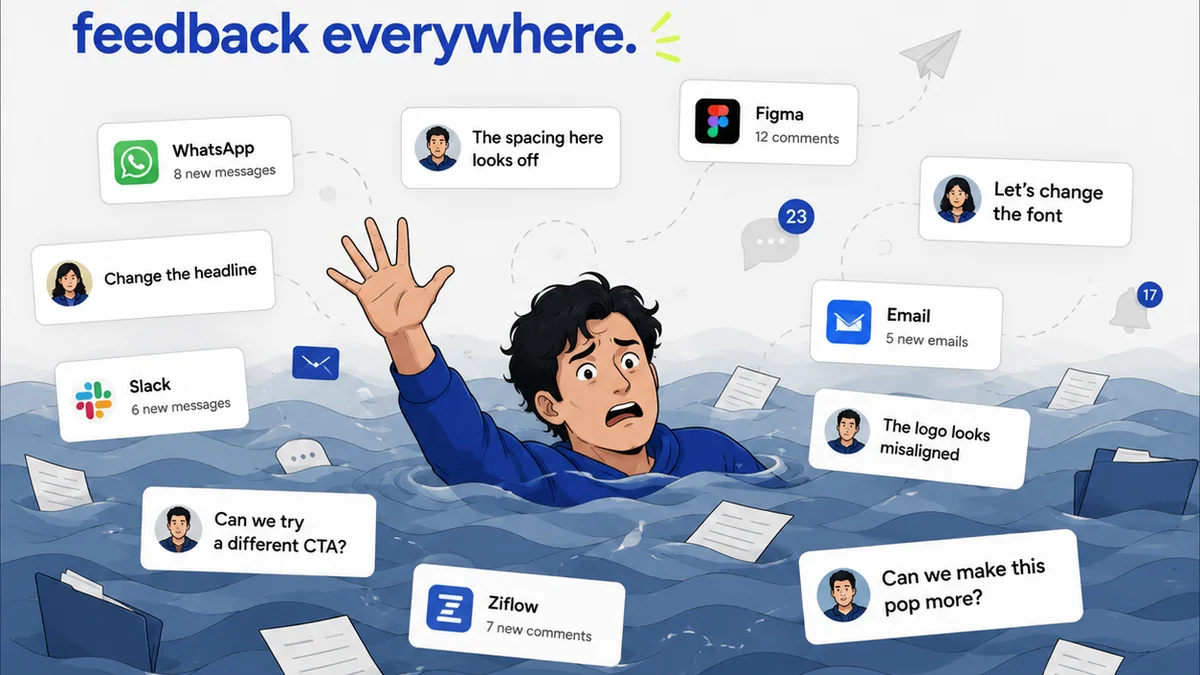
Everyone knows a smooth creative review process is key to agency success. You probably think it’s about clear briefs, talented designers, and client communication skills. None of that is wrong. But it’s incomplete.
The hard truth? Your entire creative review process is likely bottlenecked by a lack of centralized visibility and structured feedback. It’s not just about *what* you review, but *how* you manage the entire flow of information and approvals.
1. The Illusion of 'Good Enough' Feedback
We’ve all been there. A client says, “Make it pop.” Or a CD comments, “Needs more energy.” This isn’t feedback; it’s noise. Vague comments are the enemy of efficient creative reviews.
Why does this happen?
- Lack of clear project goals.
- No standardized way to collect feedback.
- Fear of being too direct (on both client and internal sides).
- Assuming everyone sees the same thing.
This ambiguity forces multiple rounds of revisions, often without addressing the core issue. It’s a drain on resources and morale.
The Real Cost of Vague Feedback
Every extra revision round eats into your margins. It delays project launches. It frustrates your team, who are stuck tweaking things without a clear target. And it damages client relationships when they feel their feedback isn’t being understood or acted upon.
2. Deconstructing the Bottleneck: Where Does It Get Stuck?
A broken creative review process isn't a single point of failure; it's a systemic issue. Let’s break down the common choke points:
a) Scattered Communication Channels
Feedback lives in emails, Slack messages, Teams chats, Google Docs comments, and even handwritten notes. Trying to piece together the latest direction from these disparate sources is a nightmare. You spend more time searching for feedback than acting on it.
b) Version Control Chaos
Which version is the latest? Is this the one with the client’s last round of changes, or did the designer start a new iteration? Without a clear system, teams often work on outdated files, leading to wasted effort and misaligned deliverables.
c) The 'Wet Ink' Signature Problem
Formal approvals are often the final hurdle. If you’re chasing signatures via email or physical sign-offs, you’re introducing unnecessary delays. This is especially true for agencies working with larger clients or regulated industries.
d) Lack of Accountability
When feedback is scattered, it’s hard to track who said what, when. This can lead to finger-pointing and a lack of ownership over the review and approval cycle.
3. Building a Better Creative Review Process: The Hard Truths
Improving your creative review process isn't about adding more steps; it’s about adding clarity, structure, and accountability. It requires a shift from reactive management to proactive workflow design.
a) Standardize Feedback Collection
Implement a single source of truth for all feedback. This means moving away from scattered emails and chats. Tools that allow for contextual, in-line comments directly on the creative asset are invaluable. This ensures feedback is tied to the specific element being discussed.
b) Define Clear Review Stages
Map out your review process. Who needs to see the work at each stage? What are the specific goals of each review? Is it a technical check, a brand consistency review, or a client stakeholder approval?
c) Establish Turnaround Time Expectations
Be upfront with clients and internal teams about how long reviews will take and what the expected turnaround times are for feedback and revisions. This manages expectations and prevents unnecessary delays.
d) Centralize Communication and Assets
This is non-negotiable. All communication, feedback, revisions, and approvals related to a specific creative asset must live in one place. This single source of truth eliminates confusion and saves massive amounts of time.
e) Implement Digital Approvals
Move towards digital sign-offs. This streamlines the final approval stage, provides a clear audit trail, and speeds up the process significantly. A tool that can capture formal approval status directly on the asset is ideal.
4. Where Revue Fits In
The challenges outlined above – scattered feedback, version control issues, delayed approvals – are precisely what Revue is built to solve. We empower creative teams to centralize their client feedback, manage revisions, and gain visibility into the entire review and approval lifecycle.
Imagine this:
- All client comments are logged directly on the creative asset, with clear timestamps and user attribution.
- Your team can see the history of feedback and revisions at a glance, eliminating guesswork.
- Stakeholders can provide feedback and give approvals within a structured workflow, reducing back-and-forth.
- You gain real-time visibility into where a project stands in the review process, allowing for proactive management.
Revue helps you turn vague comments into actionable insights and chaotic review cycles into predictable workflows. It’s about bringing order to the creative chaos, ensuring your team can focus on what they do best: creating great work.
5. Beyond the Tools: The Human Element
While tools are critical for streamlining the creative review process, don't underestimate the human element. Clear communication and strong relationships are still paramount.
a) Educate Your Clients
Help your clients understand your review process and why it’s structured the way it is. Explain the benefits of providing clear, contextual feedback. When clients understand the 'why,' they're more likely to comply.
b) Foster Internal Alignment
Ensure your internal team understands their role in the review process. Are they responsible for consolidating feedback? For providing initial technical reviews? Clear roles prevent duplication of effort and ensure accountability.
c) Practice Active Listening
When feedback *is* clear, listen actively. Sometimes, the best creative solutions come from truly understanding the client's underlying needs, even if their initial feedback wasn't perfectly articulated.
6. Measuring Success in Your Creative Review Process
How do you know if your improved creative review process is actually working? Look for these indicators:
- Reduced Revision Cycles: Are you seeing fewer rounds of revisions on average?
- Faster Turnaround Times: Are projects moving through the review and approval stages more quickly?
- Improved Client Satisfaction: Are clients happier with the process and the final outcome?
- Team Morale: Is your creative team less stressed and more productive?
- Fewer Errors: Is there a reduction in mistakes made due to miscommunication or outdated information?
Tracking these metrics provides tangible proof that your efforts to improve the review process are paying off.
Final Thought
The creative review process is often seen as a necessary evil, a hurdle to clear before the real work begins. But what if it could be a catalyst for better creative outcomes? What if streamlining feedback and approvals didn't just save time, but actually led to stronger, more effective work? The difference between a painful review process and a productive one often comes down to how well you manage information and visibility. Are you managing feedback, or is feedback managing you?
Frequently asked questions
What are the biggest challenges in a creative review process?
The biggest challenges typically include scattered communication channels (feedback in emails, chats, etc.), version control chaos, vague or subjective feedback, lack of clear accountability, and slow, manual approval processes.
How can I make client feedback more actionable?
Encourage clients to provide specific, contextual feedback directly on the creative asset. Standardize feedback collection using tools that allow for in-line comments and clear annotations. Educate clients on the benefits of providing clear direction.
What is the role of technology in improving creative reviews?
Technology, like dedicated review and approval platforms, centralizes communication, assets, and feedback. It provides version control, digital approval workflows, and audit trails, significantly reducing confusion and delays.
How does a streamlined review process benefit an agency?
A streamlined process reduces revision cycles, speeds up project delivery, improves team morale by cutting down on frustration, enhances client satisfaction through clearer communication, and ultimately protects profit margins by reducing wasted time and resources.