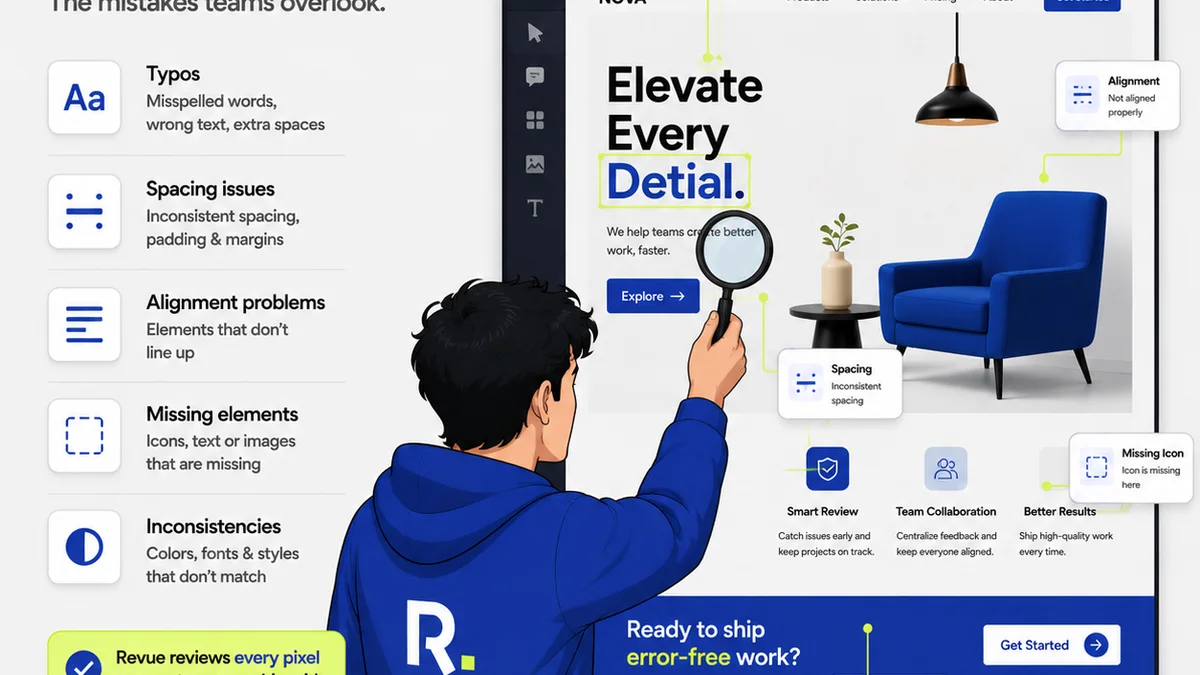
Everyone wants a smoother creative workflow. You’ve probably read about the latest productivity apps, the perfect desk setup, or the magic morning routine. None of that is wrong. But it’s incomplete.
The hard truth about improving your creative workflow is that it’s not about individual hacks. It's about understanding and systematically dismantling the bottlenecks that slow down your entire team and, more importantly, your clients.
1. The Illusion of 'Busy' vs. 'Productive'
Your team might look busy. Emails fly, Slack messages ping, and everyone seems glued to their screens. But are they actually moving projects forward? Often, 'busy' is just a symptom of a broken process.
True productivity in a creative agency or in-house team means consistent, high-quality output with minimal friction. It means knowing what needs to be done, who's doing it, and what the next step is, without constant interruptions or clarification loops.
Symptom Spotting
- Projects stall for days waiting for simple feedback.
- Team members are constantly asking others for status updates.
- Revisions go back and forth endlessly without clear direction.
- There’s a general feeling of 'firefighting' rather than planned progress.
- Too much time is spent managing communication, not doing creative work.
These aren't signs of laziness. They're signs that your workflow is holding you back.
2. Feedback Isn't Just 'Input' — It's a Process
Client feedback is the lifeblood of creative work. But how it's collected, distributed, and actioned can make or break your workflow. Treating feedback as a simple email or a quick call is a recipe for disaster.
Effective feedback management requires structure. It needs a clear channel, a defined point of contact, and a way to track what's been said, what decisions were made, and what actions were taken.
The Feedback Black Hole
Too often, feedback gets lost in:
- Endless email chains with multiple stakeholders.
- Verbal comments that are forgotten or misinterpreted.
- Scattered notes across different platforms.
- Ambiguous or conflicting input from various sources.
This leads to wasted time, incorrect revisions, and frustrated clients who feel their input isn't being heard or acted upon.
Establishing Clear Feedback Loops
A robust workflow treats feedback like a deliverable itself:
- Centralized Collection: All feedback lands in one place.
- Consolidated Review: A designated person or small group reviews and synthesizes input.
- Actionable Brief: Feedback is translated into clear, concise instructions for the creative team.
- Version Control: Each round of revisions is clearly tracked.
- Client Sign-off: Formal approval gates prevent scope creep and confusion.
This structured approach transforms feedback from a chaotic interruption into a productive part of the creative process.
3. Revisions Are Not Redos (Unless They Have To Be)
The revision stage is where many creative projects go to die. The assumption is that revisions are just part of the job, a necessary evil. The reality is that uncontrolled revisions are a symptom of a deeper workflow problem.
Are revisions stemming from a lack of initial clarity? Are they a result of poorly managed feedback? Or are they genuine creative pivots that weren't anticipated?
The Revision Spiral
Unchecked, revisions can look like this:
- Client asks for a small change.
- Designer makes the change.
- Client sees the change and asks for another, related change.
- This continues, with each change uncovering new perceived issues.
- The original brief is long forgotten.
This isn't efficient. It's a sign that the initial brief was insufficient, or that the client didn't fully understand the implications of their requests during earlier stages.
Proactive Revision Management
To improve this:
- Set Clear Scope Early: Define what's in and out of scope for each project phase.
- Use Visual Proofing: Tools that allow direct annotation on mockups make feedback precise.
- Regular Check-ins: Brief, focused meetings can catch misunderstandings before they lead to extensive revisions.
- Limit Revision Rounds: Clearly define the number of revision rounds included in the project scope.
- Charge for Scope Creep: If clients request work beyond the agreed scope, have a process for addressing it.
Revisions should be about refinement, not fundamental re-work caused by poor process.
4. The Bottleneck isn't Always the Creatives
When a project is slow, the first instinct might be to blame the designers or copywriters. But the bottleneck is rarely where you think it is. More often, it's in the handoffs, the approvals, or the communication layers.
Think about your typical project flow. Where does work actually get stuck? Is it waiting for a client's response? Is it sitting in someone's inbox for approval? Is it being held up because the next task can’t start until a document is manually transferred?
Common Bottleneck Points
- Client Approvals: The classic waiting game.
- Internal Handoffs: Moving a project from strategy to design, design to development, or account management to client.
- Review Cycles: When work sits unreviewed because the right person is unavailable or hasn't prioritized it.
- Information Silos: Key project details are held by individuals or teams, not accessible to all who need them.
- Tool Fragmentation: Using too many disconnected tools means information gets lost in translation.
Identifying these choke points is crucial. You can't fix what you don't see.
5. Visibility is Key to Flow
Imagine trying to navigate a city with no street signs or maps. That’s what a creative project without visibility feels like. Everyone is moving, but nobody knows if they’re going in the right direction or if they’re about to hit a dead end.
Visibility means knowing the status of every task, every project, and every client interaction in real-time. It means understanding dependencies and potential risks before they derail progress.
What Visibility Looks Like
- A clear overview of all active projects.
- Up-to-date status for each task and deliverable.
- Accountability: knowing who is responsible for what.
- Awareness of upcoming deadlines and potential conflicts.
- Easy access to project history and feedback.
Without this, you're operating blind, making reactive decisions instead of proactive ones.
Where Revue Fits In
Improving your creative workflow isn't about adding more tools. It's about creating a single source of truth for your projects and client interactions. That's where a platform like Revue becomes essential.
Revue is designed to bring clarity and control to the chaos of creative production. It centralizes client feedback, making it impossible for input to get lost in endless email threads or forgotten Slack messages. Every comment, every annotation, every approval is logged and tracked.
This provides the visibility your team needs. You can see exactly where a project stands, what feedback needs to be addressed, and what approvals are pending. This eliminates the guesswork and reduces the time spent chasing down information.
By streamlining the feedback and revision process, Revue helps you move from a reactive, 'busy' state to a proactive, productive flow. It ensures that creative energy is focused on creation, not on managing communication breakdowns.
6. Don't Confuse Speed with Progress
It's easy to chase speed. Faster rendering, quicker file transfers, instant messaging. These are all good. But they don't guarantee better or faster *progress* towards a finished, approved project.
True progress is about moving through defined stages efficiently and effectively, with clear understanding and minimal rework. It's about hitting your milestones consistently.
The Pitfalls of Pure Speed
- Rushing through the brief without proper client alignment.
- Skipping quality checks to meet an arbitrary deadline.
- Prioritizing urgent tasks over important ones, leading to long-term problems.
- Implementing tools that promise speed but add complexity to the workflow.
Focus on the flow, not just the pace. A smooth, predictable flow often gets work done faster overall than a frantic, stop-start race.
7. Process Over Personality
You might have a superstar designer or a client who's a communication genius. Relying on individual brilliance to carry a broken workflow is a risky strategy.
What happens when that person is sick? What happens when they leave? A truly improved workflow is one that is robust enough to function consistently, regardless of who is performing the tasks.
Building a Systemic Approach
This means:
- Documenting your core processes.
- Creating templates for briefs, feedback requests, and project plans.
- Using a centralized system (like Revue) that standardizes how information is handled.
- Training your team on the established workflows.
- Conducting regular retrospectives to identify where the system can be improved.
A well-defined process ensures that the agency can deliver reliably, even when individuals are having an off day or are unavailable.
Final Thought
Improving your creative workflow isn't a one-time fix. It's an ongoing commitment to observing, analyzing, and refining how your team works. It requires looking beyond the surface-level 'busy-ness' to the underlying systems and communication patterns.
Are you building a workflow that supports your team and clients, or one that creates unnecessary friction? The answer lies in looking critically at where the real bottlenecks are, and systematically addressing them.
Frequently asked questions
What's the difference between 'busy' and 'productive' in a creative workflow?
Being 'busy' means appearing occupied, often with tasks that don't move projects forward. 'Productive' means consistently achieving high-quality output with minimal friction, making tangible progress towards project goals.
How can I prevent endless revision cycles?
Prevent endless revisions by setting clear project scope and deliverables early, using visual proofing tools for precise feedback, limiting the number of revision rounds in your contract, and having a process for addressing scope creep.
Why is visibility important in a creative workflow?
Visibility is crucial because it provides real-time insight into project status, task ownership, and potential roadblocks. This allows teams to make proactive decisions, manage dependencies, and ensure everyone is aligned, preventing delays and misunderstandings.
How does a centralized feedback system improve workflow?
A centralized feedback system consolidates all client input into one accessible location, preventing loss or misinterpretation. This structured approach ensures feedback is clearly understood, tracked, and actioned, leading to more efficient revisions and faster approvals.