Everyone thinks a smooth design approval workflow is about clear briefs and talented designers. That’s part of it, sure. But it’s not the whole story. The real bottleneck? It’s rarely the creative work itself. It’s the messy, frustrating process of getting feedback, managing revisions, and finally, securing that elusive sign-off. This is the operational truth most agencies and in-house teams grapple with daily.
The hard truth is that a broken approval process bleeds time, kills morale, and ultimately impacts your bottom line. It’s not just about aesthetics; it’s about efficiency.
1. The Illusion of 'Good Enough' Feedback
You get feedback. It arrives in emails, Slack messages, scribbled notes on PDFs, or even verbal instructions in a hallway chat. Everyone’s contributing. Looks like progress, right?
Wrong. This fragmented approach is the enemy of clarity. It creates confusion, invites conflicting edits, and makes tracking changes a nightmare. Each siloed piece of feedback is a potential point of failure.
The Symptoms of Siloed Feedback
- Endless email chains with conflicting instructions.
- Designers guessing which version is the 'final' one.
- Clients asking, “Did you get my note from Tuesday?”
- Team members working off outdated assets.
- Missed feedback buried in long threads.
This isn't just annoying; it’s a direct hit to your team’s productivity and your project timelines. You can have the best designers in the world, but if their input is scattered to the winds, their output will suffer.
2. The Real Cost of Revision Cycles
You’ve probably heard that managing revisions is part of the job. And it is. But when revisions become a black hole of endless back-and-forth, something is fundamentally broken in your design approval workflow.
Each revision cycle isn't just a simple tweak. It’s a cascade of tasks: re-interpreting feedback, making changes, re-exporting assets, re-distributing for review, waiting for new feedback, and repeating. This drains valuable creative hours that should be spent on new projects or strategic thinking.
Why Revisions Spiral
- Lack of a clear 'source of truth' for feedback.
- Ambiguous or vague feedback that requires multiple clarification rounds.
- No defined scope for revisions, leading to scope creep.
- Poor version control, causing work on outdated iterations.
- Delayed feedback, pushing the entire project timeline back.
If your team spends more time managing revisions than creating, your approval process is costing you more than you think. It’s an operational drag you can’t afford.
3. The Myth of the 'Final' Approval
That email saying, “Looks good, approved!” feels like a victory. But how often does 'final' approval turn out to be anything but?
This is where the operational disconnect really bites. True approval means certainty. It means everyone who needs to sign off has done so, and there’s a clear record. Without this, you’re left vulnerable to last-minute changes that derail everything.
What 'Final' Approval Should Mean
- All stakeholders have provided explicit sign-off.
- There is a clear, auditable trail of approvals.
- The approved version is clearly marked and inaccessible for further edits.
- Any subsequent changes are initiated through a formal change request process.
A shaky approval process leads to a shaky foundation for your final deliverables. This impacts everything from client satisfaction to the quality of the final product.
4. Building a Robust Design Approval Workflow
Improving your design approval workflow isn’t about more meetings or stricter rules imposed from above. It’s about implementing systems that naturally guide feedback and approvals towards clarity and efficiency.
Centralize All Feedback
Stop the email ping-pong. Consolidate all client and stakeholder feedback into a single, accessible location. This becomes your definitive record.
Establish Clear Review Cycles
Define when feedback is due and who is responsible for providing it. Set expectations for the type and depth of feedback required at each stage. This prevents endless, overlapping review periods.
Standardize Feedback Formats
Encourage stakeholders to use structured feedback methods. This could be commenting directly on designs, using pre-defined templates, or answering specific questions. The goal is actionable, unambiguous input.
Implement Version Control
Every iteration needs a clear version number and timestamp. This ensures everyone is looking at the same stage of the design and prevents confusion about which is the 'latest' or 'approved' version.
Define Approval Gates
Clearly mark stages where formal approval is required. This isn't just a casual 'looks good'; it's a deliberate sign-off that moves the project forward. Use checklists or formal sign-off buttons.
Automate Notifications
Keep everyone informed without manual chasing. Automated reminders for feedback due dates, notification of new comments, and alerts when approval is requested can significantly speed things up.
5. Where Revue Fits In
Managing creative feedback and approvals efficiently is a core challenge for agencies and design teams. You need a system that cuts through the noise and provides clarity.
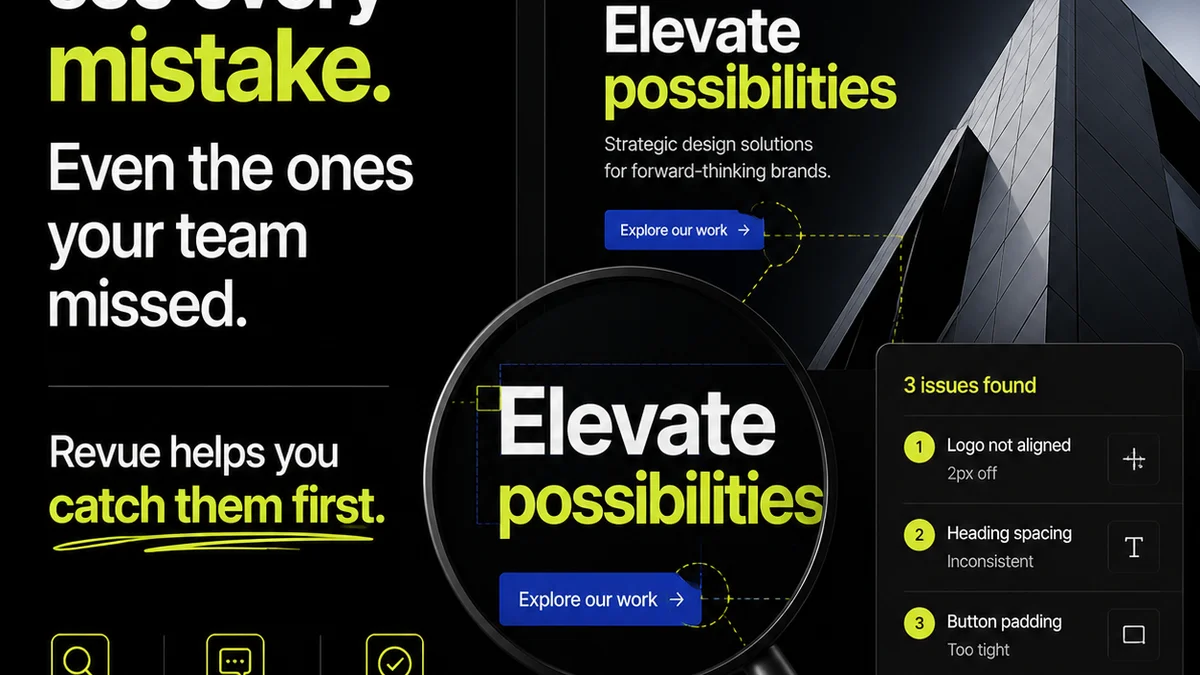
Revue acts as that central hub. It’s designed to streamline the entire design approval workflow, from initial feedback to final sign-off.
- Centralized Feedback: All client comments, annotations, and discussions live in one place, linked directly to the creative asset. No more hunting through emails or Slack.
- Revision Visibility: Track every iteration. See exactly what changed between versions and who approved what, when. This transparency reduces confusion and builds trust.
- Streamlined Approvals: Define clear approval stages and collect explicit sign-offs. Revue makes it easy for stakeholders to approve or request changes, creating an auditable trail.
- Quality Assurance: Ensure that what gets approved is what gets delivered. Revue helps maintain version integrity and ensures all feedback has been addressed before final sign-off.
By bringing structure to the chaos, Revue empowers your team to get designs approved faster and with greater confidence.
Final Thought
Is your current design approval process a well-oiled machine, or a constant source of friction?
The difference isn't just about saving a few hours here and there. It's about creating an environment where creativity thrives, clients are delighted, and your agency or team operates at peak efficiency. Take a hard look at your workflow. Where are the hidden costs? Where can clarity replace confusion?
Frequently asked questions
What is the biggest mistake teams make in design approvals?
The biggest mistake is treating feedback as a secondary task, allowing it to become siloed across multiple communication channels like email, Slack, or verbal notes. This fragmentation leads to confusion, missed feedback, and endless revision cycles.
How can I get clients to provide better feedback?
Encourage structured feedback by defining clear review cycles and expectations. Guide clients to comment directly on the design, use specific language, and focus on objective criteria rather than subjective preferences. Centralizing feedback also helps ensure all input is captured.
What are the key components of an efficient design approval workflow?
An efficient workflow includes centralized feedback, clear review cycles, standardized feedback formats, robust version control, defined approval gates, and automated notifications. The goal is to create a single source of truth and a transparent process.
How does version control help in design approvals?
Version control ensures that everyone is referring to and approving the correct iteration of a design. It prevents confusion about which changes have been made, which are pending, and which version is the 'final' approved one, significantly reducing errors and rework.