Everyone says design QA is about catching mistakes. Catching typos, broken links, misaligned elements. None of that is wrong. But it’s incomplete.
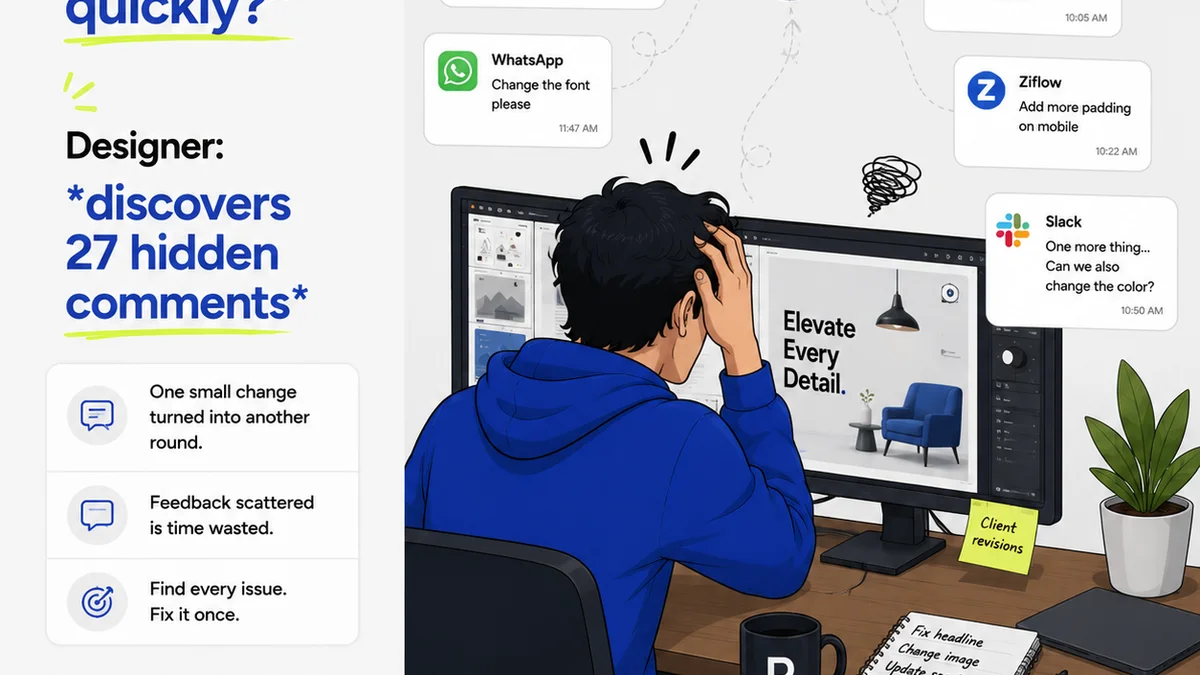
The real problem for agencies isn’t just spotting errors. It’s the chaos that leads to them. Unclear feedback. Endless revision cycles. The sheer operational drag of managing the entire design approval process.
This is the harder truth: your design QA process is only as good as your feedback and revision management. Without that foundation, QA is a frantic, last-minute scramble, not a strategic safeguard.
1. The Feedback Black Hole: Why QA Fails Before It Starts
Most agencies assume client feedback arrives clean and actionable. It doesn't.
It’s a mess. A jumble of subjective opinions, conflicting requests, and vague directives. Often buried in email chains, Slack messages, or even verbal conversations.
This is where design QA often fails. Not at the final check, but at the source.
The Symptoms of Bad Feedback
- Endless
Frequently asked questions
What is the primary goal of design QA for agencies?
While catching errors is part of it, the primary goal is to ensure the final creative output meets client objectives, brand standards, and technical specifications efficiently, minimizing rework and client frustration.
How can agencies handle subjective client feedback during QA?
Establish clear project briefs and creative directions upfront. Use a centralized feedback tool that allows for annotation and discussion, making subjective comments more concrete and trackable. Schedule regular check-ins to clarify feedback before it impacts multiple revisions.
What are the benefits of a structured revision process?
A structured process reduces ambiguity, ensures all feedback is addressed systematically, prevents scope creep, and provides a clear audit trail. This leads to faster approvals, fewer errors, and better client relationships.
How does technology help with design QA?
Technology, like centralized feedback platforms, automates tracking, provides a single source of truth for revisions, and streamlines communication. This reduces manual errors and saves significant time compared to managing feedback across multiple channels.